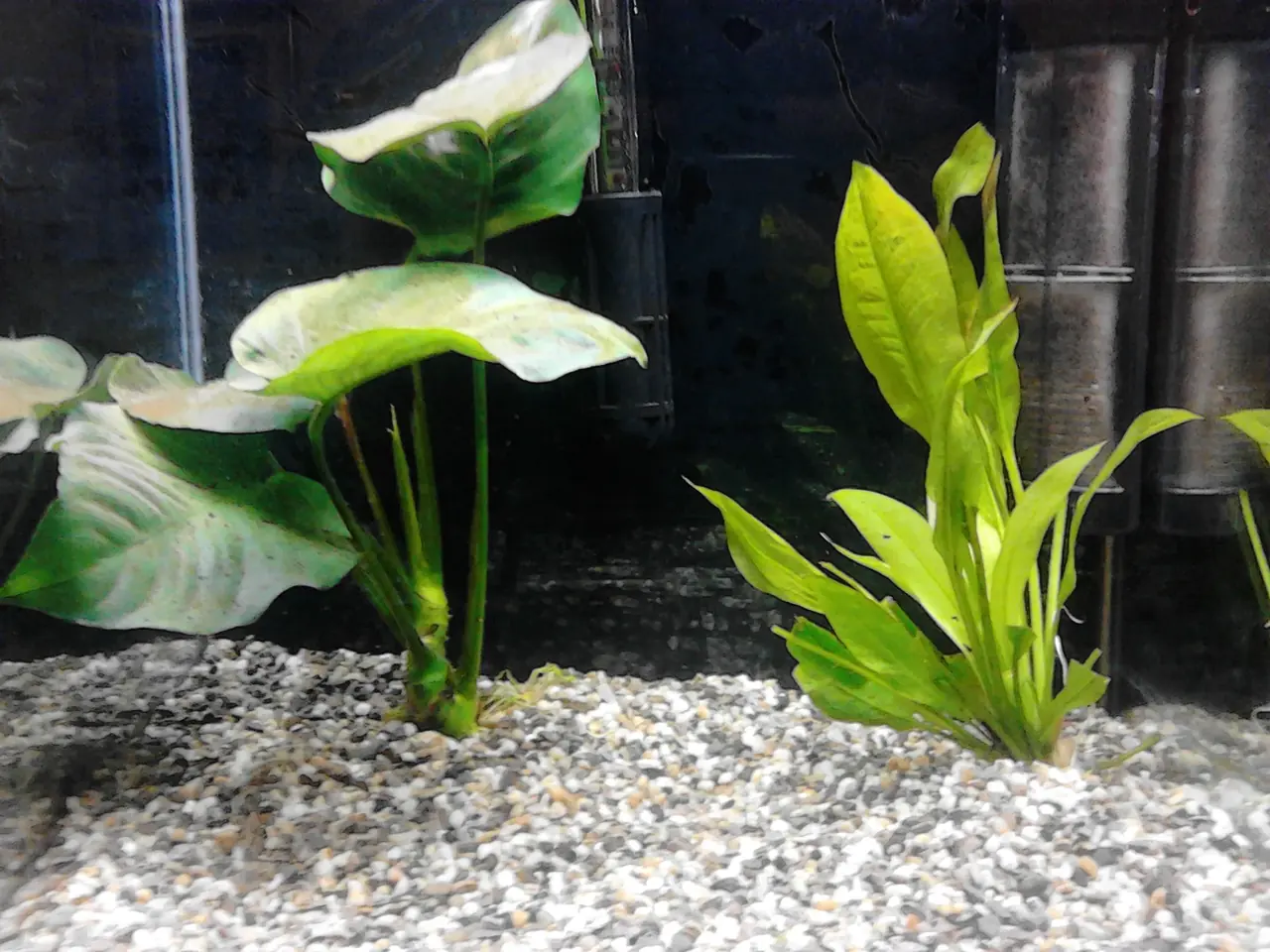
The easiest aquarium plants are anubias, java fern, cryptocorynes, java moss, vallisneria, Amazon sword and marimo moss balls. They tolerate low to moderate light, need no CO2 injection and forgive missed fertilizer. Attach the rhizome plants to wood or rock, plant the root feeders in the substrate, and let floaters drift.
A planted aquarium for beginners does not require special equipment. A basic LED light, a modest dose of fertilizer and plants chosen for low-tech conditions will outperform an ambitious setup that is hard to keep balanced. Start with a few hardy species, learn how they respond, and add more later.
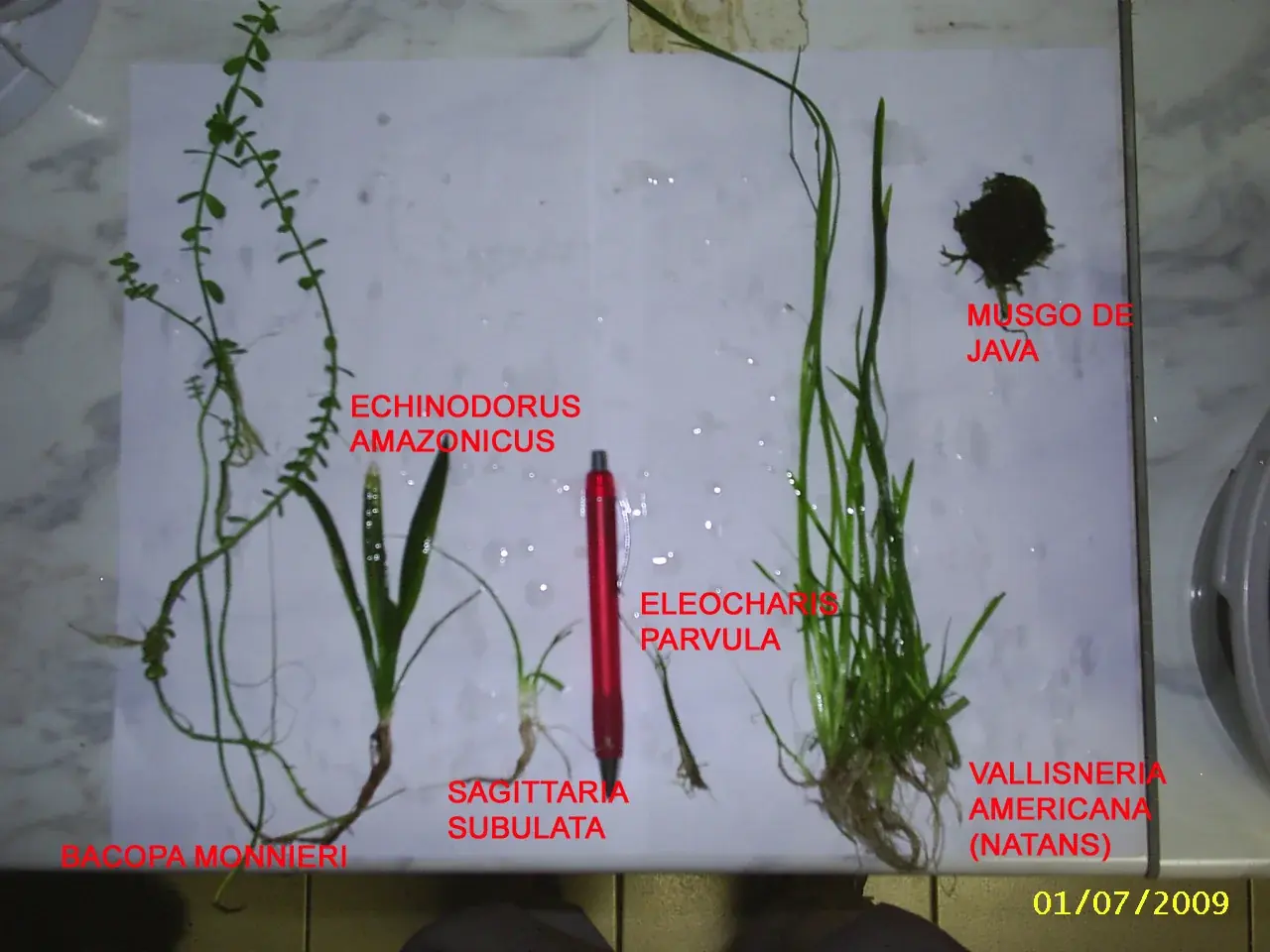
Easy aquarium plants at a glance
Use this table to match a plant to its place in the tank. “Rhizome” plants must stay above the substrate, “root feeders” want nutrients at the base, and floaters need nothing but water and light.
| Plant | Light | Growth | Placement | How to plant |
|---|---|---|---|---|
| Anubias | Low to medium | Slow | Mid or foreground, on hardscape | Tie or glue to wood or rock; keep the rhizome out of the substrate |
| Java fern | Low to moderate | Steady | Mid or background, on hardscape | Wedge, tie or glue to wood or rock; never bury |
| Cryptocoryne (wendtii, lutea) | Almost any | Slow | Midground | Plant roots in substrate; add root tabs |
| Java moss | Most setups | Easy, trim to shape | Anywhere, on hardscape | Attach to any surface |
| Christmas moss | Low to moderate is a safe start | Slow | On wood or rock | Tie to rock or driftwood |
| Marimo moss ball | Low | Slow | Anywhere | Set on the substrate; roll at water changes |
| Vallisneria | Low tolerated; moderate is faster | Fast, spreads by runners | Background | Plant roots in substrate; root tabs |
| Amazon sword | Moderate | Large, steady | Background or center | Roots in substrate; feed with root tabs |
| Dwarf sagittaria | Short in high light, taller in low | Fast, runners | Foreground or midground | Plant roots in substrate |
| Bacopa | Low to high | Stem; trim and replant tops | Midground or background | Push stem into substrate; replant cut tops |
| Ludwigia | Medium to high | Dense, upright | Mid or background | Push stems into substrate |
| Aponogeton bulb | Low | Fast, gets tall | Background | Set the bulb on top of the substrate |
| Banana plant | Moderate is a safe start | Slow to settle, then sends up leaves | Midground | Rest tubers on top or bury no more than a quarter inch |
Best plants for beginners, by type
Plants you attach: anubias, java fern and mosses
These are the closest thing to indestructible in a freshwater aquarium. Anubias adapts to a range of water conditions, grows slowly and stays lush for years. Java fern sends its leaves and roots from a thick horizontal stem called a rhizome and absorbs most of its nutrients from the water, so it never needs to touch the substrate. You can propagate it by cutting the rhizome in two or by letting a mature leaf produce tiny plantlets, which you detach and move.
Java moss will grow on nearly any surface and tolerates most lighting. It also gives cover to shrimp and small fish. Trim it regularly so it does not take over. Christmas moss is slower and forms fluffy fronds that suit a breeding tank, tied onto stone or wood.
Root feeders: crypts, swords, vallisneria and sagittaria
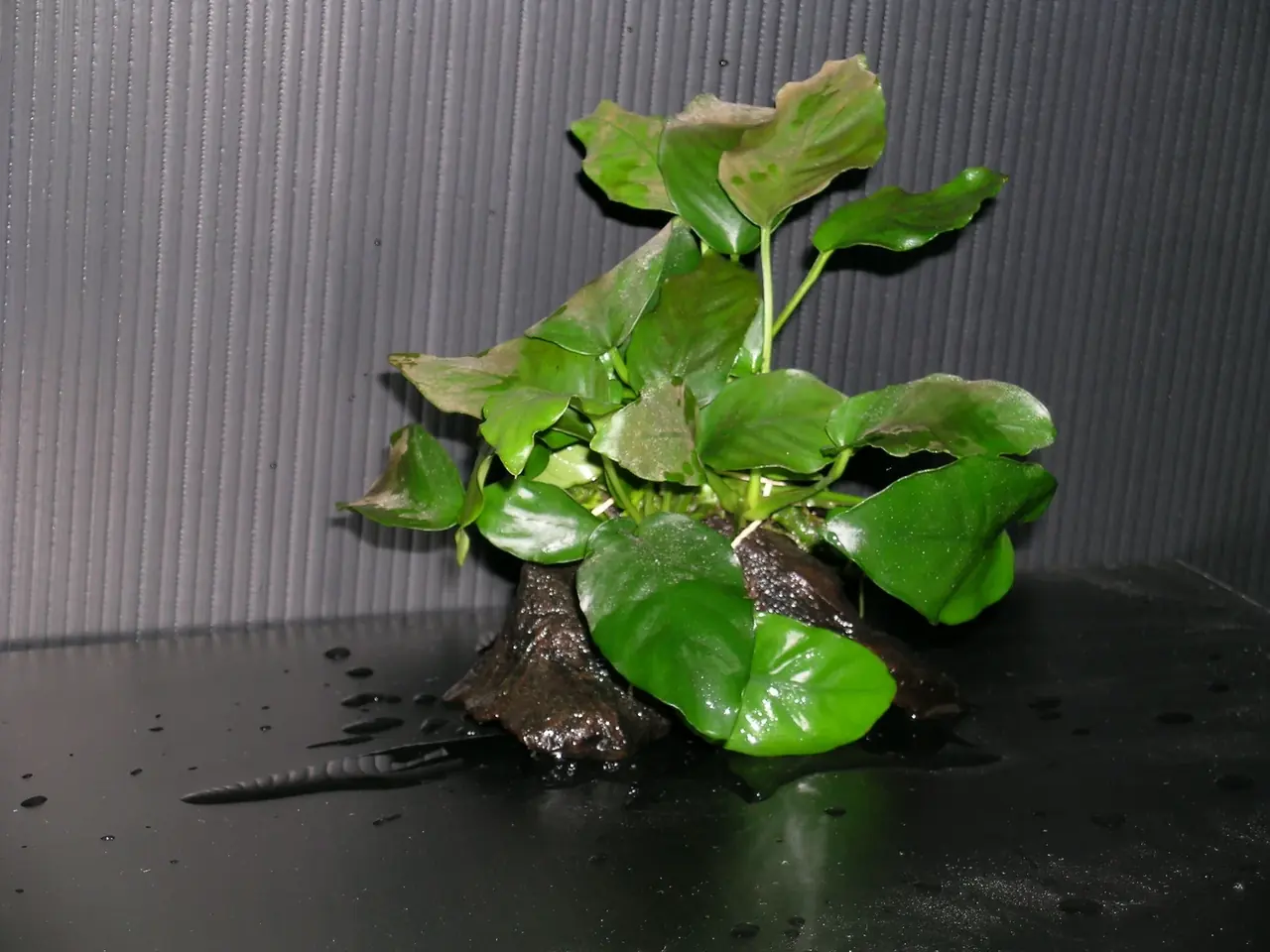
Cryptocorynes are slow growers that do well under almost any light and in almost any substrate, and they do not demand liquid fertilizer or CO2. Wendtii and lutea are both easy. They prefer to feed through their roots, so if your substrate is inert, push a root tab in beside them about every three months.
The Amazon sword is a large, bold centerpiece. A mature plant can reach about 12 to 20 inches tall, so give it a bigger tank, and feed it plenty of root tabs. Vallisneria is tall and grass-like and reaches the surface when it has root tabs and liquid fertilizer. It spreads by runners and, once settled, can share a tank with fish that dig or nibble. Dwarf sagittaria looks like a small vallisneria. It stays short in strong light and grows taller in dim light, spreads by runners, and makes a good carpet. If it appears where you do not want it, pull the extra shoots and replant them elsewhere.
Substrate plays a role here. See the aquarium substrate guide for which materials suit root feeders.
Stem plants and bulbs: bacopa, ludwigia and aponogeton
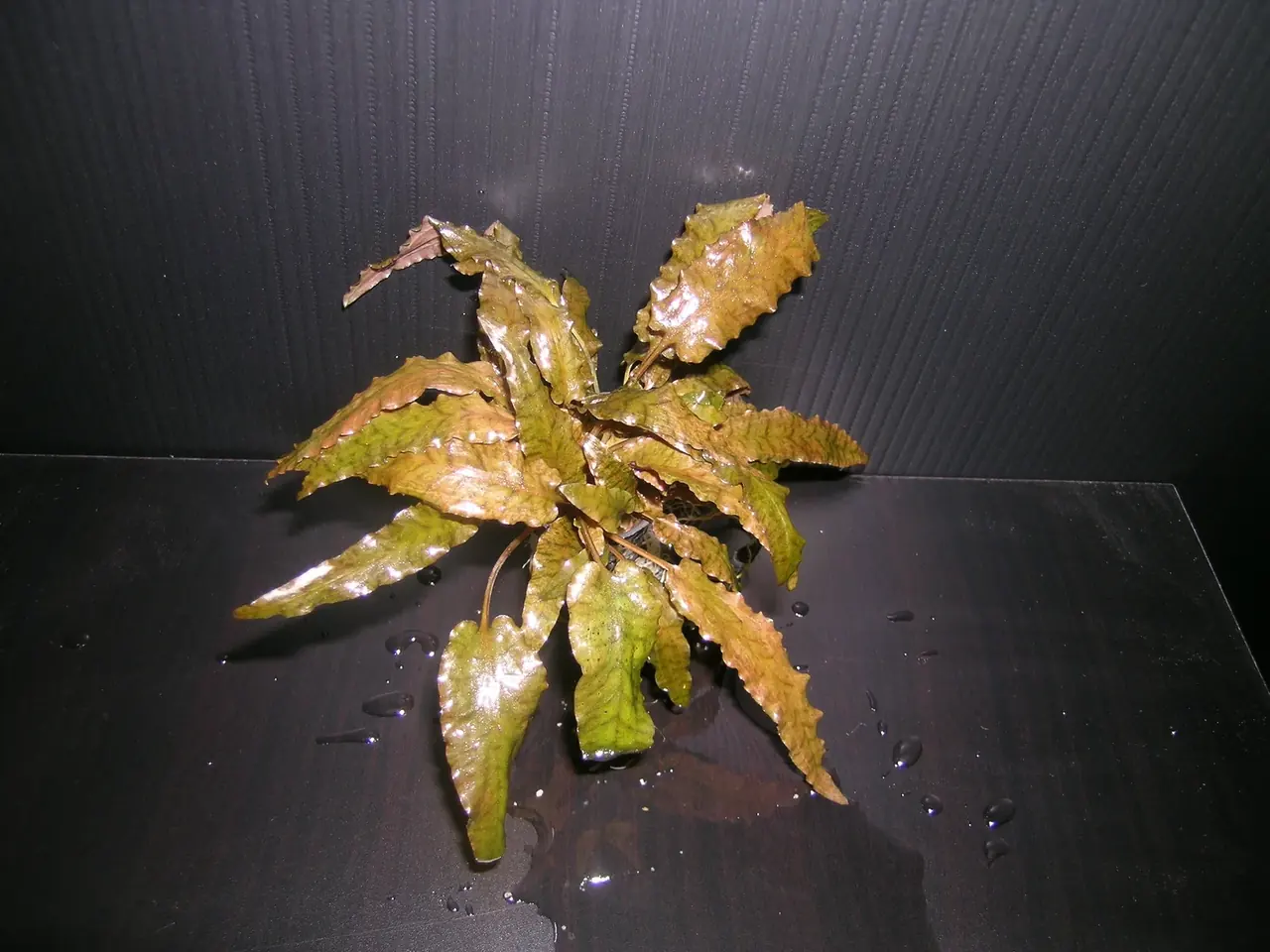
Bacopa is the easiest stem plant to start with. It grows in low light and turns copper-red tips under strong light. As it grows tall, the lower stem goes bare, so cut the top and replant it. Ludwigia adds red and orange and grows dense and upright, but it wants medium to high light and steady nutrients, so it is a step up. Aponogeton crispus grows from a bulb: place it on top of the substrate and it sprouts quickly, then may rest for a couple of months when its large leaves die back. Leave it in the tank and it comes back. The banana plant has a cluster of tubers that should rest on the substrate or sit no deeper than a quarter inch.
Floating plants and marimo moss balls
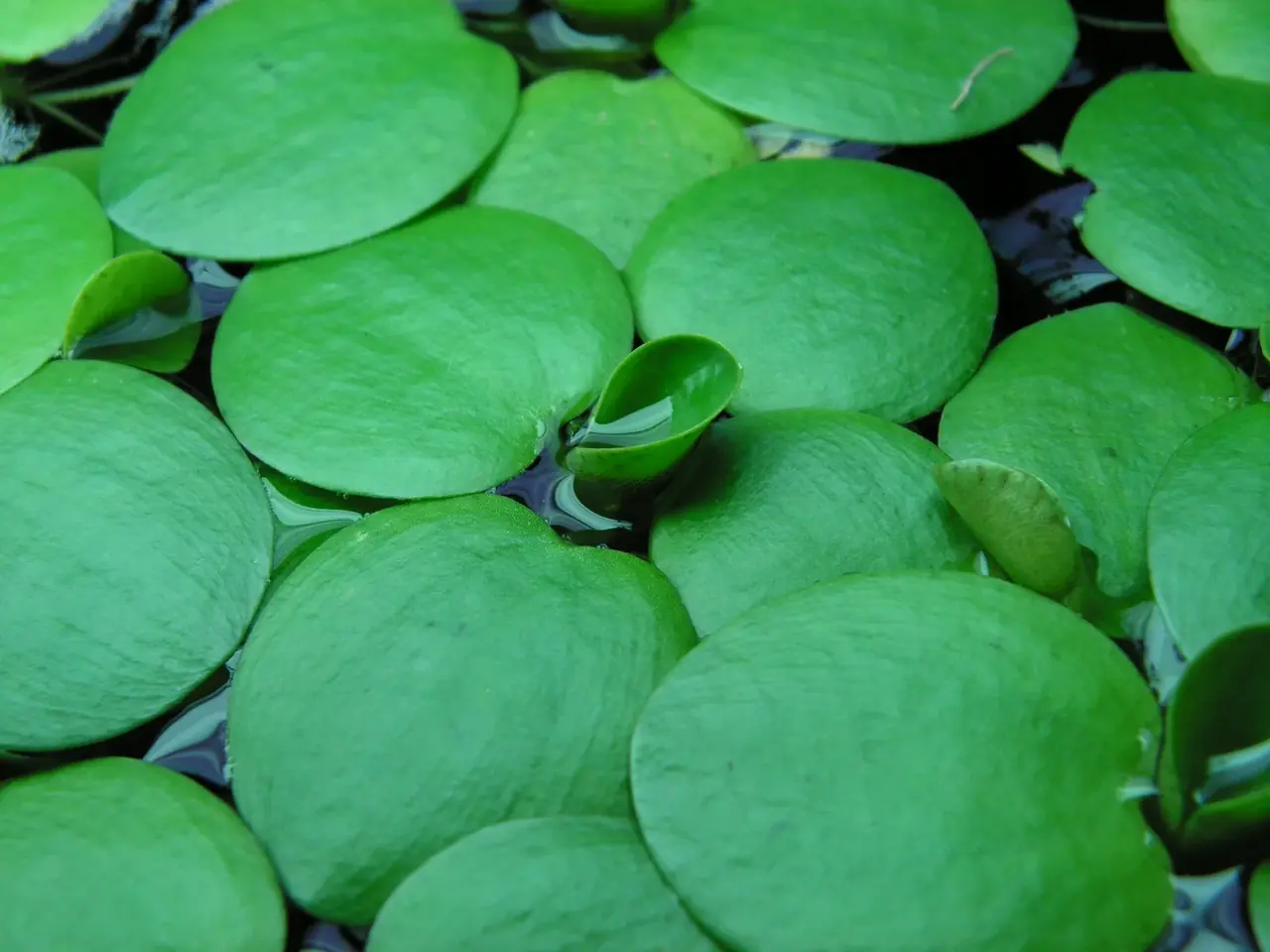
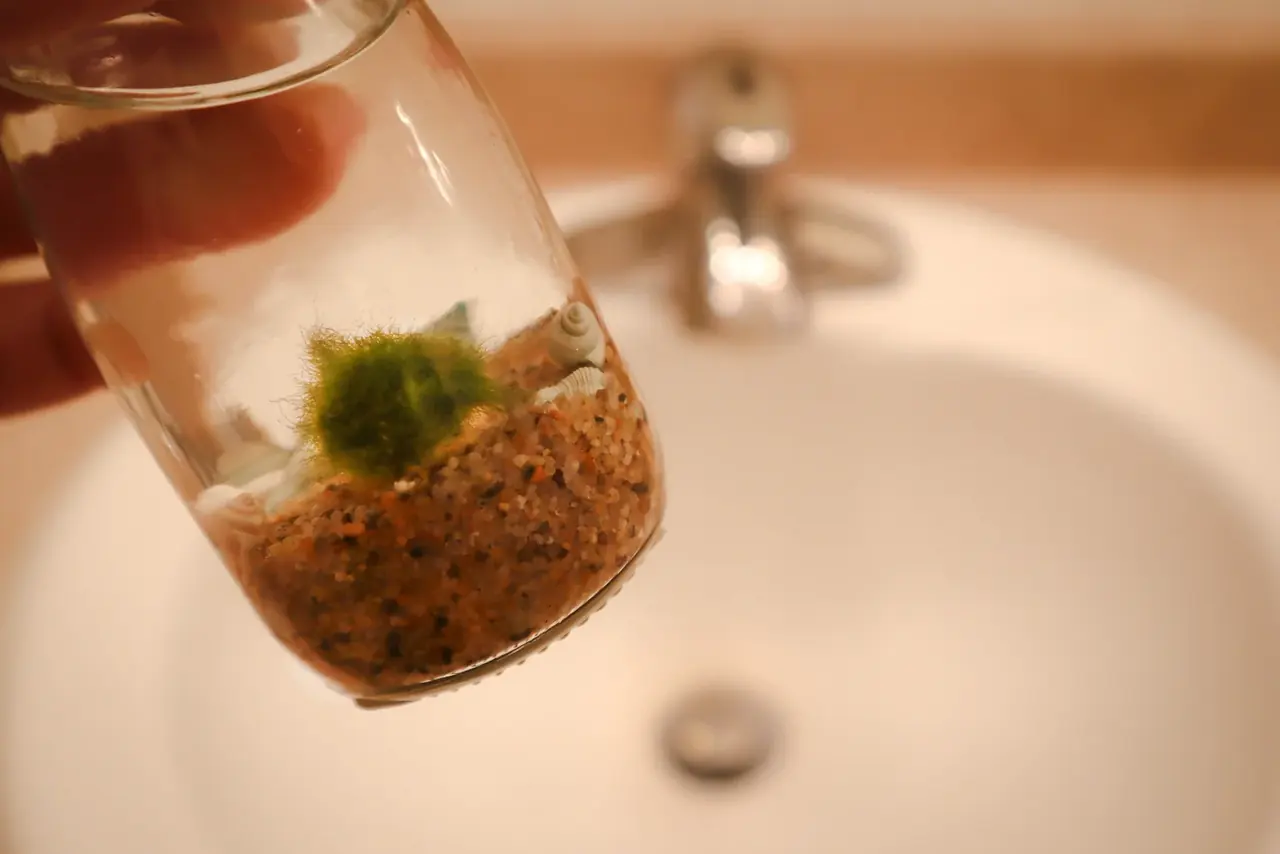
Floaters such as frogbit, water sprite and hornwort sit at the surface, with better access to light and to carbon dioxide from the air. They absorb nitrate quickly and need nothing planted. Marimo moss balls are not true moss or true plants but balls of algae. They need only low light and an occasional roll in your hands at water changes so they stay round and every side gets light.
How to plant each type
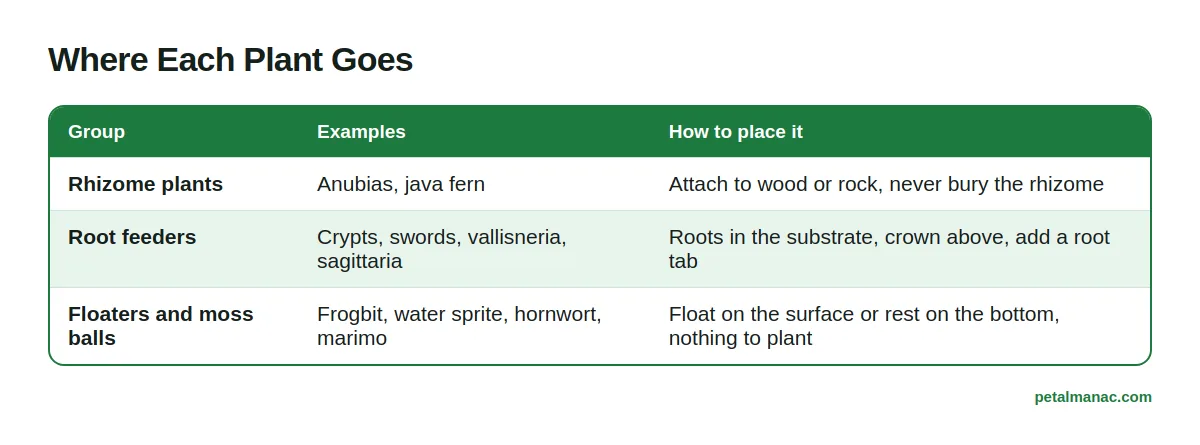
- Rhizome plants (anubias, java fern): wedge them between rocks, tie them with sewing thread, or glue them with gel super glue. Burying the rhizome can make it rot. Roots will grip on their own over time.
- Root feeders (crypts, swords, vallisneria): spread the roots and set them into the substrate, leaving the crown above the surface. Add a root tab nearby.
- Stem plants (bacopa, ludwigia): trim the bottom of the stems, push several into the substrate a few inches apart, and replant tops when they grow tall.
- Bulbs (aponogeton) and tubers (banana plant): rest them on the surface or cover with only a thin layer of substrate.
- Floaters: place them on the water. Keep surface agitation low enough that they are not constantly pushed into the filter flow.
- Mosses and marimo: tie moss onto wood or rock, and set marimo anywhere.
Lighting and fertilizer basics for a low-tech tank
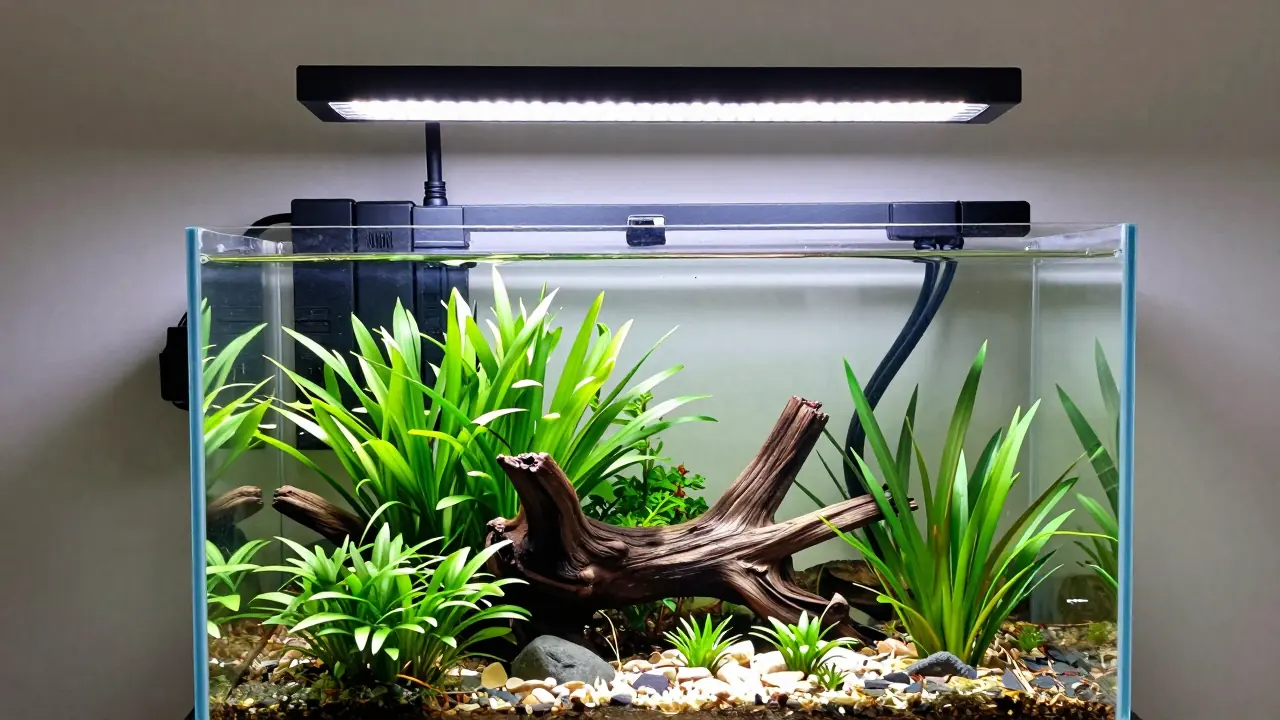
For aquarium lighting for plants, choose an LED sold for planted or freshwater tanks and match the plants to the strength rather than the other way around. Low-light species such as anubias, crypts and ferns are the safest start. Medium-light plants can work for beginners, but they can struggle if you need to dim the light to stop algae. If algae appears, the lights are one of the first things to check, and our guides to brown algae and black beard algae explain what each type means.
Fertilizer follows the same rule. Slow-growing, low-demand plants usually do well with an all-in-one liquid fertilizer once or twice a week, plus root tabs for the root feeders. Fast stem plants in a dense tank use much more, in some cases daily dosing. Always read the label on whatever you buy and start at the low end.
Aquarium lights are electrical equipment near water. Use UL-listed fixtures and plug them into a power strip mounted above the water level. Make a drip loop in each cord so water runs off before it reaches the outlet, and unplug everything before putting your hands in the tank.
Common beginner mistakes
- Burying rhizomes. Anubias and java fern rot when the thick stem is covered. Attach them to hardscape instead.
- Throwing out melting crypts. New cryptocorynes often drop old leaves when they move to a new tank. Leave the plant in the substrate and it will rebound with new growth once it adjusts.
- Removing swords after leaf loss. Plants grown out of water have broad leaves that melt back as the plant grows narrower underwater leaves. If the new leaves yellow, add more root tabs.
- Ignoring water chemistry. High pH (above 7.8) and very hard water reduce the CO2 available to plants, while very soft water with a pH below 6.5 can lead to deficiencies. Easy low-light plants cope better with the first problem.
- Planting what the fish will eat. Goldfish and some cichlids eat soft plants. Anubias and java fern are tougher, and vallisneria can work once established.
Frequently asked questions
What is the easiest aquarium plant to grow?
Marimo moss balls need almost nothing, followed by java moss, java fern and anubias. They all adapt to low light and basic water.
Do I need CO2 for these plants?
No. Every plant on the list grows without CO2 injection when you keep the lighting modest.
What are the best live plants for a 10-gallon tank?
Choose smaller, slow plants: anubias, java fern, java moss, dwarf sagittaria and small crypts. A mature Amazon sword can reach 12 to 20 inches tall and belongs in a larger tank.
Can I grow plants without special substrate?
Yes. Rhizome plants and mosses grow on wood and rock, and root feeders do well in plain gravel or sand with root tabs.
Why are my new plant’s leaves dying?
Plants grown out of water often lose their old leaves as they shift to underwater growth. Give them time before replacing.

The Pet Almanac editorial team researches, writes and edits every care guide on the site. Each guide is fact-checked before publishing and reviewed again when care guidance or equipment changes.