Skipping the cycle is the most common reason a brand-new aquarium turns deadly within the first few weeks. Learning how to cycle a fish tank takes some patience, but the method is simple: feed a source of ammonia, measure the water as bacteria colonize your filter, and add fish only when the numbers say the tank can handle their waste.
What the Nitrogen Cycle Does
Every aquarium has a nitrogen cycle, whether you start it on purpose or not. Fish waste, leftover food and decaying plants release ammonia, which is toxic to fish. One group of bacteria converts ammonia to nitrite, which is also harmful. A second group converts nitrite to nitrate, which is far less dangerous at normal levels. Nitrate is then removed by water changes or absorbed by plants.
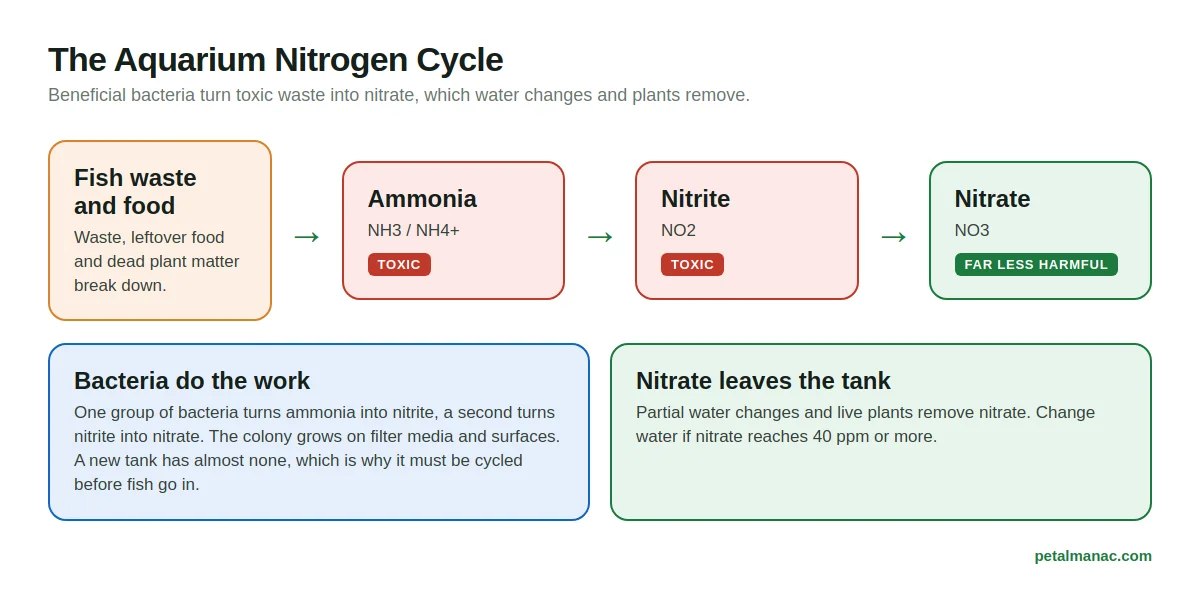
The bacteria live on surfaces, mostly inside your filter media. A new tank has almost none, so ammonia has nowhere to go. That spike is what hobbyists call new tank syndrome: fish added to a tank with no bacterial colony are exposed to ammonia and then nitrite, and they suffer or die. Cycling builds the colony first.
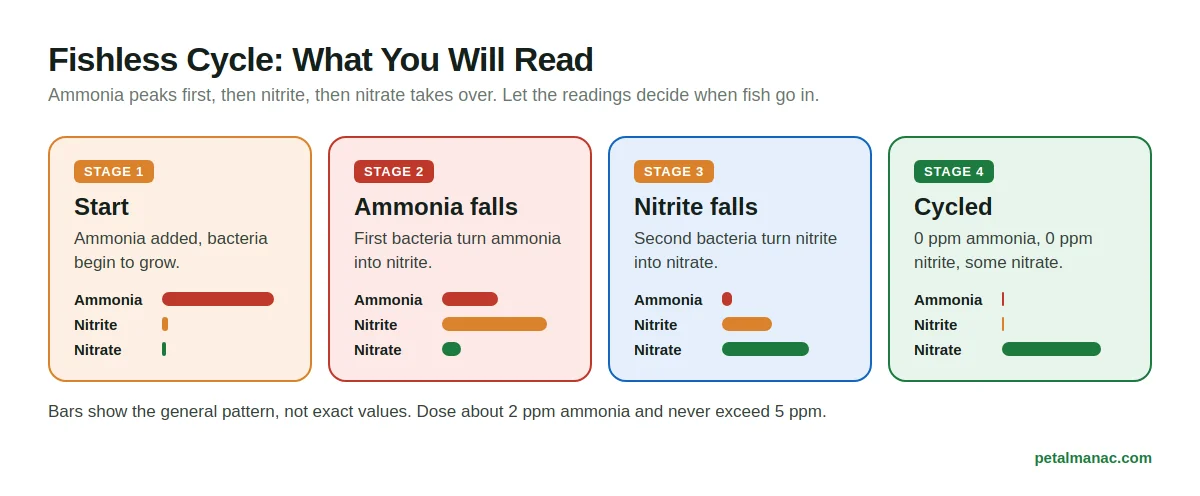
| Stage | What is happening | What you will read |
|---|---|---|
| 1. Start | Ammonia is added, bacteria begin to grow | Ammonia present, no nitrite |
| 2. Ammonia converters establish | First bacteria turn ammonia into nitrite | Ammonia falling, nitrite rising |
| 3. Nitrite converters establish | Second bacteria turn nitrite into nitrate | Nitrite falling, nitrate rising |
| 4. Cycled | Both groups can process a full dose of ammonia | 0 ppm ammonia, 0 ppm nitrite, some nitrate |
Do Fish Tanks Need to Be Cycled?
Yes. Every filtered aquarium depends on the same bacteria, and a tank without them cannot process the ammonia fish produce. The only real choice is whether the bacteria grow before the fish arrive (a fishless cycle) or while they are in the tank (a fish-in cycle, which is harder on the animals).
How Long to Cycle a Fish Tank
Most tanks take about 2 to 6 weeks to cycle, and if you read the water daily a tidy fishless cycle can finish in around three weeks. Some tanks, especially planted ones or those started without bacteria help, take two months or more. The range is wide because temperature, the starting bacteria supply and the amount of ammonia all vary. Do not set a calendar date and add fish when it arrives. Let the readings decide.
How to Cycle a Fish Tank Without Fish
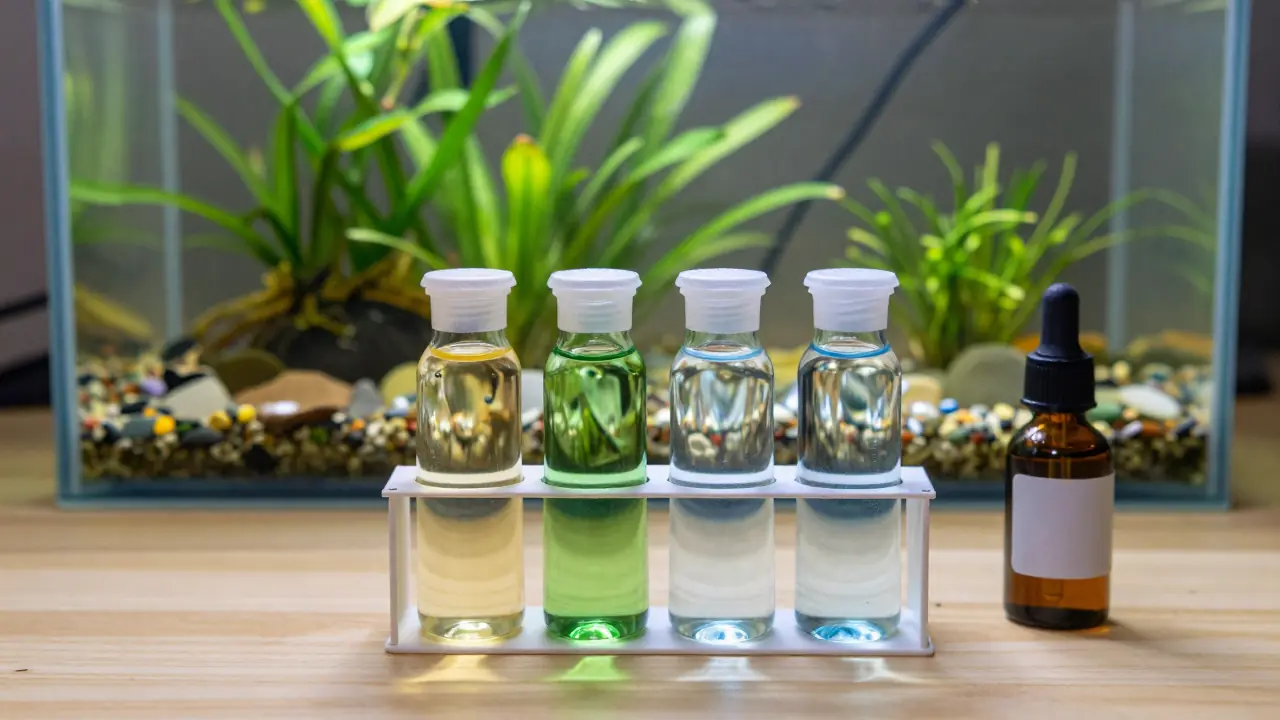
A fishless cycle is the better method because no animal is exposed to ammonia. You need a water-parameter kit that reads ammonia, nitrite and nitrate, a water conditioner, and a bottle of ammonium chloride.
- Set up the tank completely. Install the filter, heater, substrate and decor. Fill with dechlorinated water and run the equipment.
- Turn off UV sterilizers. Switch them off during the initial cycle.
- Add ammonium chloride. Follow the label on your bottle. A widely used ammonium chloride product directs 4 drops per gallon for about 2 ppm of ammonia. For a 10-gallon tank that is 40 drops. Do not exceed 5 ppm.
- Add live nitrifying bacteria. Use a bottled live bacteria product. Used filter media from an established tank is another source.
- Measure ammonia, nitrite and nitrate every few days. Daily readings let you see the pattern faster, and every 3 to 4 days is a workable minimum. Write each reading down so you can see the trend. Cloudy water during the cycle is usually a harmless bacterial bloom that clears on its own.
- Re-dose when ammonia drops. When the ammonia has been processed, add another dose and keep going.
- Watch nitrate. If it reaches 40 ppm or more, do a water change.
- Confirm the finish. When a full dose of ammonia disappears and nitrite also reads 0 ppm with some nitrate present, the tank is cycled.
- Do a water change and add fish gradually. Adding many fish at once can overwhelm the bacteria, so add a few at a time over the following weeks and months.
Keep the water around 78°F during the cycle, since bacteria grow faster in warm water. Some keepers leave the tank unlit during a fishless cycle, which also keeps algae from getting a start.
Using a decaying shrimp as the ammonia source
If you do not have ammonium chloride, a single large raw shrimp from a seafood counter can stand in. Drop it in the tank, leave it for about 72 hours as it breaks down and releases ammonia, then remove and discard it. The water may turn cloudy, which is normal. Afterward the kit should read at least 1 ppm ammonia. This method is smellier and harder to control than a measured dose, so ammonium chloride is the better option. Years ago hobbyists used a sacrificial fish for the same job, which is a poor plan because ammonia burns a fish’s gills.
Handle ammonium chloride like any household chemical. Wear gloves, keep the bottle capped and out of reach of children and pets, wash your hands after handling it, and never mix it with other cleaning products. Follow the label directions exactly.
How to Speed Up the Cycle
You cannot rush biology, but you can give it a head start. Each of these adds bacteria or removes nitrogen while the colony grows:
- Bottled live nitrifying bacteria. Adds a starter colony directly.
- Used filter media. A sponge or media from a healthy, established tank carries bacteria already.
- Live plants. They take up ammonia and nitrate while the bacteria catch up.
Keep the filter running around the clock, since the bacteria need oxygen and flowing water. If the power goes out, restart the filter as soon as you can and read the water before you trust it.
Never rinse new filter media in tap water. Chlorine can kill the colony you are building. Use old tank water or dechlorinated water.
Cycling a Planted Tank
Live plants take up ammonia, which can mask what the bacteria are doing, so a planted tank needs a little more care. The cleanest route is to cycle the tank without plants or fish first. Cycling with plants but no fish is the next-best option, and cycling with both plants and fish comes last.
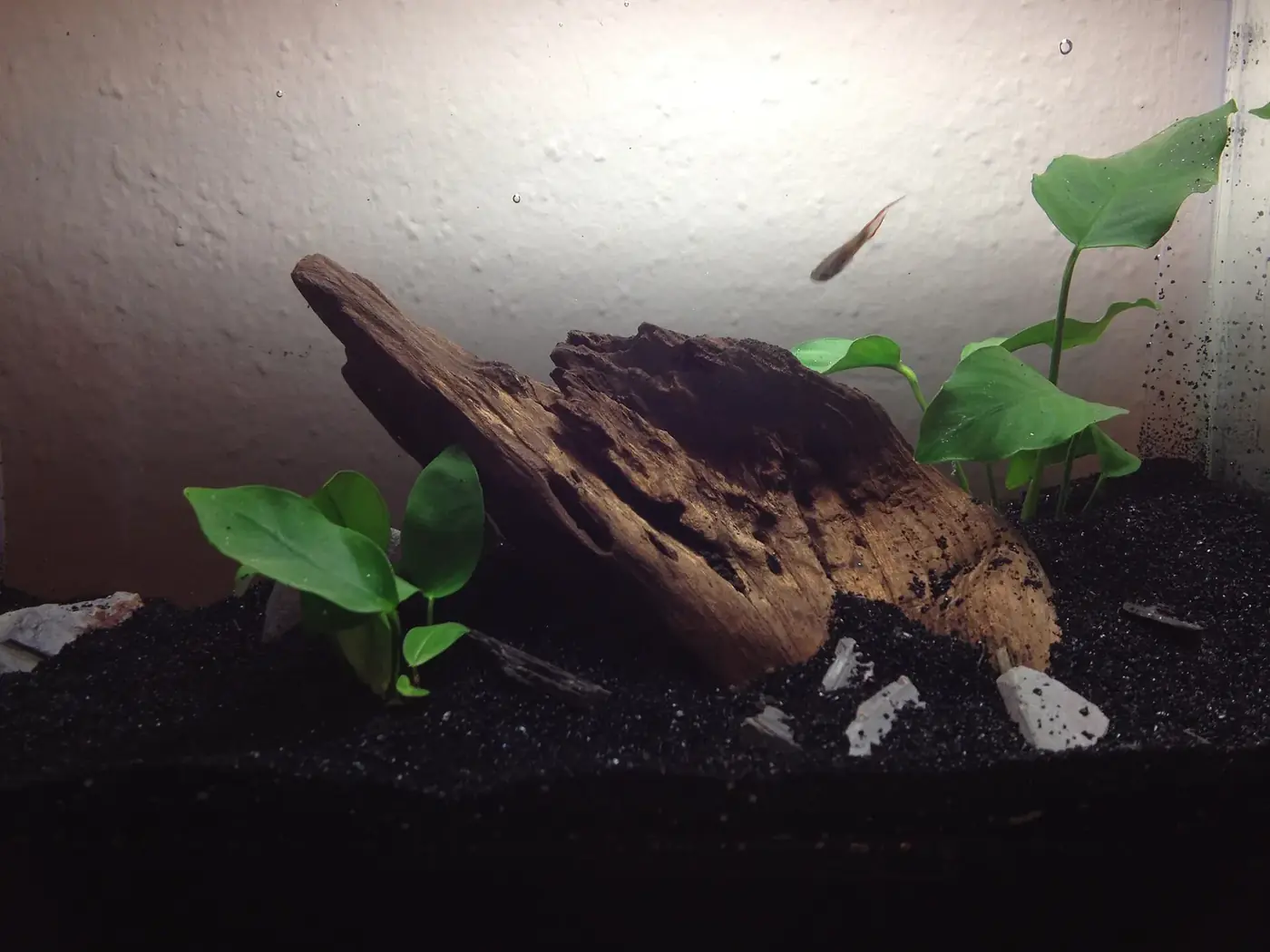
- Newly planted stems often melt back and do not absorb much ammonia at first. Plants can take weeks or months to settle in and put out new growth, usually around 6 to 10 weeks.
- Plants only absorb ammonia while the lights are on, so ammonia is often highest first thing in the morning.
- A planted-only cycle can take anywhere from 2 to 20 weeks depending on light, CO2, plant choice and substrate, and algae sometimes force a restart.
- A practical finish line: new growth appears and a dose of ammonia falls below 0.25 ppm within 24 hours. Then stop adding ammonia, do a large water change (around 95%) and add fish.
- If plants and fish go in together, treat it as a fish-in cycle: feed lightly for about two months and read the water a few hours after the lights come on.
Cycling With Fish Already in the Tank
If fish are already in the tank, you are doing a fish-in cycle, and your job is to protect them while the bacteria grow.
- Feed lightly, and remove uneaten food.
- Measure ammonia and nitrite often, at least once a day if you can.
- Make a partial water change (around 30%) whenever ammonia or nitrite shows up on the kit. Fish waste typically pushes ammonia up to roughly 0.5 to 1 ppm during this phase.
- Add fish in small batches, since fewer fish means less ammonia for the young colony to handle.
- Add a bottled bacteria product and, if you can get it, used media from an established tank.
- Do not add more fish until readings stay at 0 ppm ammonia and 0 ppm nitrite.
If fish look distressed, gasp at the surface or show signs of illness, contact an aquatic veterinarian.
How Do I Know My Tank Is Cycled?
A tank is cycled when it reads 0 ppm ammonia and 0 ppm nitrite, with nitrate present (commonly 5 to 20 ppm, and below 20 ppm is a good target), even after you add a full dose of ammonia. In a fish-in cycle the equivalent is ammonia and nitrite staying at 0 ppm while nitrate slowly climbs. A water-parameter kit gives you a snapshot, so the pattern across several readings matters more than any single one. Early on you expect ammonia to be the main reading. Later, nitrite should climb and then fall, and nitrate should become the dominant number. If nitrite lingers for a long time, be patient and keep the filter running instead of changing everything. Keep the kit’s bottles and instructions fresh, and follow the color chart under good light.
When Not to Add Fish Yet
Once the tank is stable, the species you choose matters. Our betta fish care guide covers a setup that suits a single betta, and the black beard algae guide explains an algae problem that often appears in young, unstable tanks.
FAQs
What is new tank syndrome?
It describes the ammonia and nitrite spikes that harm fish in a tank where the bacterial colony has not yet formed. Cycling before adding fish prevents it.
Can I cycle a tank with fish in it?
Yes, but it is harder on the fish. Feed lightly, measure often, and change part of the water whenever ammonia or nitrite appears.
Do I need to cycle a small tank?
Yes. Every filtered aquarium relies on the same bacteria, and small volumes let ammonia climb quickly.
How do I know the cycle is done?
You read 0 ppm ammonia, 0 ppm nitrite and some nitrate after a full dose of ammonia.
What is the quickest way to cycle an aquarium?
Add live nitrifying bacteria and used filter media from an established tank, keep the water warm, dose ammonia and keep the filter running all day. This shortens the wait, but there is no dependable 24-hour cycle. Keep reading the water until ammonia and nitrite both stay at 0 ppm.
How long does it take to properly cycle a fish tank?
Usually about 2 to 6 weeks, and sometimes longer. Planted tanks started without fish can take much longer.
Why is my new tank cloudy?
Cloudiness during a cycle is commonly a bacterial bloom. Check ammonia and nitrite, and change part of the water if either is high.
Patience here pays off for years: a cycled tank forgives small mistakes that would otherwise cost you fish.

The Pet Almanac editorial team researches, writes and edits every care guide on the site. Each guide is fact-checked before publishing and reviewed again when care guidance or equipment changes.