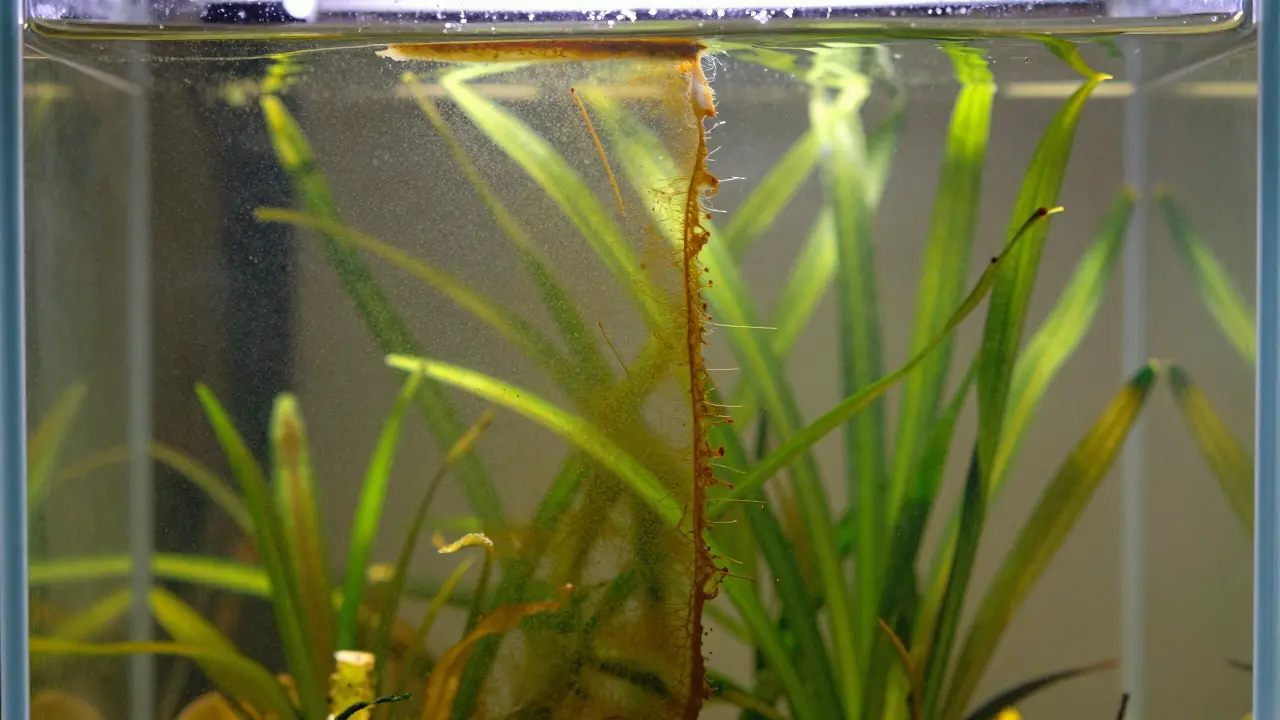
Brown algae in a fish tank is almost always diatoms, a soft brown dust that coats glass, leaves, rocks and decor. It is common in new tanks, harmless to fish and usually fades on its own as the tank matures. Wipe it away, keep the light and feeding in check, and it generally does not return.
If the water itself looks hazy rather than the surfaces, see our guide to cloudy aquarium water.
What is brown algae?
Diatoms are single-celled algae that build their cell walls from silica. They form a brown or rust-colored film that wipes off easily with a finger. That powdery, loose texture is the quickest way to tell it apart from other algae. Stringy dark tufts on plants and decor are a different problem; see our guide to black beard algae.
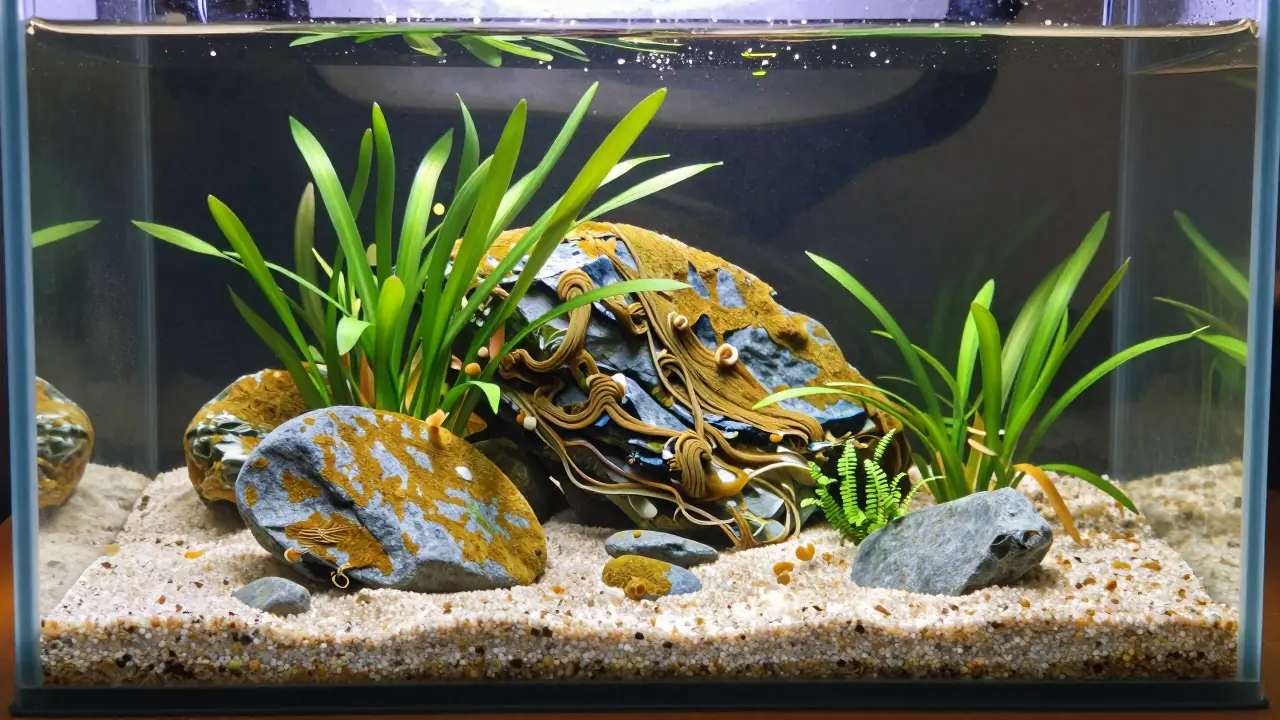
It helps to know what you are looking at before you clean. Diatoms smear when touched, and they cling to flat surfaces first: the glass, broad plant leaves, and the substrate near the front of the tank. They often spread in a thin layer, then thicken into patches. If the growth feels hairy, forms tufts, or does not wipe off, you are probably dealing with another type.
What causes brown algae in a fish tank?
Diatoms feed on nitrates and phosphates, and they use silica. Several conditions give them an edge:
- A tank that is still maturing. Diatoms typically show up shortly after setup, while the tank is still cycling.
- Silica in the water. Tap water and well water often carry it.
- Few plants. With nothing competing for nutrients, diatoms use them up, especially when nitrogen levels are high.
- Too much light or overfeeding. Long lighting periods and uneaten food add fuel.
Use a liquid water-parameter kit to read nitrate and check your tap water for silica if you can, since that tells you where to focus.
Brown algae in a new tank
Brown algae in a new tank is normal. It tends to appear within the first month, often after about one to three weeks, while the filter bacteria and plants are still getting established. Growth declines as the tank matures. This is not a sign that the water is bad, and it is not a reason to tear the tank down. If you have not yet cycled your tank, read how to cycle a fish tank first.
Is brown algae harmful to fish?
Diatoms are harmless to fish, shrimp and snails, and some of these animals eat them. The risk is to plants: if left unchecked, a film on the leaves blocks light. A heavy coating can also make the tank look neglected, which is mostly a cosmetic problem. If a fish looks unwell, contact an aquatic veterinarian rather than blaming the algae.
How to remove brown algae
Cleaning is quick, but it only treats the surface. Expect a thin film to return within days if the underlying conditions stay the same, so use the removal steps below together with the prevention list after them.
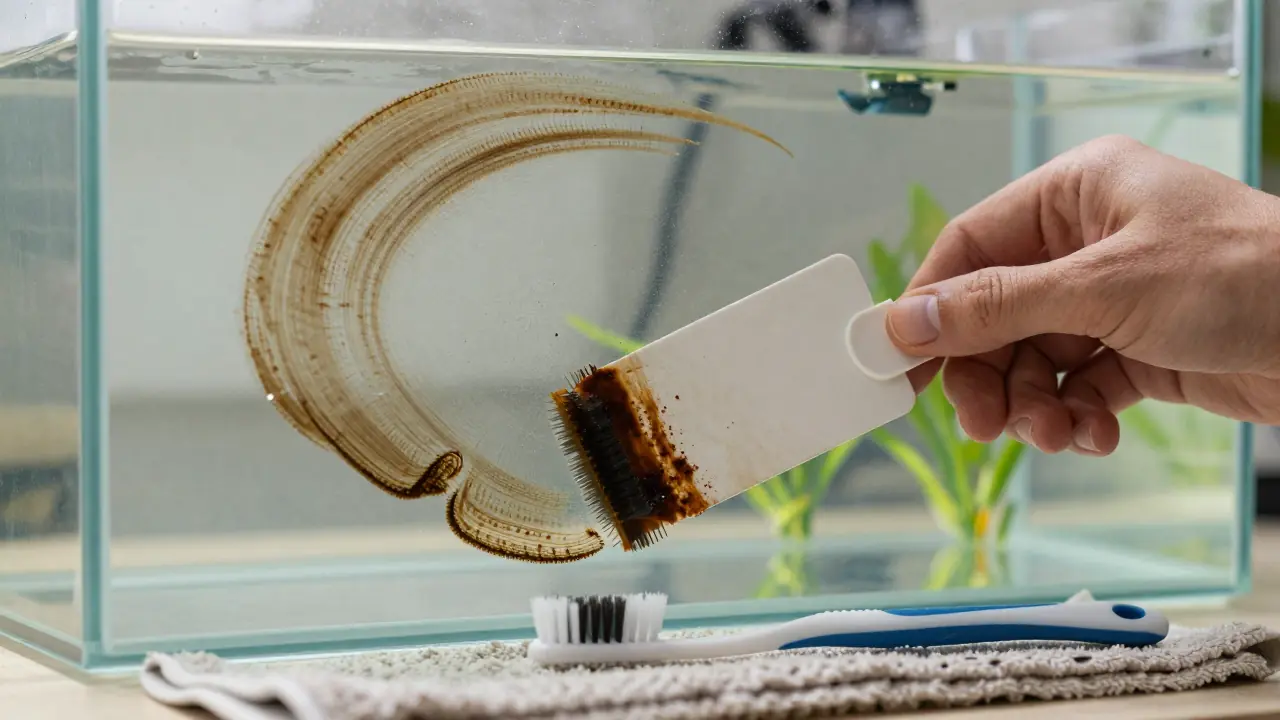
- Glass. Scrape with an extended scraper or an old gift card. Acrylic needs a soft, acrylic-safe tool.
- Leaves. Rub gently by hand or use a soft toothbrush.
- Rocks and decor. A toothbrush, or a wire brush for hard rock that is not in use for plants.
- Loose debris. Pull it out with a gravel vacuum or siphon during a water change. The full routine is in our guide on how to clean a fish tank.
Remove as much as you can in one session. Wiped-off algae that floats loose is easy to siphon out during the same water change.
How to stop it coming back
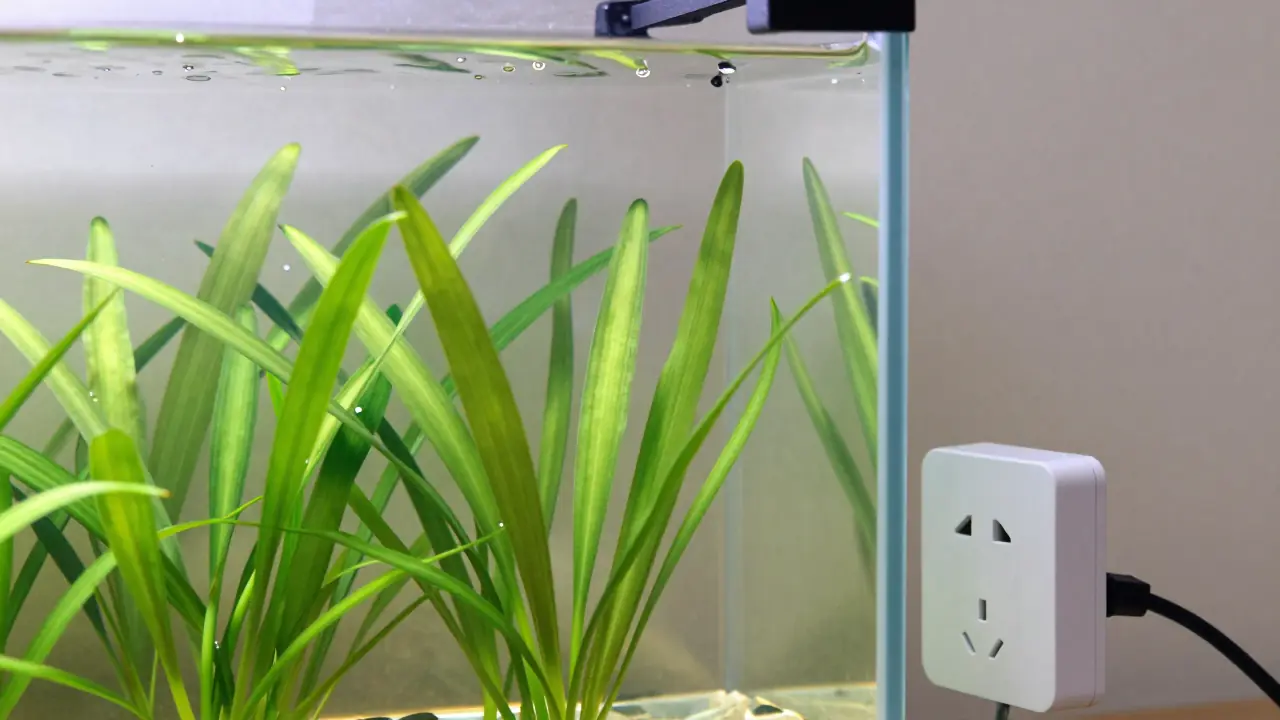
- Add plants. They compete with diatoms for nutrients. Plants need light for at least 6 to 8 hours.
- Keep up with water changes. Weekly changes lower nitrates.
- Consider reverse osmosis water. Mixing it with conditioned tap water can lower nitrate and silica.
- Feed less. Give fish only what they finish and remove uneaten food.
- Increase water flow. Stronger flow limits buildup on surfaces.
- Control the lights. Run them no more than 8 hours and no less than 6.
Why diatoms bloom in some tanks and not others
Two tanks set up the same week can behave very differently. The one with tap water high in silica, a bright light on a long timer and a light fish load is the one that browns first. A tank with fast-growing plants rarely does, because the plants take up nutrients before the diatoms can.
That is why the fix is rarely a single action. Think of three levers: what goes in (food and source water), what uses it up (plants and filter bacteria), and what drives growth (light). Moving all three in the right direction clears the film, and it tends to stay gone. Cleaning alone only resets the clock.
Planted tanks deserve one extra note. A brown film on leaves blocks light from reaching the plant, so wipe it off gently during maintenance. Do not rip leaves that are otherwise healthy, and trim only what is badly covered.
A simple weekly routine
- Wipe the glass and any leaves that show a film.
- Vacuum the substrate and change part of the water.
- Read nitrate with a liquid kit and adjust feeding if it is climbing.
- Confirm the light timer is running for the intended 6 to 8 hours.
- Remove any uneaten food after feeding.
Keep that routine going for a few weeks and watch the trend rather than any single day.
What eats brown algae?
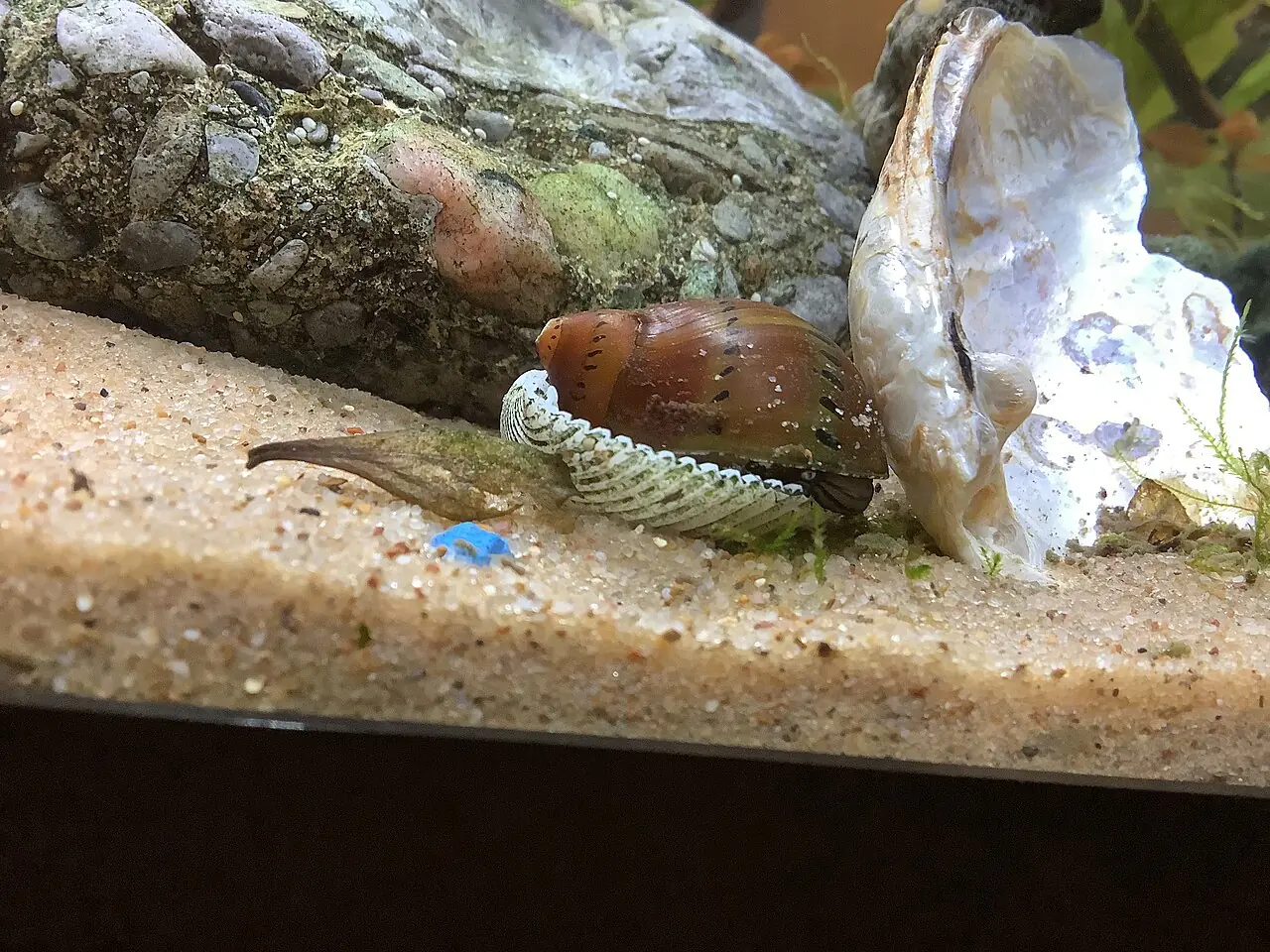
Bristlenose plecos, otocinclus catfish, nerite snails, pest snails, hillstream loaches and amano shrimp all graze on it. Loaches, corydoras and nerite snails also help clean up leftover food and debris. Choose only species that suit your tank size and water, because a cleanup crew is not a substitute for fixing the cause.
How long does brown algae last?
There is no fixed number of days, because it depends on what is feeding it. Be patient and consistent, and judge progress over weeks, not hours.
In a new tank it tends to fade over a few weeks as plants and bacteria settle in. In an established tank, it lingers as long as the cause does, so cutting light and feeding and adding plants speeds things up. If it keeps coming back, check silica in your source water.
FAQ
How do I get rid of brown algae in my fish tank?
Wipe or scrape it off, siphon the debris, cut lighting to 6 to 8 hours, feed less and add plants.
Is brown algae toxic to fish?
No. Diatoms are harmless to fish, shrimp and snails.
How long does it take for brown algae to go away?
In a new tank, it typically fades as the tank matures, over a few weeks.
What will eat brown algae in an aquarium?
Bristlenose plecos, otocinclus, nerite snails, hillstream loaches and amano shrimp.
Is brown algae a sign of a bad tank?
Usually not. It is common in new setups and a signal to check light, feeding and silica.

The Pet Almanac editorial team researches, writes and edits every care guide on the site. Each guide is fact-checked before publishing and reviewed again when care guidance or equipment changes.