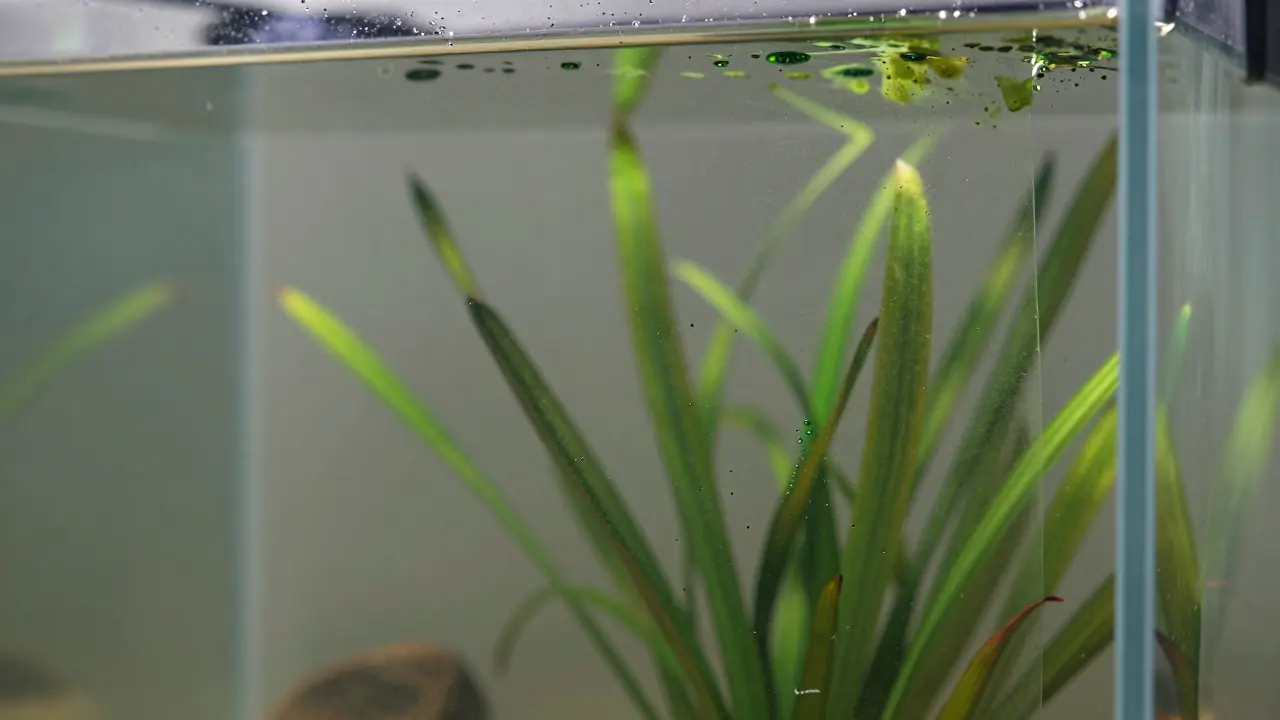
You get rid of algae in a fish tank by doing three things together: remove what is already there by hand, cut the light to a steady schedule, and reduce the excess nutrients that feed it. Algae eaters and chemicals can help, but neither works for long if light and waste stay out of balance.
A little algae is normal. Every tank grows some, and a thin film is not a failure. The goal is to keep it from taking over the glass, the plants and the water.
Identify the algae first
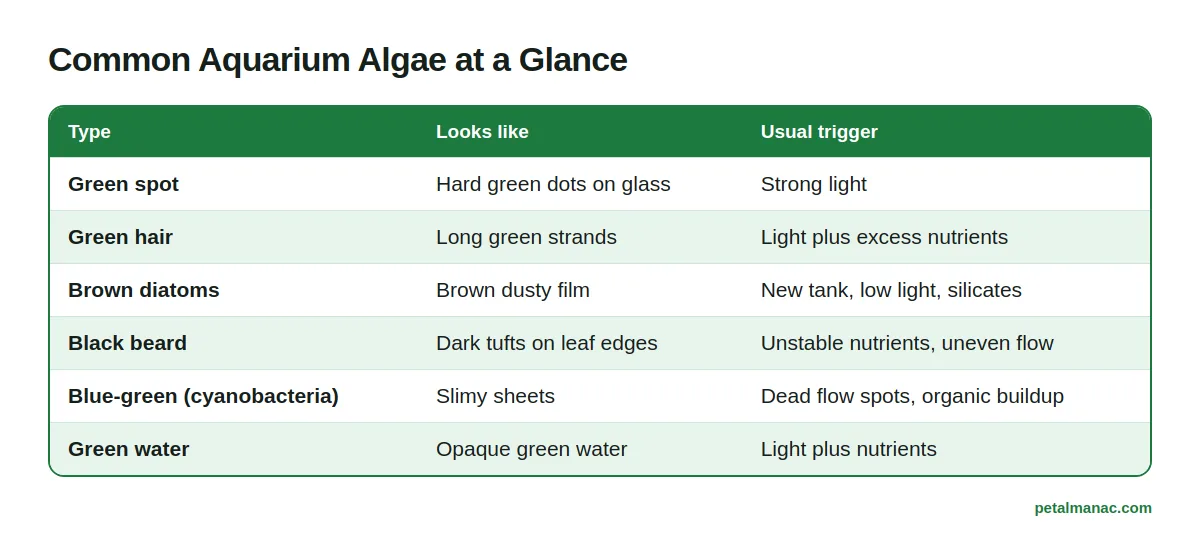
Different algae have different causes, so naming the type tells you what to change. Use the table, then read on for the general fixes.
| Type | What it looks like | Usual trigger | Where to start |
|---|---|---|---|
| Green spot | Hard, small green dots on glass and slow-growing leaves | Strong light | Scrape with a blade or scrubber, trim old leaves |
| Green hair (thread) | Long green strands on plants and decor | Too much light, excess nutrients | Twist out with a toothbrush, cut light hours |
| Brown diatoms | Brown dusty film on glass, decor and substrate | New tanks, low light, silicates | Wipe or siphon. See brown algae in a fish tank |
| Black beard | Dark tufts on leaf edges and hardscape | Unstable nutrients, uneven flow | See black beard algae |
| Blue-green (cyanobacteria) | Slimy, smelly sheets, often in dead flow spots | Poor circulation, organic buildup | Siphon it out, raise flow, remove waste |
| Green water | Water turns green and opaque | Light plus nutrients | See green water in a fish tank |
Blue-green “algae” is actually a bacteria, and it grows where water barely moves: behind big rocks, in thick plant clumps or on the substrate under slow flow. It looks like slime, not fuzz.
Step 1: Remove algae by hand
Start with the fastest wins. Manual removal does not fix the cause, but it takes algae out of the tank and cuts the spores and nutrients tied up in it.
- Glass: a melamine-style scrubber pad is gentle on glass and acrylic. A blade scraper handles green spot on glass. Never use a metal blade on acrylic.
- Hair algae: twist it around a clean toothbrush until it winds up like spaghetti on a fork, and pull it out.
- Substrate and diatoms: siphon the loose film during a water change.
- Decor: pull heavily coated pieces, scrub them under hot tap water with no soap, and put them back.
- Dying leaves: trim dead or algae-covered leaves during water changes.
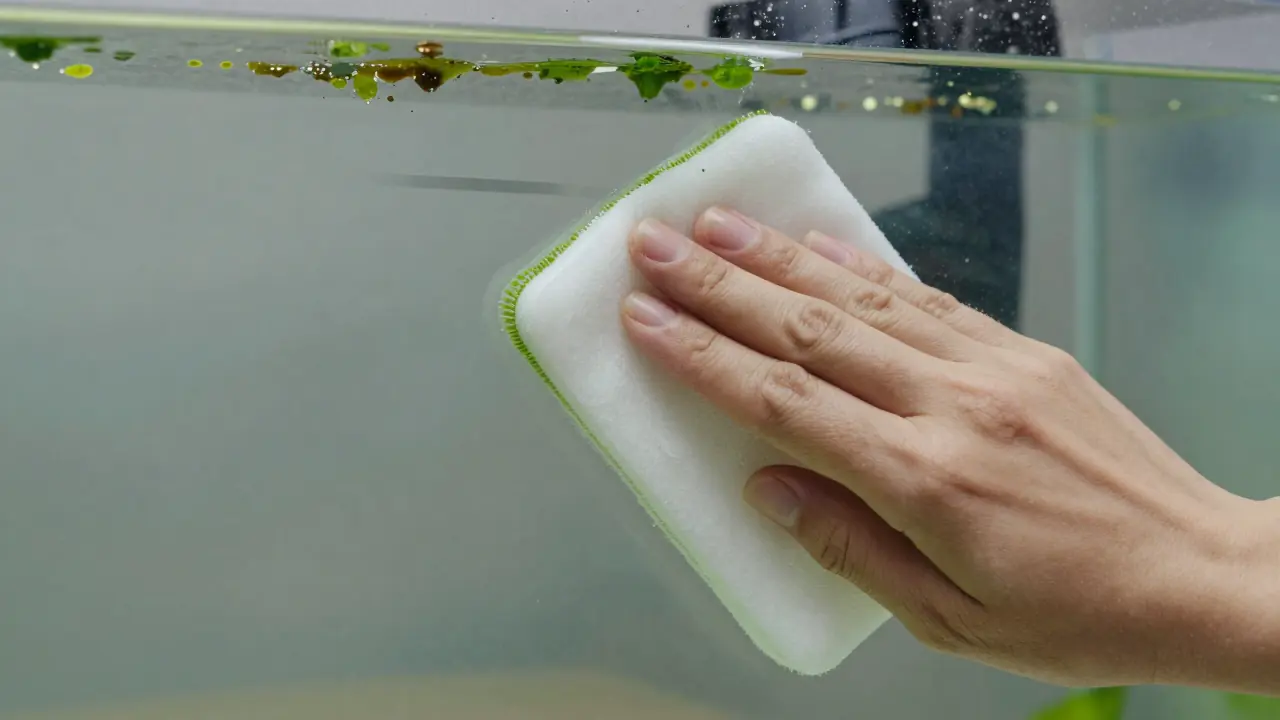
Do all of this during a normal water change, as in how to clean a fish tank, so that dislodged algae gets siphoned out instead of floating around.
Step 2: Fix the light
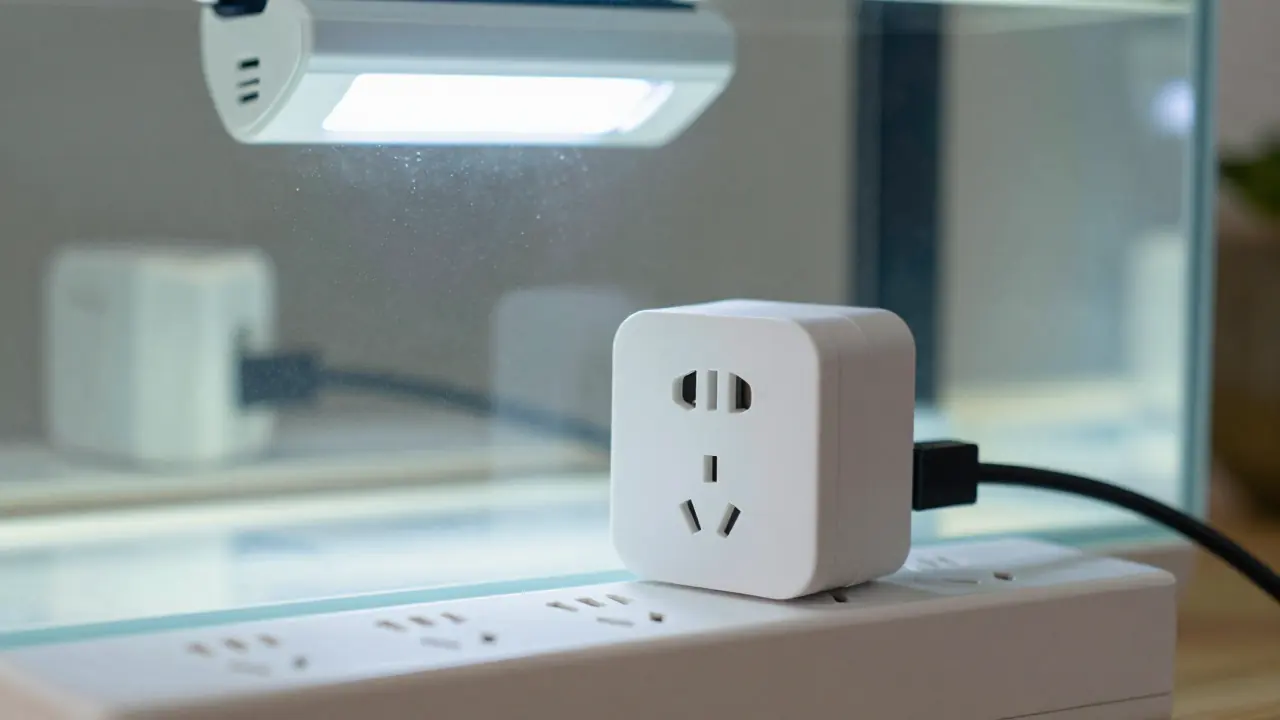
Light is the first lever to pull. As a starting point, run lights about 6 to 8 hours a day, on a timer. Lights that sometimes stay on for a dozen or more hours a day invite algae. If your lights have run long, shortening them to about 9 hours with a timer is a reasonable first step. A planted tank can go a bit higher if plants and nutrients are balanced.
- Check sunlight. A few hours of daylight on one end of the tank can grow algae there, and the problem often appears when the season changes. Shade the glass or move the tank.
- Replace old bulbs. Fluorescent bulbs are often changed about once a year, and VHO lamps at least twice a year. Old tubes shift in color and can favor algae. Many algae seem to like blue light.
- Use a timer. A plug-in timer takes the guesswork out and holds the schedule steady.
Step 3: Balance nutrients and organic waste
Algae is fed by waste. A cycled tank should show no trace of ammonia. Beyond that, nitrate and phosphate are the numbers to watch with a liquid kit.
- Nitrate: opinions differ on a safe level, from under 25 ppm to 80 ppm. For algae control, do a water change when nitrate is above 50 ppm. In a planted tank where nitrate has fallen below 20 ppm, dose a plant fertilizer to bring it back up to about 20 ppm, and wait 2 to 3 weeks between each change to see the effect.
- Phosphate: some of it comes from fish food and some from tap water, since many municipalities add it to protect their pipes.
- Feeding: if fish do not finish the food within a few minutes, feed less.
- Waste: vacuum the substrate, rinse filter media in old tank water and remove dead plant matter.
- Dead zones: blue-green algae grows where flow is poor. Point the filter outlet at those spots or add a small powerhead or air stone. Aeration also matters, since algae can concentrate near the bottom where there is little movement.
- Temperature: a tank running at the high end of its range, such as 79°F, helps algae along. Lowering it by a couple of degrees can slow an outbreak, if the new temperature suits your fish.
Adjust the tank slowly. Big nutrient swings cause their own algae outbreaks. If your tank is also cycling, see how to cycle a fish tank.
Step 4: Grow live plants
Healthy plants take up the same nitrate and phosphate that algae need, and they shade the water. Fast growers and floating plants do this best. A tank full of thriving plants has far less room for algae. Pick hardy species from our list of easy aquarium plants, and keep their light and nutrient needs in balance.
Algae eaters: a helper, not a cure
Algae-eating animals nibble the film that builds up between cleanings. Which ones fit depends on tank size.
- Nano tanks: nerite snails, amano shrimp or a school of otocinclus catfish.
- Larger tanks: bristlenose plecos or Siamese algae eaters.
- Be careful: the Chinese algae eater looks similar to the Siamese but becomes more aggressive. Check the species before you buy.
Whatever you add must suit your tank size, water and other fish, and you should never stock an animal just to eat algae. They also need food of their own once the algae runs out. An eater only keeps up with a tank that is already in balance.
Algaecides and hydrogen peroxide: use with care
Chemical treatments work best after light and nutrients are balanced, otherwise the algae returns. If you use a liquid algaecide, follow the label directions exactly, remove activated carbon first, and check that it is safe for your plants and any shrimp or snails. Many are not.
Some hobbyists spot-treat stubborn growth with 3% hydrogen peroxide from a drugstore. The usual method is to lower the water, apply it directly to the affected area, and let it sit for 5 minutes before refilling the tank. Dying algae turns red or clear. Treat it as a careful, targeted step, never a casual routine, and skip it if you are not sure how your plants and animals will react.
A simple weekly routine to keep algae down
- Wipe the glass and trim dead or coated leaves.
- Vacuum the substrate and change part of the water. Weekly changes are common, and a routine of around 10 to 25% works for most tanks.
- Check that the light timer is on a fixed schedule and the tank is out of direct sun.
- Feed only what is eaten and remove leftovers.
- Read nitrate with a liquid kit every few weeks and adjust the schedule if it creeps up.
FAQ
How do I get rid of fish tank algae quickly?
Scrub and siphon what is visible, then cut the light period and do a water change. Fast removal helps cosmetically, but the algae returns unless light and nutrients change.
What kills algae but is safe for fish?
Balanced light and nutrients, live plants and manual removal are safest. If you use a chemical, follow the label and check that it is safe for your plants and invertebrates too.
Will algae go away on its own?
Not usually. Some cycles, such as brown film in a new tank, fade as the tank matures, but most algae stays until the cause is fixed.
Is algae harmful to fish?
Most common algae is not toxic. A heavy outbreak can compete with plants and lower oxygen at night, and it points to excess nutrients worth fixing.

The Pet Almanac editorial team researches, writes and edits every care guide on the site. Each guide is fact-checked before publishing and reviewed again when care guidance or equipment changes.