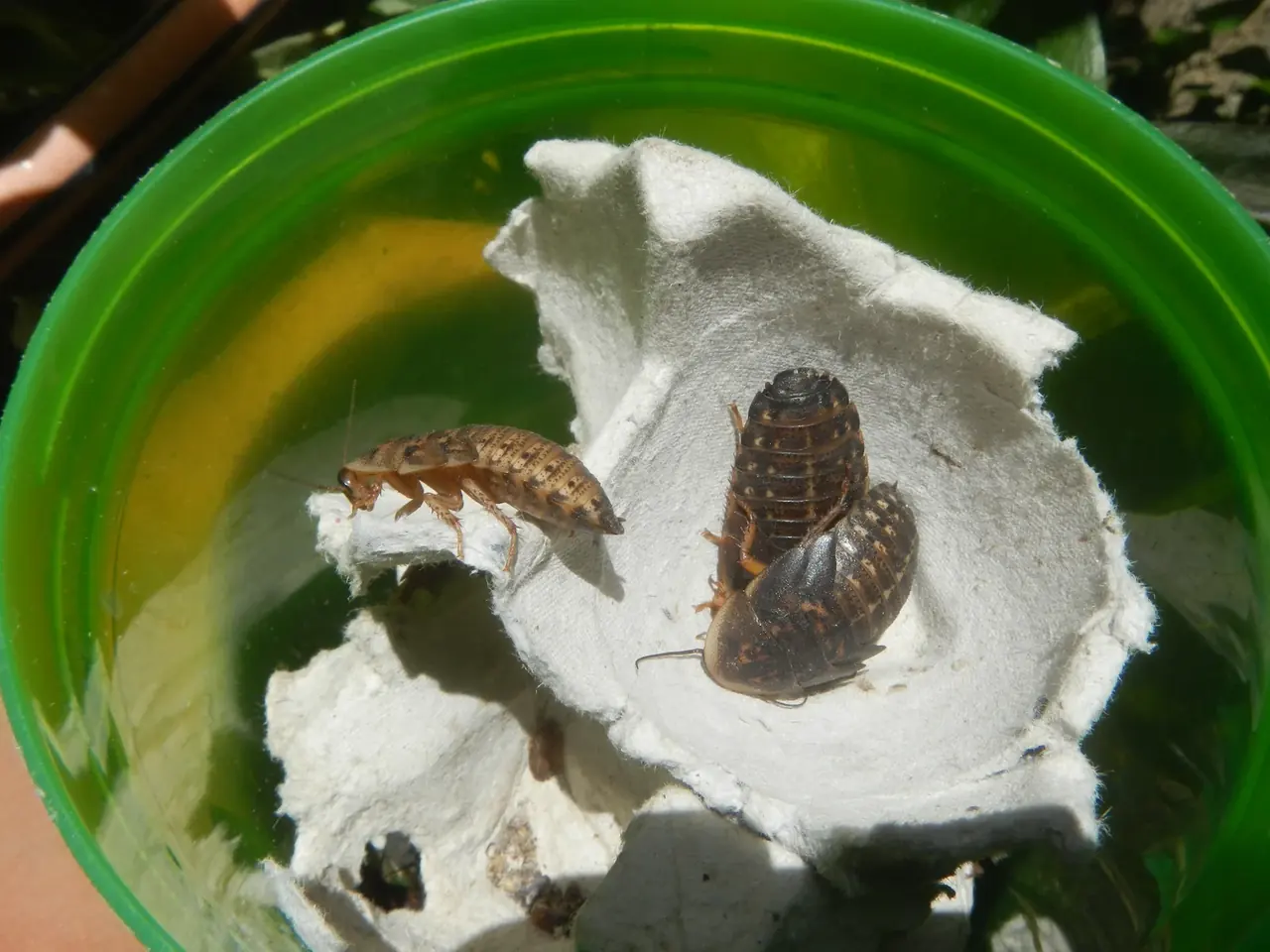
To start a dubia roach colony, buy at least 20 medium roaches with about 3 to 5 females for every male, house them in a ventilated bin of 10 gallons or more with stacked egg crates, and hold the temperature near 90°F. Expect the first nymphs within a few weeks and a feeding-size colony in roughly 8 to 9 months.
The payoff is a steady supply of feeders that do not climb glass, rarely fly and live far longer than crickets. This guide covers the starter count, housing, heat, humidity, food, sexing, the breeding timeline, harvesting and the problems that slow a colony down.
How many dubia roaches to start with
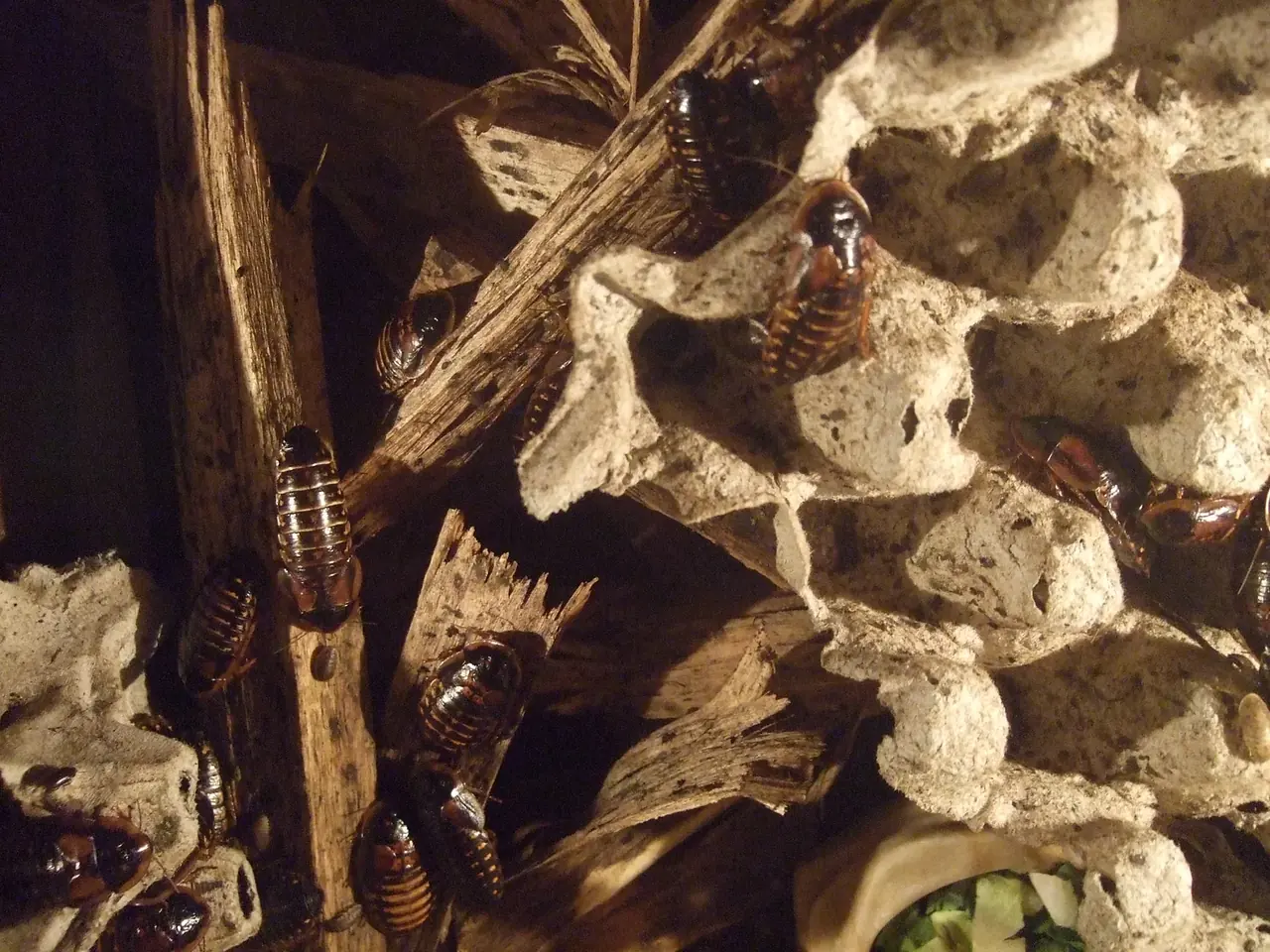
There is no fixed minimum: in theory one pregnant female will do. In practice, start with at least 20 roaches, about 5 males and 15 females, because a few losses will not stall the colony. A bigger start of 100 to 200 roaches builds a feeding supply faster. Choose medium roaches, which are young adults in breeding condition, and keep a few nymphs as future breeders.
Population grows fast with good conditions. A starter of 5 females and 1 male produces roughly 125 newborn nymphs after 2.5 months under a 75% survival assumption, and by 7.5 months you could have about 50 adult females and 1,250 nymphs. After a year the starting numbers matter little.
Choose the container
Use a plastic bin of 40 quarts or more, or a glass aquarium of at least 10 gallons. A bin of 22 gallons or larger gives a colony more room to grow. Dubia roaches cannot climb smooth vertical surfaces, but the lid should still fit, and the ventilation must let air in without letting roaches or other insects through.
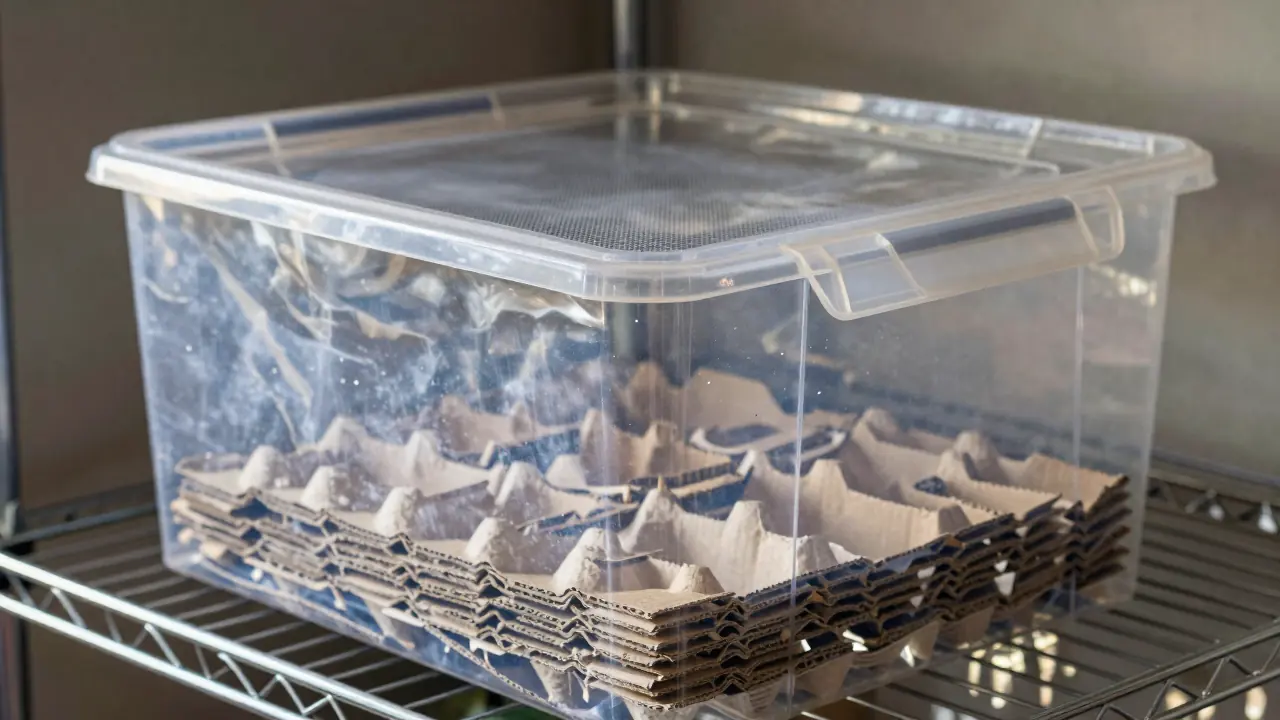
- Cut a ventilation opening of at least 6 by 6 inches in the lid.
- Glue fine mesh over the opening so nothing can crawl out or in.
- Keep a second bin on hand to move the colony into when you clean.
- Set the bin in a quiet, dark place.
Egg crate
Stack cardboard egg crate flats so roaches have surface to stand on, and keep the stack below the top of the bin. A rough guide is 50 to 100 adults, or similar-sized nymphs, per crate. Skip supermarket egg cartons, which are often treated with chemicals that harm roaches. Flat cardboard works as extra harborage.
Heat and humidity
Aim for about 90°F. Colonies tolerate a range of roughly 85 to 95°F during the day and should not fall below 68°F. They survive cooler conditions, but they may not breed. Warm the bin with an adhesive under-tank heater on the side, a heat cable or rope, or a ceramic heat emitter, and put it on a thermostat or lamp dimmer checked with a probe thermometer. Most heat sources take about 6 hours to reach a reasonable temperature and can keep rising for a few days, so set up and adjust the bin before the roaches arrive.
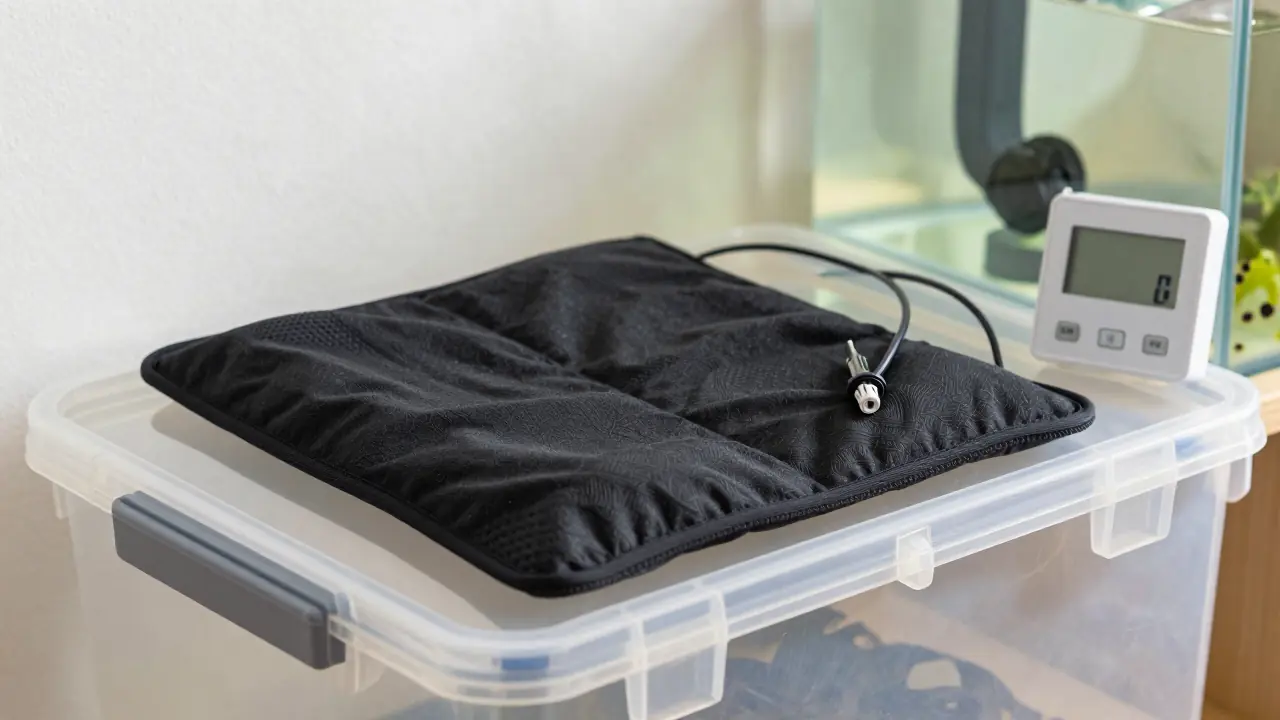
Keep humidity at 40 to 60% and check it with a hygrometer. Above that range mold and bacteria take hold, and mold is deadly to a colony. Ventilation, dry food and a dry floor do most of the work.
Use UL-listed heating equipment on a thermostat, check bin temperatures with a digital probe thermometer or infrared temperature gun, and keep cords and any water apart. Do not let a heater touch bare plastic that can melt, and unplug the heat source before handling the bin.
Food and water
Feed commercial roach chow, cricket feed or a gut-load product, and add washed fruit and vegetable peels such as carrot, apple or orange once or twice a week. Do not use a meat-based protein blend. Remove uneaten produce within 24 to 48 hours, and avoid watery, high-moisture foods that raise humidity.
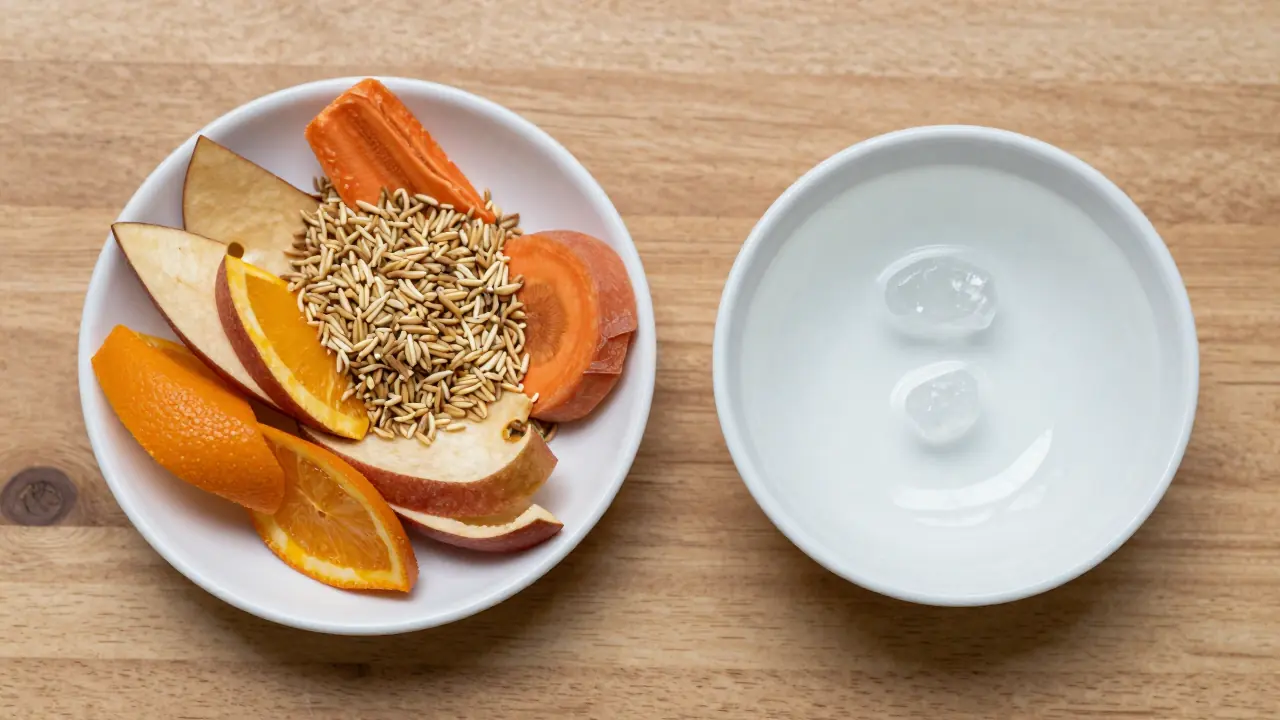
For water, use polymer water crystals in a shallow dish. Young roaches drown in an open dish, and a wet sponge can quickly breed mold, so crystals are the safer choice. Store food dry so it stays fresh and mold-free.
Males vs. females: sexing dubia roaches
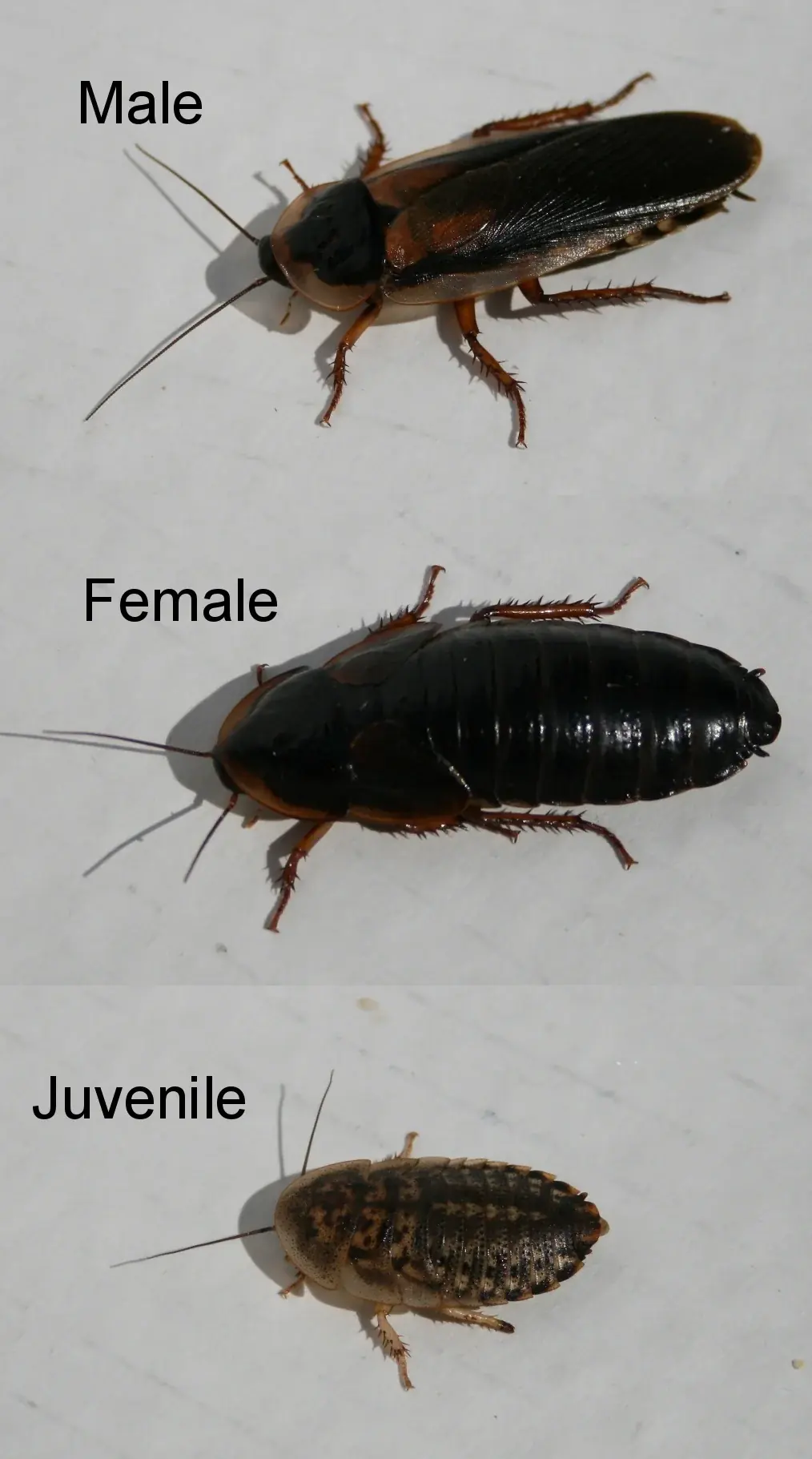
Adult males have full wings, although they rarely fly. Adult females have only short wing stubs. Juveniles have no wings. Learning to tell them apart lets you keep a healthy ratio of about 1 male to 3 to 5 females, since one male can fertilize several females.
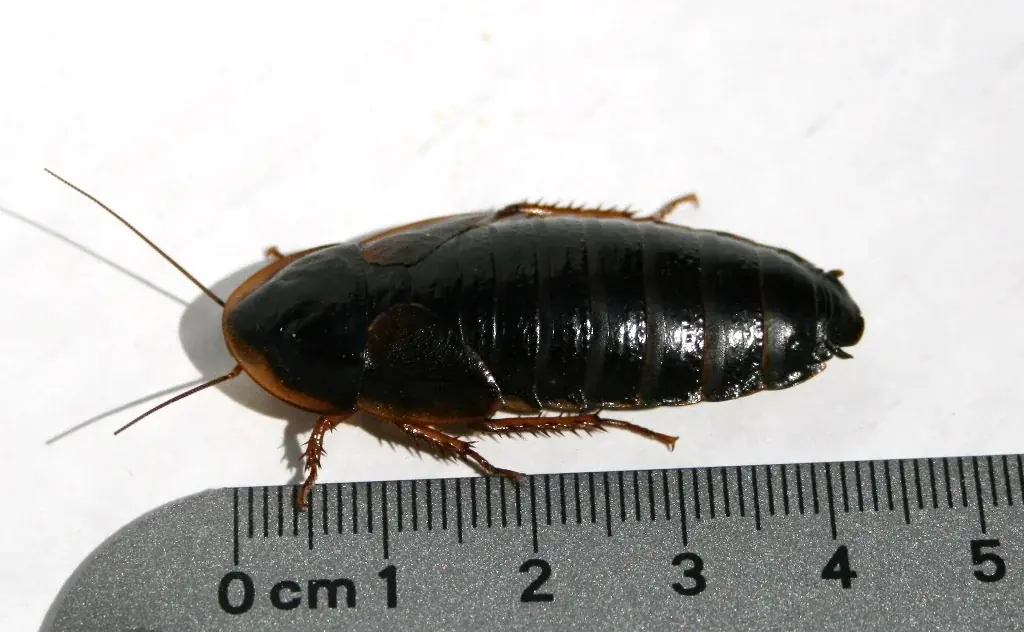
Adults reach roughly 1.6 to 1.8 inches, and females tend to live a little longer than males.
The breeding timeline
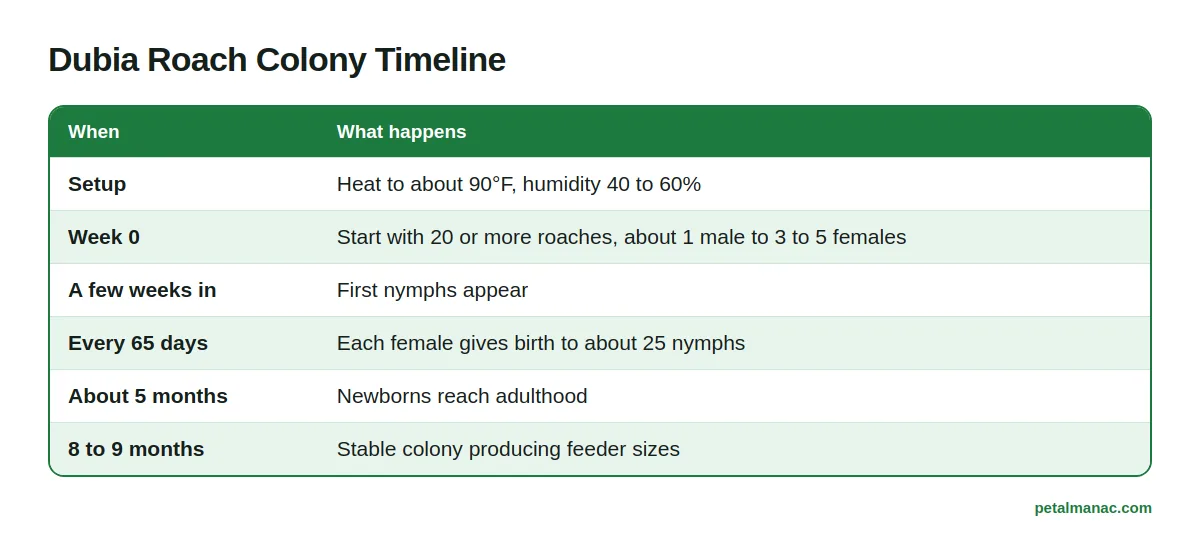
Dubias are live-bearing: the eggs hatch inside the female, which gives birth to roughly 25 nymphs about every 65 days. Newborns take about 5 months to reach adulthood, with males mating almost right away and females about a week later. You can see the first nymphs in a few weeks after setting up breeding-age adults, and a stable, feeding-size colony takes about 8 to 9 months. Adult roaches can live up to two years.
Harvesting without crashing the colony
Feed off the roaches sized for your reptile and the older, larger females, and take only what the colony can replace. Remove extra older males or females to hold the ratio. To keep the colony going, let enough young adults grow up to replace breeders about every 8 months, and always leave nymphs to mature.
Cleaning and common problems
Do a full clean every 1 to 2 weeks, or at least monthly in a small colony, and remove dead roaches the moment you see them, since the smell usually comes from them. Scoop frass from the floor and move roaches to the spare bin while you wipe the dirty one.
| Problem | Likely cause | Fix |
|---|---|---|
| No babies after a couple of months | Too cool, too dry, too few females, or not enough time | Raise the bin toward 90°F, confirm 40 to 60% humidity, and give females 6 weeks or more between clutches |
| Mold on food or floor | Humidity above about 60%, wet sponges, old produce | Remove old produce in 24 to 48 hours, ventilate more, use water crystals |
| Musty smell | Dead roaches or buildup | Clean the bin and remove the dead |
| Mites | Damp bin and old food | Dry the bin, clear old food, and start with a clean spare bin |
| Escapes | Lid does not seal, vent mesh torn | Replace the mesh and check the lid fit |
Check your local rules first
Canada and some US states do not allow the general public to import dubia roaches, and some people treat the species as invasive. Before buying or breeding a colony, check your state’s agriculture rules, and never release roaches outdoors.
Is 25 dubia roaches enough to start a colony?
Yes. 20 is a workable minimum if you have around 5 males and 15 females, and 25 gives a bit more margin. Growth will be slow at first.
How hard is it to make a dubia roach colony?
It is easy once heat, ventilation and a dry bin are in place. The hard part is patience: it takes months before the colony supports regular feeding.
What can I feed my dubia roach colony?
Roach chow or cricket feed as the base, plus carrot, apple or orange peels a couple of times a week. See the gut-loading notes in our leopard gecko feeding guide.

The Pet Almanac editorial team researches, writes and edits every care guide on the site. Each guide is fact-checked before publishing and reviewed again when care guidance or equipment changes.