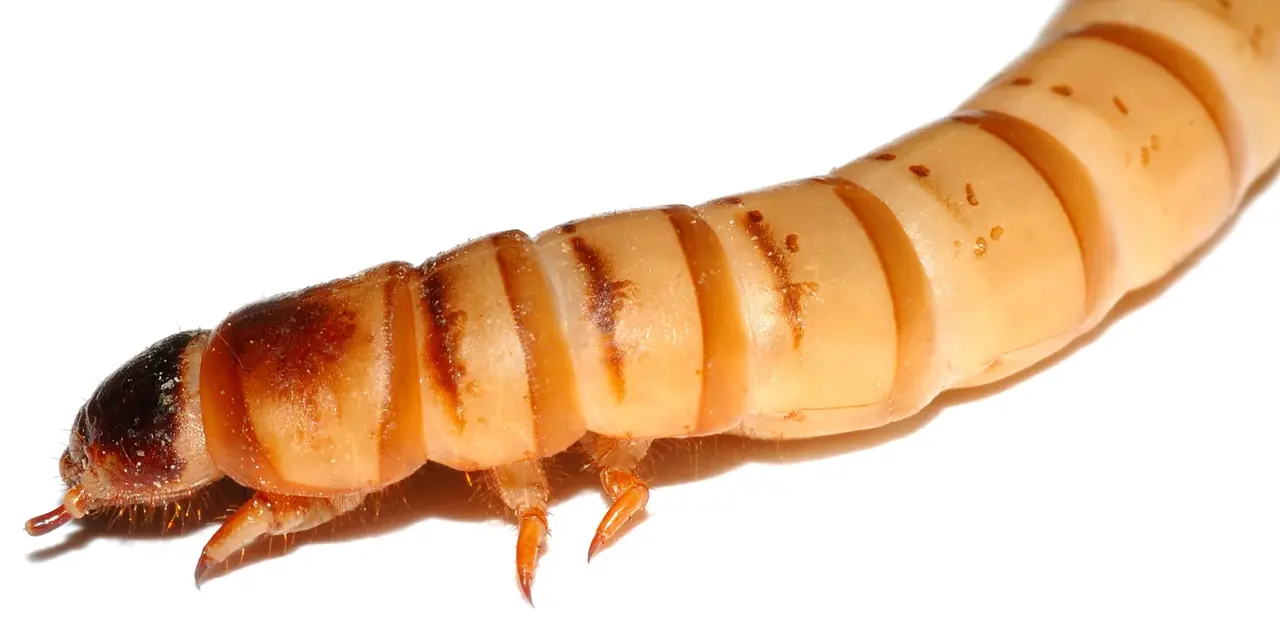
Mealworms and superworms are different insects. Superworms are about twice as long, darker, firmer, fattier and bite-capable, while mealworms are smaller, softer and easier to digest. Mealworms suit small reptiles and can be refrigerated for storage. Superworms suit larger, active reptiles and must never go in the fridge.
Neither is a complete diet, and both are higher in fat than crickets or dubia roaches, so treat them as part of a rotation. Below is how to tell them apart, a nutrition comparison, which reptiles each fits, and how to store and feed them safely.
How to tell a mealworm from a superworm
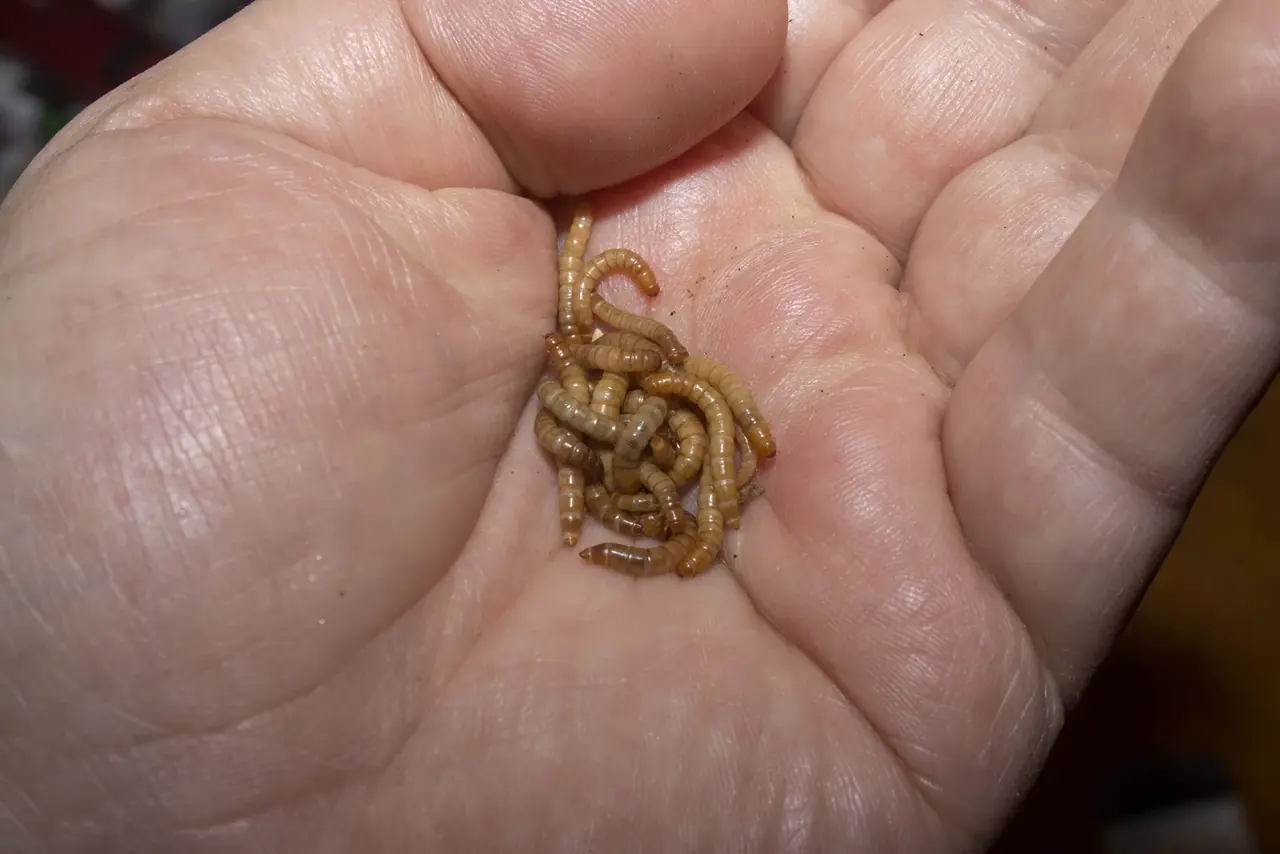
Size gives it away first. Mealworms grow to about 1 to 1.25 inches. Superworms reach about 2 inches and can go as long as 2.5 inches. They are also thicker, so side by side they are easy to separate.
| Trait | Mealworm | Superworm |
|---|---|---|
| Genus | Tenebrio molitor | Zophobas |
| Length | About 1 to 1.25 in | About 2 in, up to 2.5 in |
| Color | Lighter brown, uniform | Darker brown with black tips |
| Exoskeleton | Soft | Firm |
| Bite or defense | Harmless | Can bite, with a small pin-like spine on the back |
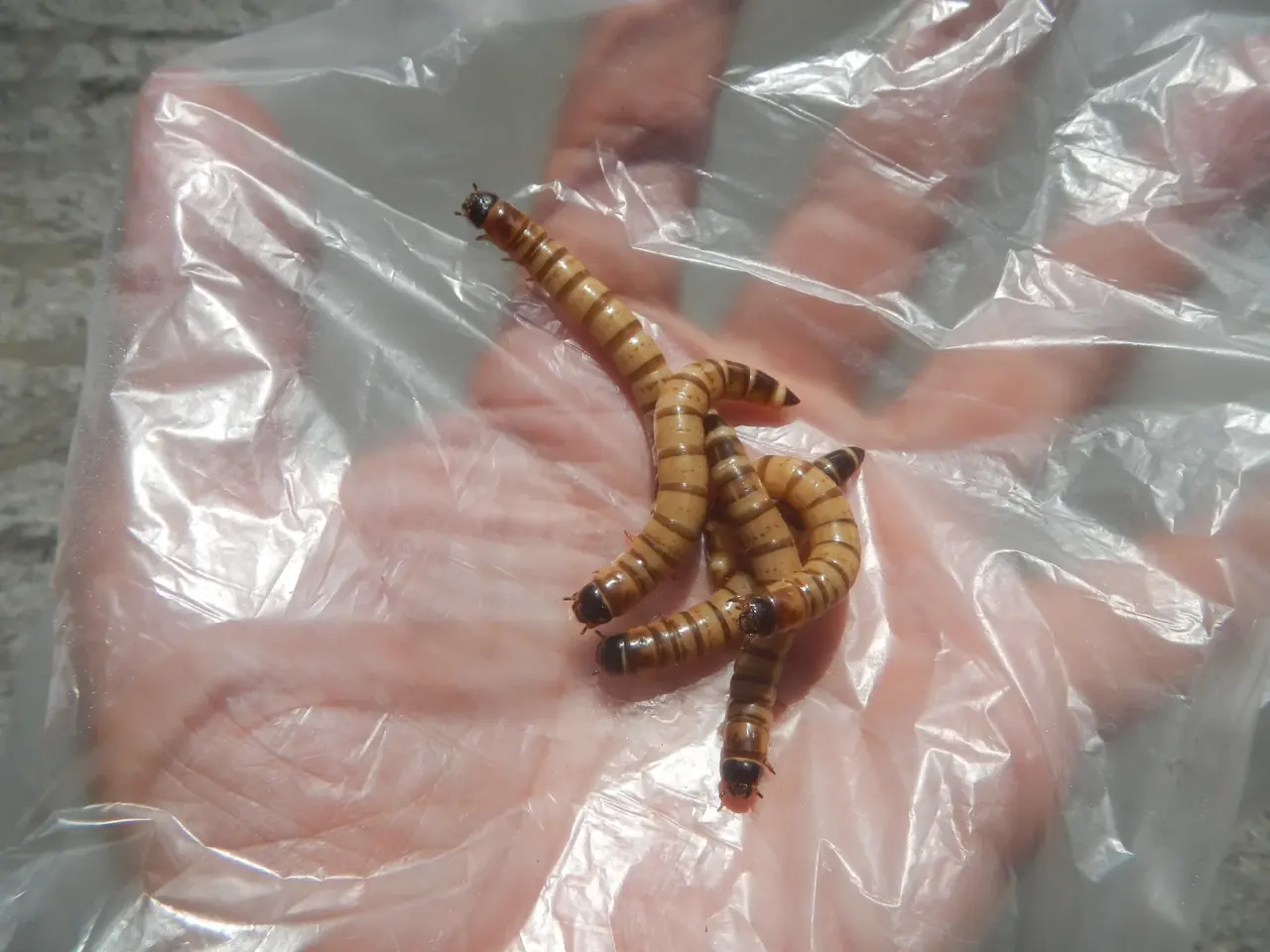
Mealworms are sold in grades, so the size you receive depends on what you order. Medium mealworms run about 0.5 to 0.75 inches, large about 0.75 to 1 inch, and giant about 1 to 1.25 inches. Pick the grade by your reptile’s head width rather than by what is on the shelf, and remember that a superworm is always larger than the biggest mealworm grade.
Are superworms just big mealworms?
No. They are separate species in the same darkling beetle family, and they grow into different beetles. Superworms are not mealworms fed hormones either: giant mealworms are never hormone-enhanced and are simply the largest grade of true mealworm.
Nutrition: mealworms vs superworms
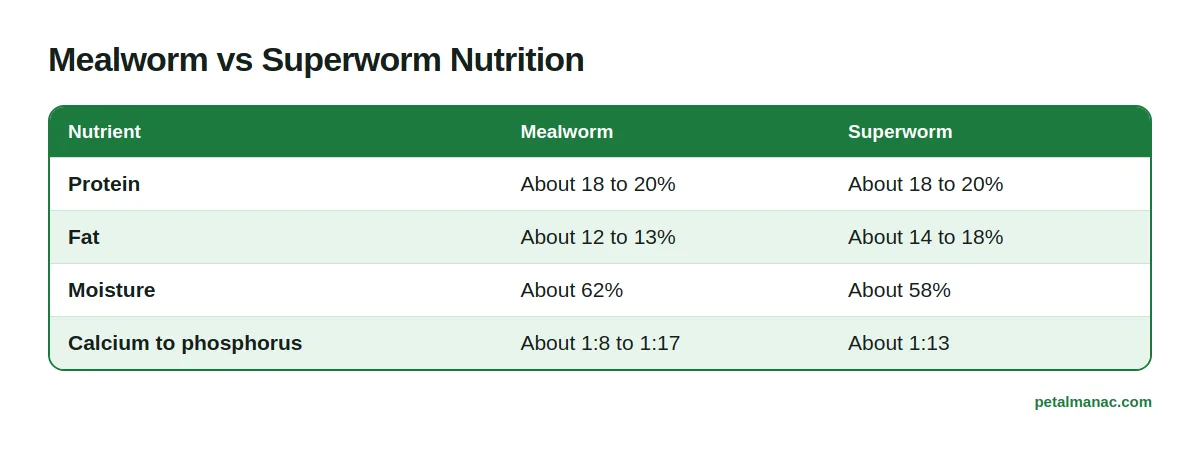
The two are close in protein. Superworms carry more fat and less moisture. Fiber figures vary between sources, so no single number is reliable. Both have a poor calcium-to-phosphorus ratio of roughly 1:13, far from the 2:1 reptiles ideally need, which is why calcium dusting matters.
| Nutrient | Mealworm | Superworm |
|---|---|---|
| Protein | About 18 to 20% | About 18 to 20% |
| Fat | About 12 to 13% | About 14 to 18% |
| Moisture | About 62% | About 58% |
| Calcium to phosphorus | About 1:8 to 1:17 | About 1:13 |
Mealworms are also known for a tough chitin shell that can cause impaction in young reptiles, and superworms are fattier, so neither should be a staple. A common rotation uses mealworms as an occasional treat and superworms as a limited fatty feeder.
Which reptiles suit each worm
- Small lizards and geckos: mealworms fit better because they are smaller and softer. Superworms can be harder for small pets to digest.
- Larger lizards: superworms are more active and better for hunting, and their size suits a wider range. Bearded dragons, which eat insects and greens, can take them in limited numbers.
- Leopard geckos: strict carnivores that need varied insects. See our leopard gecko feeding guide for the full diet.
Whatever the size, a feeder should be no larger than the space between your reptile’s eyes. That limits the risk of choking and impaction.
Life cycle and why “worm” is misleading
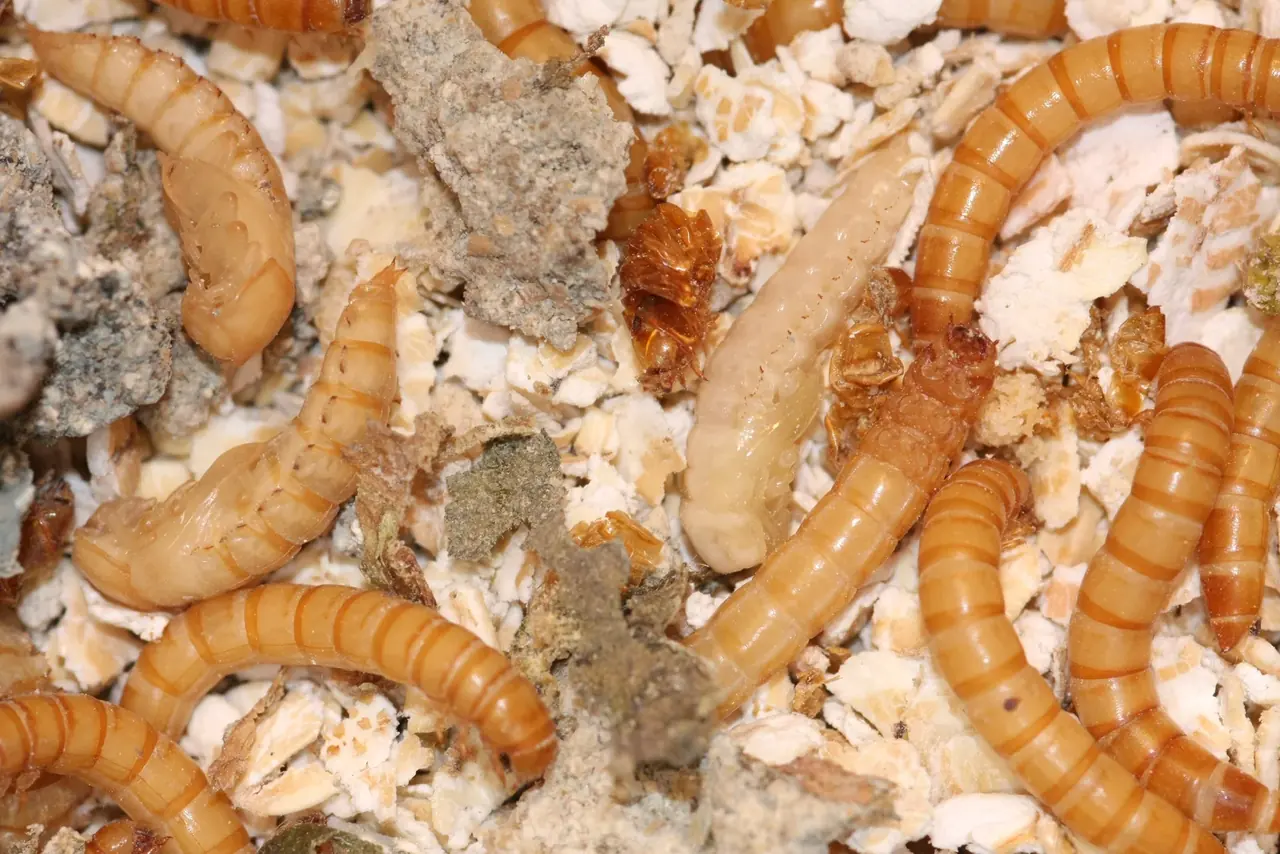
Both feeders are the larval stage of a darkling beetle. They spend up to six months as larvae, then pupate and become beetles. That is why a bin of worms slowly fills with pale pupae and shed skins, and why feeders you buy are not all the same age. Superworm beetles give off an unpleasant-smelling pheromone when threatened.
Which one should you buy?
Choose by the animal and the job, not by a single winner.
- Easy digestion and more protein per bite: mealworms, in small portions.
- More fat and a larger, active meal: superworms, in limited numbers, especially for larger lizards that benefit from hunting.
- A staple feeder: neither. Use crickets or dubia roaches as the base and add worms for variety.
Juvenile bearded dragons need protein-rich, high-fat insects while adults eat more plants, so worm portions should shrink as the animal matures. Leopard geckos are strict carnivores from hatching and do well on a varied insect rotation, with worms as one part.
Storage: fridge or room temperature?
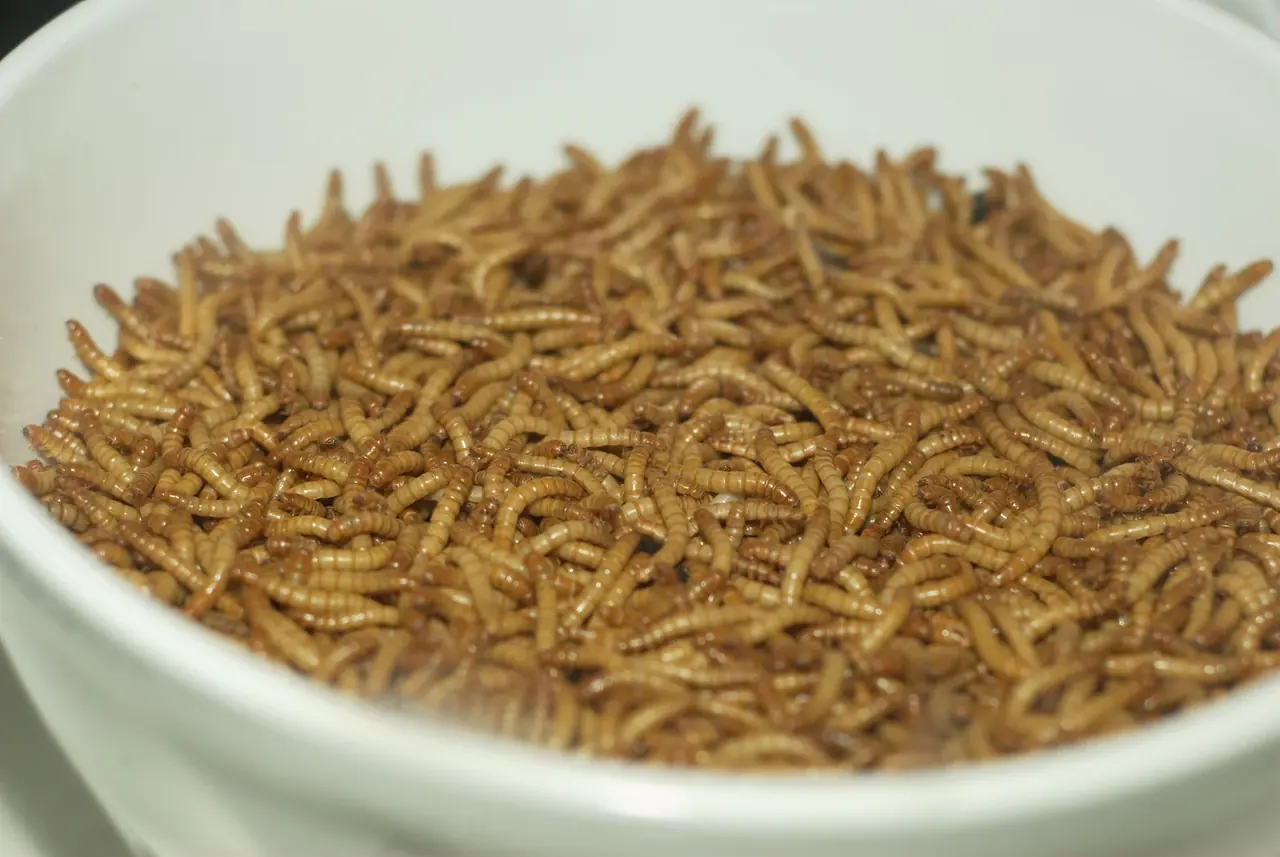
Mealworms keep well in the refrigerator and can stay alive for 6 to 10 weeks cold. Many keepers use the top shelf of the fridge door. Left at room temperature, they last about 3 to 4 weeks with good care.
Superworms must stay at room temperature. Cold temperatures kill them. With food and water, they can last about 3 months or more.
Can they live together?
No. Keep superworms and mealworms in separate bins. Their storage temperature needs differ anyway.
Gut loading and calcium dusting
Feed worms for at least 24 hours before offering them to your pet, using vegetables or a gut-load diet, then coat them in a high-quality calcium powder. Mealworms and superworms are both low in calcium, so dusting is not optional. For the right calcium and multivitamin schedule, follow the product directions and your veterinarian’s advice. More on feeding schedules is in our gecko diet guide.
How they compare with crickets and dubia roaches
| Feeder | Protein | Fat | Calcium to phosphorus |
|---|---|---|---|
| Crickets | 18 to 21% | 6 to 7% | About 1:9 |
| Dubia roaches | 20 to 25% | 7 to 9% | About 1:3 |
| Mealworms | 18 to 20% | 12 to 13% | About 1:13 |
| Superworms | 18 to 20% | 14 to 18% | About 1:13 |
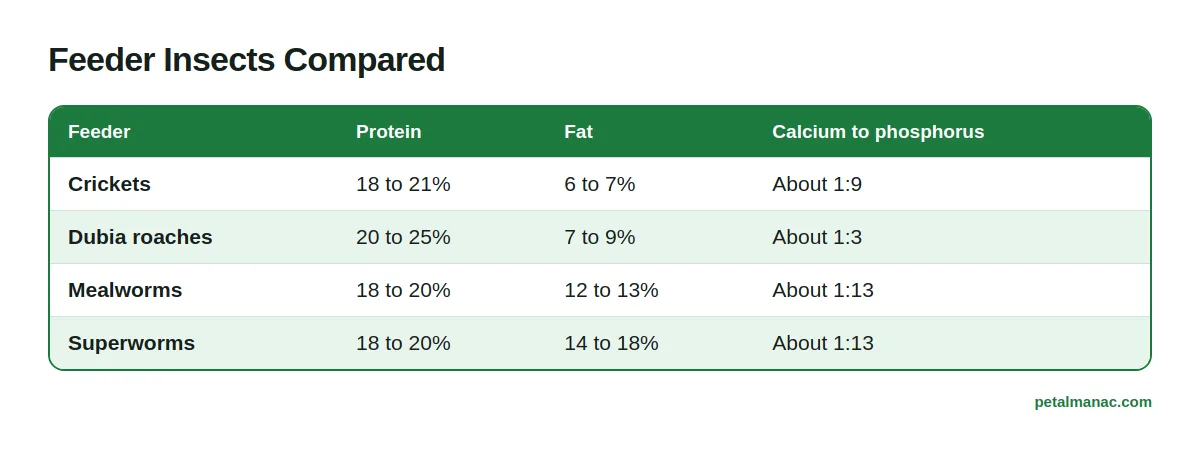
No single feeder gives complete nutrition, so rotate. Crickets and dubia roaches are the leaner base, and the worms are a fattier add-on. See how to keep crickets alive and the dubia roach colony guide, and browse more practical help in our How-To section.
Feeding safely
- Offer worms in a deep, smooth-sided dish and remove leftovers, since feeders left with a reptile can bite it.
- Hand feeding raises the chance of an accidental bite to you.
- Do not crush or remove a superworm’s head. That idea is largely a myth.
- Cut back superworms if your reptile is gaining weight.
Are mealworms better than superworms?
Neither is better overall. Mealworms are easier to digest and higher in protein relative to fat, while superworms add fat and size. Rotate them with leaner feeders.
Can mealworms and superworms live together?
They should not. Store them in separate bins, because mealworms can go in the fridge and superworms cannot.
How long do worms last once I buy them?
Refrigerated mealworms last 6 to 10 weeks. Mealworms kept at room temperature last about 3 to 4 weeks. Superworms last about 3 months or more at room temperature with food and water. Sources differ a little, so treat these as typical ranges.

The Pet Almanac editorial team researches, writes and edits every care guide on the site. Each guide is fact-checked before publishing and reviewed again when care guidance or equipment changes.