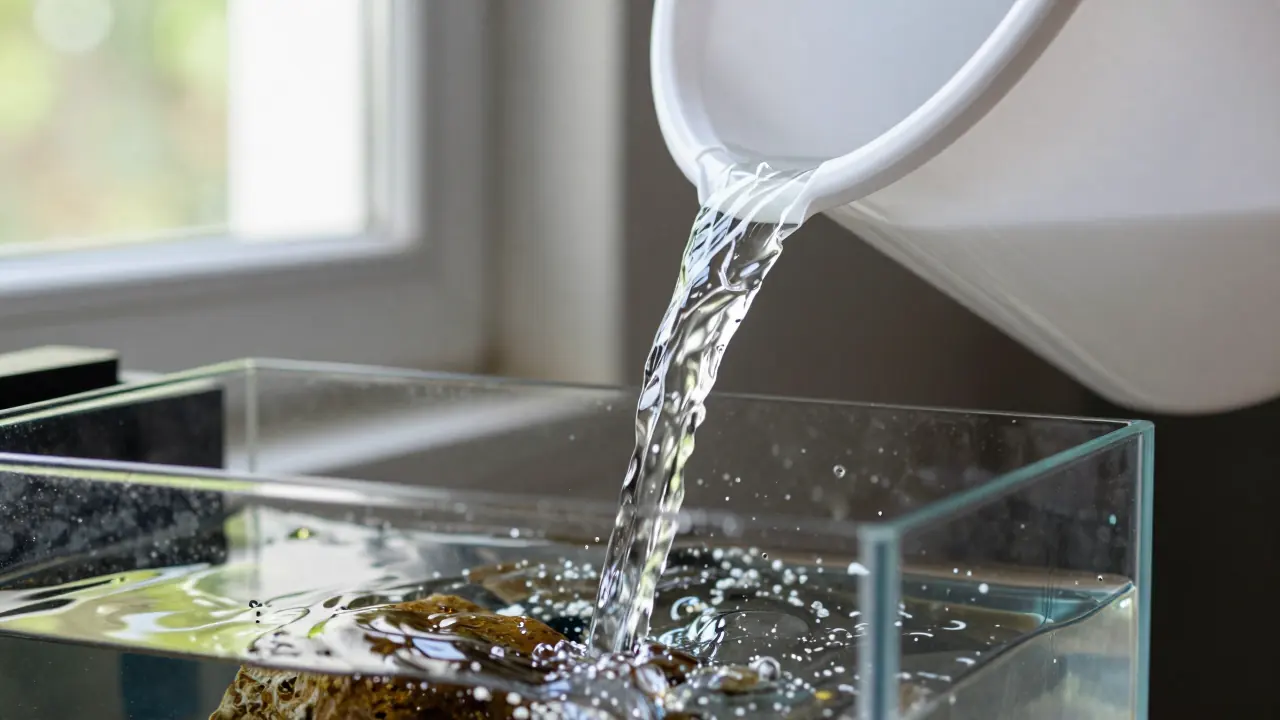
An aquarium water conditioner neutralizes the chlorine and chloramine that city water companies add to tap water, both of which are toxic to fish and to the bacteria in your filter. If your water is treated, you need it every time you fill the tank or change water. Dose it for the amount of new water you add, following the label, and add it at the same time as the water.
Conditioners are cheap and fast, which makes them the easiest safety step in the hobby. The details that matter are knowing whether your water has chlorine or chloramine, what extra claims on the bottle really mean, and when a conditioner is not the right tool.
What a water conditioner does
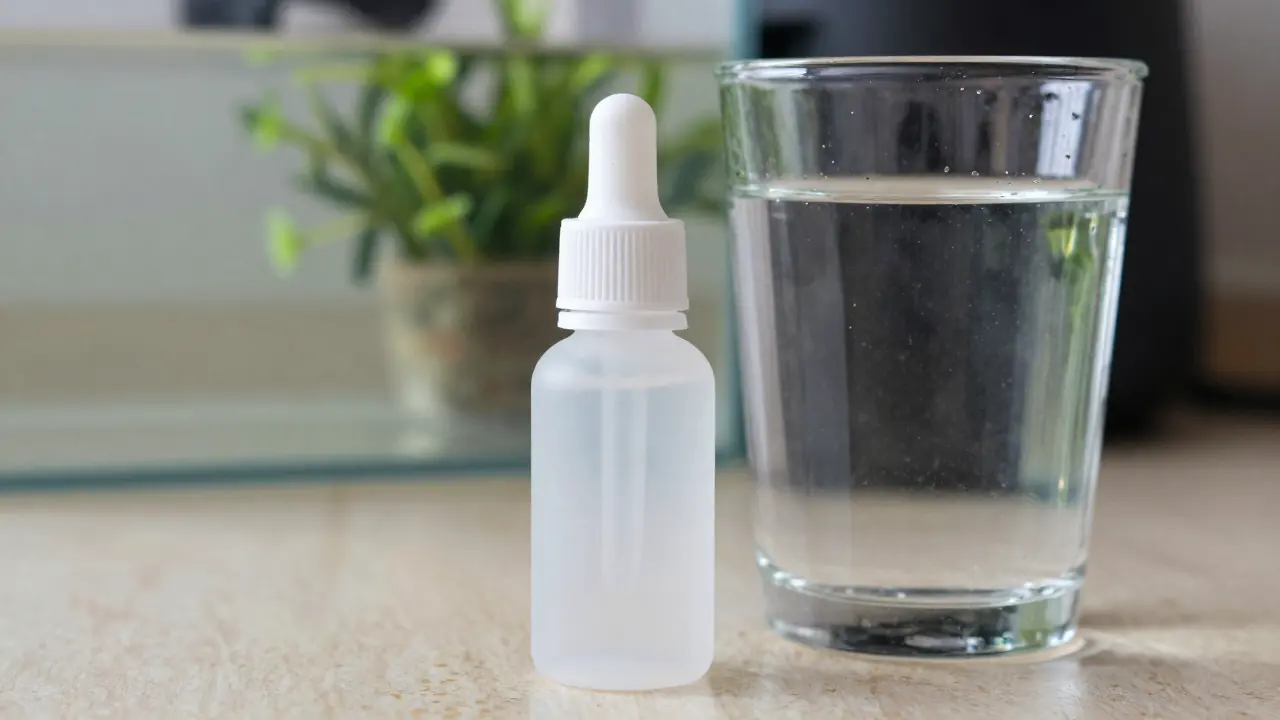
Almost all dechlorinators work with sodium thiosulfate, a compound that reacts with chlorine and chloramine and leaves harmless byproducts. A basic conditioner is just that. More complete products add other ingredients to deal with problems the basic formula leaves behind.
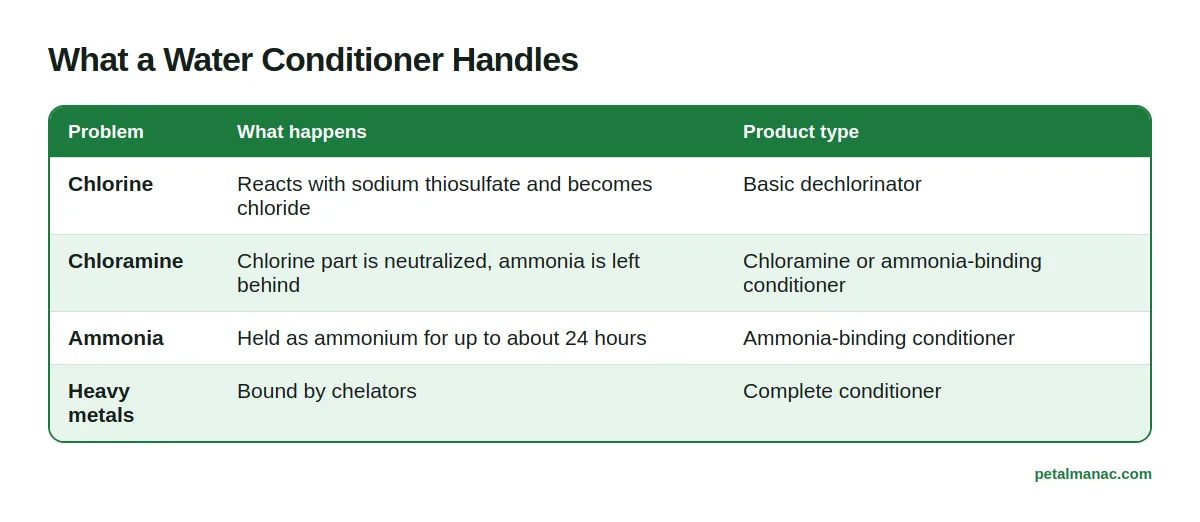
- Chlorine: reduced to chloride, which is far less harmful to fish.
- Chloramine: a chlorine and ammonia compound that is more stable than chlorine. A simple dechlorinator reacts only with the chlorine half, which frees ammonia into the water.
- Ammonia: some products also bind the ammonia so it becomes ammonium, an inert form, for up to about 24 hours. During that window, bacteria in the tank and filter can break it down. The product does not remove ammonia, it holds it harmlessly until the bacteria catch up.
- Heavy metals: the most complete conditioners include chelators that bind and remove metals.
- Slime coat additives: some formulas add ingredients such as aloe extract or polyvinylpyrrolidone, which can reduce stress behavior in fish during transport. They are extras, not part of the dechlorinating job.
If your tank has an ammonia reading, a conditioner is a temporary patch. The steps in the guide to lowering ammonia in a fish tank cover the real fix.
Do you really need water conditioner?
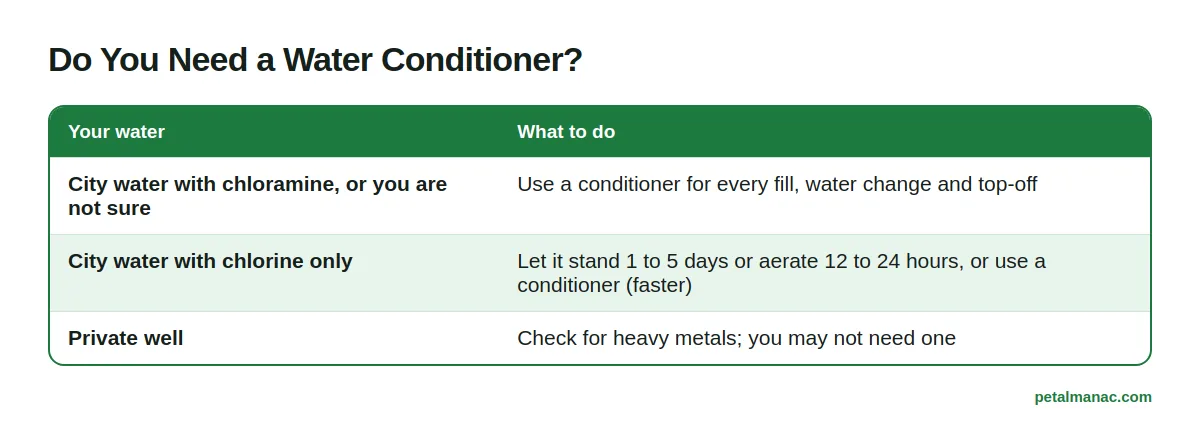
If your water comes from a municipal supply, almost certainly yes. Public water systems disinfect with chlorine or chloramine to kill microorganisms, and both are toxic to fish and to beneficial bacteria. Skipping the conditioner can burn the gills, and the fish may start gasping or breathing heavily.
If your water comes from a private well that is not treated with chemicals, you may not need a dechlorinator at all. Have the water checked for heavy metals first, because some conditioners can bind them. A call to your water utility will tell you whether it uses chlorine or chloramine.
Can you just let tap water sit?
Only if the disinfectant is chlorine. Chlorine is unstable and evaporates, typically within 1 to 5 days of standing. Running an air stone for 12 to 24 hours or boiling the water for 15 to 20 minutes speeds it up, and a chlorine strip reading confirms none is left.
Chloramine does not leave the water by evaporation. Many utilities have switched to chloramine, so standing water often remains unsafe. Unless you know your supply uses plain chlorine, treat water with a conditioner.
How to dose water conditioner
Follow the label on your bottle. Concentrations differ widely. One product calls for 1 ml per 10 gallons, while another asks for 5 ml (1 teaspoon) per 10 gallons, so never assume one product’s dose applies to another. Use the cap or pipette that comes with it.
Labels also generally say to dose for the volume of tap water you are adding, whether you are filling a new tank, doing a water change or topping off. If you replace 25% of a 40-gallon tank, treat 10 gallons. If you fill a new tank from empty, treat the full volume. See the fish tank sizes chart if you are unsure how many gallons your tank holds.
- Work out how many gallons of new tap water you are adding.
- Measure the labeled dose for that volume.
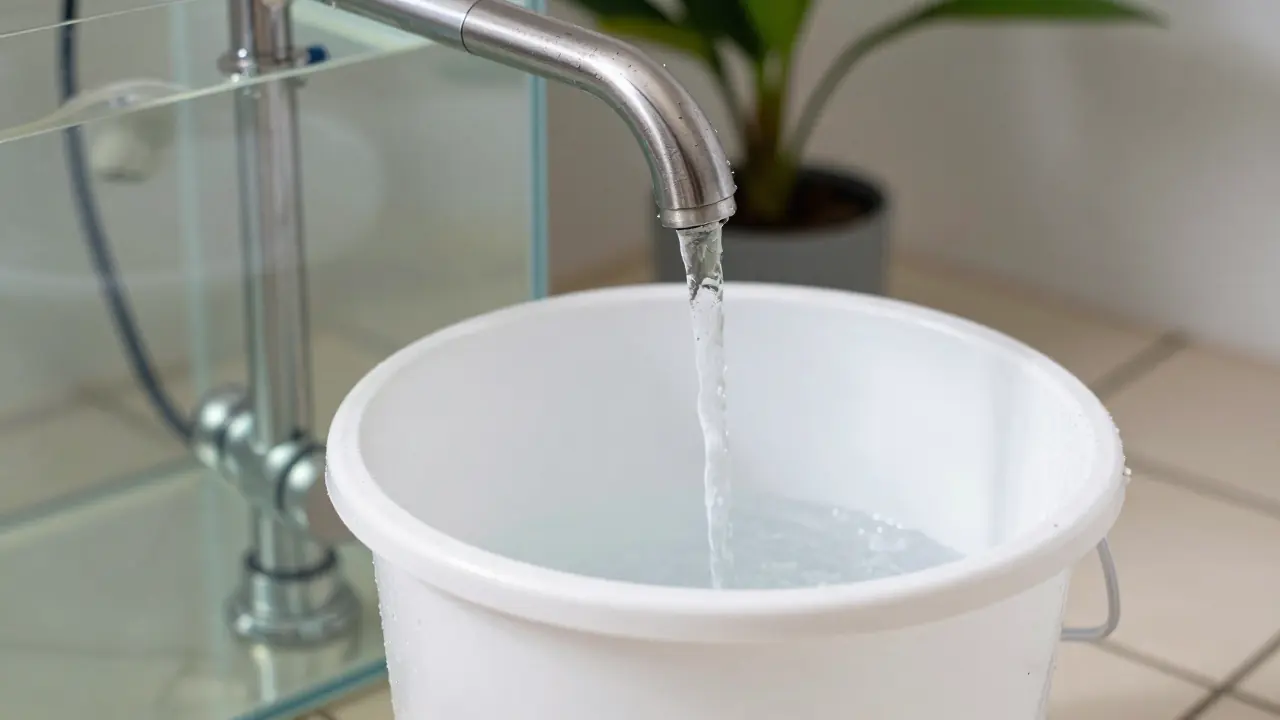
- Add it to the bucket of new water, or to the tank just before the water goes in.
- Match the new water temperature to the tank, then pour in slowly.
When to add it
It takes about 2 to 5 minutes for chlorine and chloramine to be neutralized. Many manufacturers recommend dosing a separate container first, and that is the cautious route. Some keepers pour the conditioner directly into the tank and then add the fresh water. Either is workable if you dose the right amount, but treating the bucket first removes the question. The water change steps are in the fish tank cleaning guide.
Can you overdose conditioner?
Generally, no, a modest overdose is not harmful. The reducing agents in conditioner use up oxygen as they work, though, so a big overdose in a tank with weak surface movement can lower oxygen. This matters most with very large water changes, such as 90%, or with tanks that run CO2 and keep the surface calm. Add an air stone or increase surface agitation for a few hours after a heavy dose. Dose accurately rather than guess, and read chlorine with a water-parameter strip if you want to use the minimum.
Types of water conditioner
- Basic dechlorinators: sodium thiosulfate only. Fine when your water has plain chlorine.
- Chloramine and ammonia-binding conditioners: deal with chlorine and temporarily lock up the ammonia released by chloramine. A safer choice for most households.
- Heavy-metal formulas: add chelators. Worth considering if your pipes or well supply carry metals.
- Slime coat or stress-reducing formulas: include extras such as aloe.
- Small-volume formulas: designed for bowls and tanks with little filtration and circulation, with dosing suited to small amounts.
Any of them will remove chlorine and chloramine when used at the labeled dose. Choose by what your water needs, not by the longest list of claims.
Well water and other special cases
Well water that has never been treated with chlorine does not need a dechlorinator, but it may contain heavy metals, so check it. For water changes in a new tank, treat tap water every time, since untreated water will also harm the bacteria growing in a cycling tank. Do not forget evaporation top-offs: tap water topped off without conditioner reintroduces chlorine.
Frequently asked questions
Do I really need water conditioner for my fish tank?
If you use municipal tap water, yes. Chlorine and chloramine are toxic to fish and beneficial bacteria. Only untreated well water may not need it.
What does water conditioner do for an aquarium?
It neutralizes chlorine and chloramine, and in many formulas also binds ammonia and heavy metals.
When should I put water conditioner in my fish tank?
Whenever you add tap water: new setup, water change or top-off. Dose it with the new water.
How long does water conditioner take to work?
About 2 to 5 minutes to neutralize chlorine and chloramine.
What is the best water conditioner for a fish tank?
Any that treats both chlorine and chloramine will do the core job. Look for ammonia binding if your supply uses chloramine, and heavy-metal removal if your water carries metals.

The Pet Almanac editorial team researches, writes and edits every care guide on the site. Each guide is fact-checked before publishing and reviewed again when care guidance or equipment changes.