To lower pH in an aquarium, blend RO or DI water into your water changes, add driftwood or aquarium-grade peat, and make every change slowly. Before you start, check that your fish actually need a lower pH: many adapt well to local water, and a swinging pH does more harm than a steady one that is slightly off target.
Should You Lower Aquarium pH at All?
Captive-bred freshwater fish adjust to a wider range than wild-caught ones. That covers most fish sold in stores. If your tap water is stable and your fish are healthy and active, leave it alone. Chasing a number invites swings.
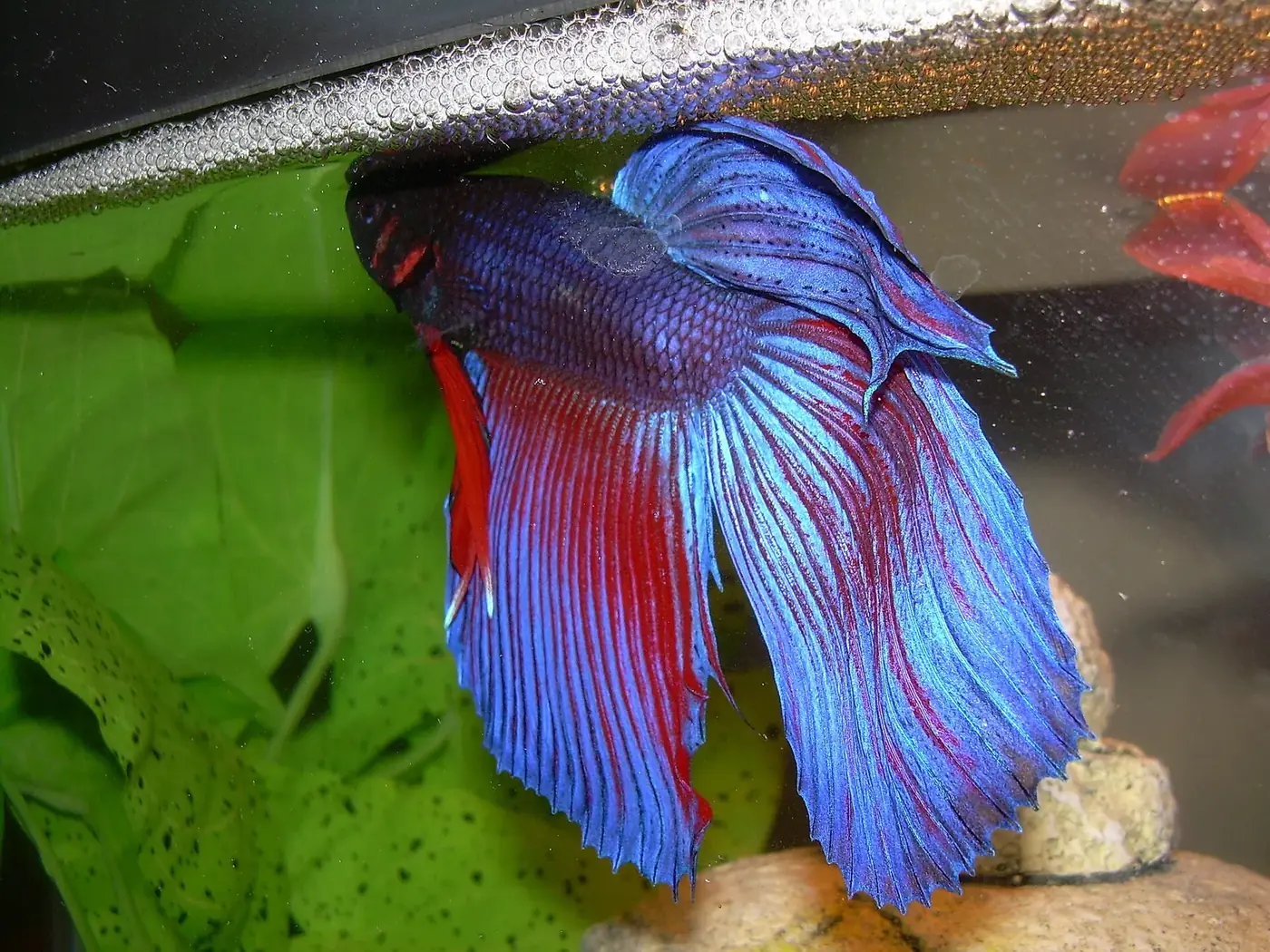
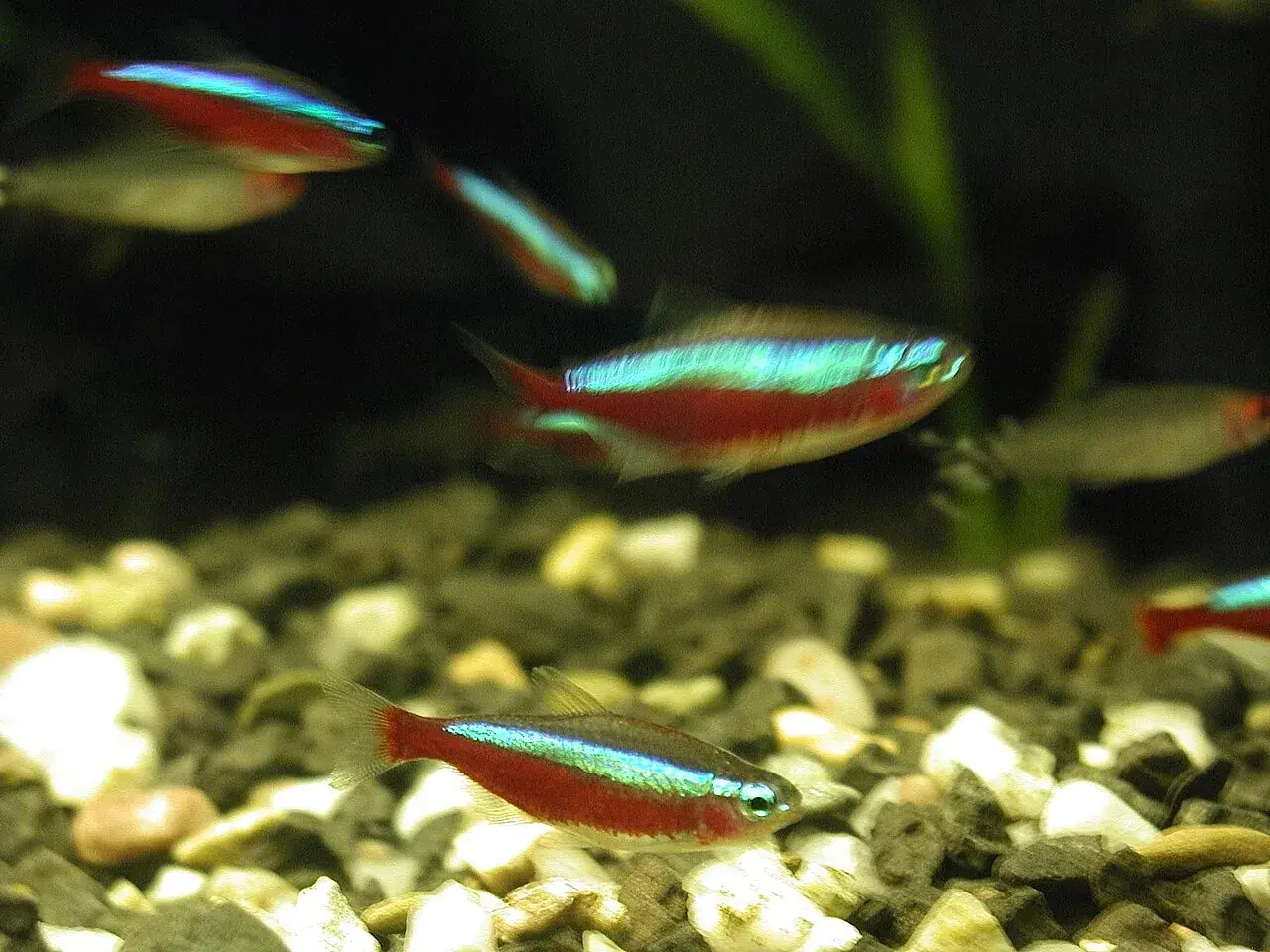
Most fish do not need a correction unless pH sits above roughly 8.5, where ammonia also becomes far more toxic. Adjust pH only when a species truly needs it, and do it before adding livestock. Some fish, such as tetras, discus, angelfish and rasboras, prefer soft water with a pH below 7, and plants such as Amazon swords and cryptocorynes also favor lower pH. Check regularly with a liquid kit. For example, about 7 is ideal for a betta, with 6.5 to 7.8 tolerable. See the betta fish care guide for how that fits a real setup.
Why Is My Aquarium pH So High?
Hard, mineral-rich tap water is the usual cause. Dissolved minerals raise both KH and pH. Other contributors are crushed coral, limestone or certain rocks in the tank, and heavy aeration or surface agitation, which drives dissolved CO2 out of the water and lets pH rise. Check your tap water straight from the faucet, then check it again after it sits out for a day, to see whether the tank or the supply is the source.
Why KH Controls How pH Moves
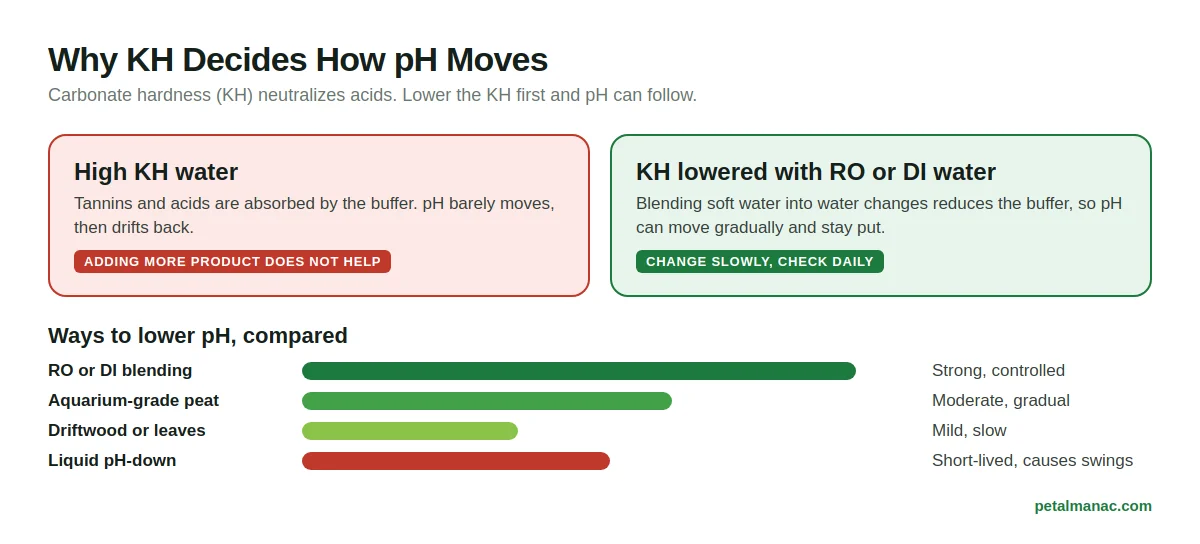
Carbonate hardness (KH) buffers pH: it neutralizes acids that would otherwise pull the number down. In high-KH water, tannins and acids get absorbed by the buffer and pH barely moves. Lowering KH, for example by blending in RO water, is what lets pH move. If a method seems to do nothing, check KH before you add more. Tannin-based methods in particular do almost nothing in water with a high KH. Water with very low KH, below about 3 KH, is the opposite: it has little buffer, so pH moves easily and can swing, which is another reason to go slowly.
How to Lower pH in an Aquarium: Methods
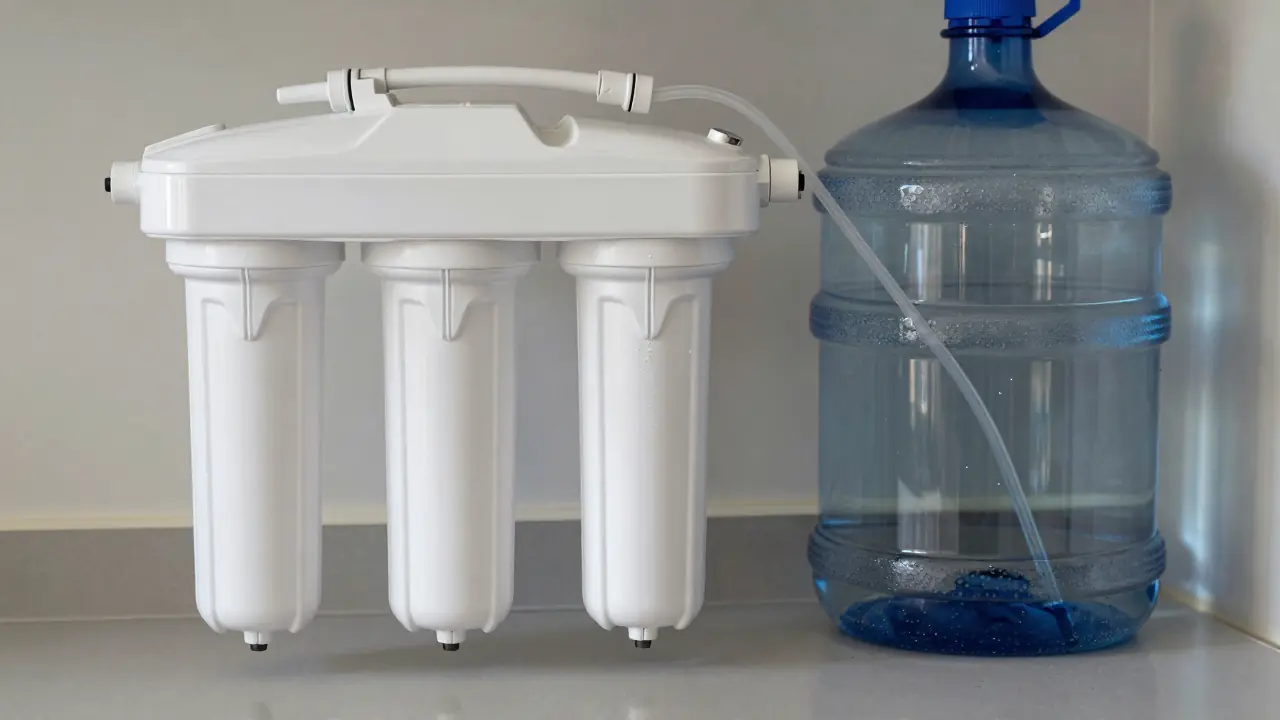
RO or DI water
Reverse osmosis (RO) or deionized (DI) water is the most dependable option. Mixing it with tap water dilutes both the minerals and the buffer. Prepare it and check the blend before it goes in the tank. Change a portion at a time rather than replacing a lot of water at once. Pure RO or DI water has almost no minerals, and fish cannot live in it, so remineralize it or blend it with tap water to a hardness fish can handle. If you pay for water, RO units waste a good deal of it, and chloramine in tap water can damage the membrane unless you use a carbon stage with enough contact time. Rainwater is another soft source, with no added chemicals. Strain it through fine cloth to remove insects, and blend it like RO water. Bottled distilled water works for small tanks if you remineralize it.
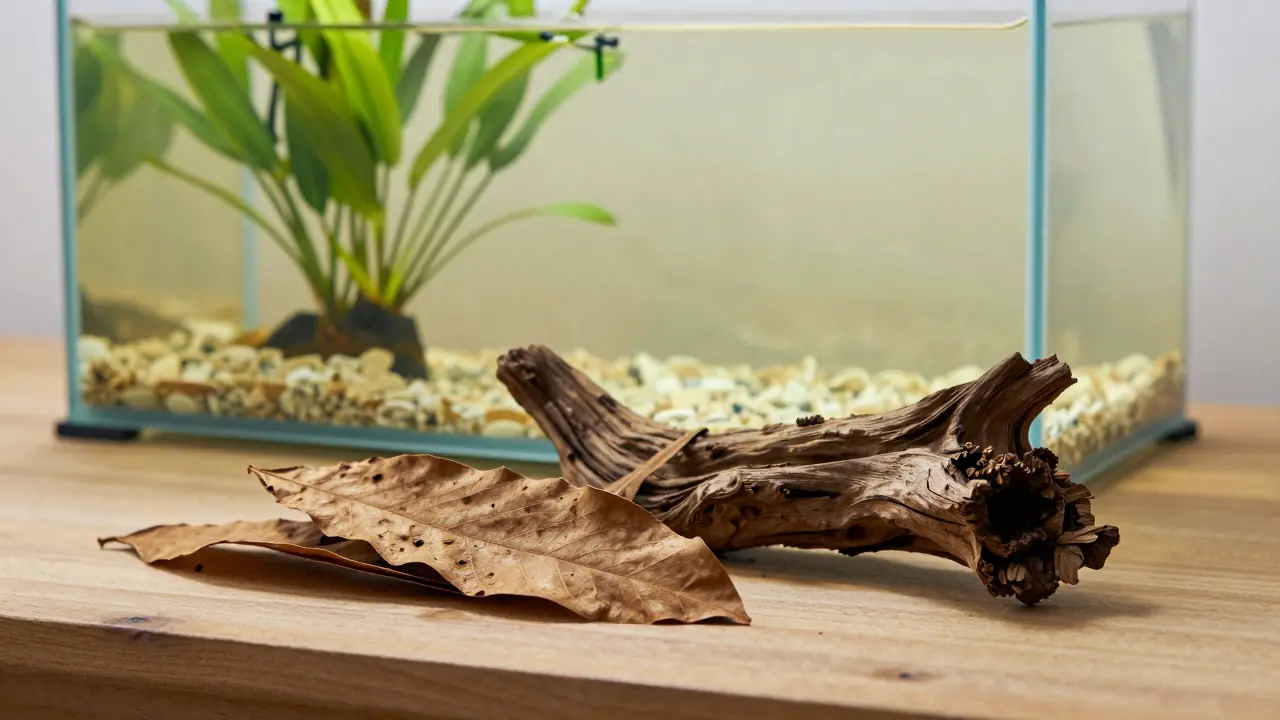
Driftwood
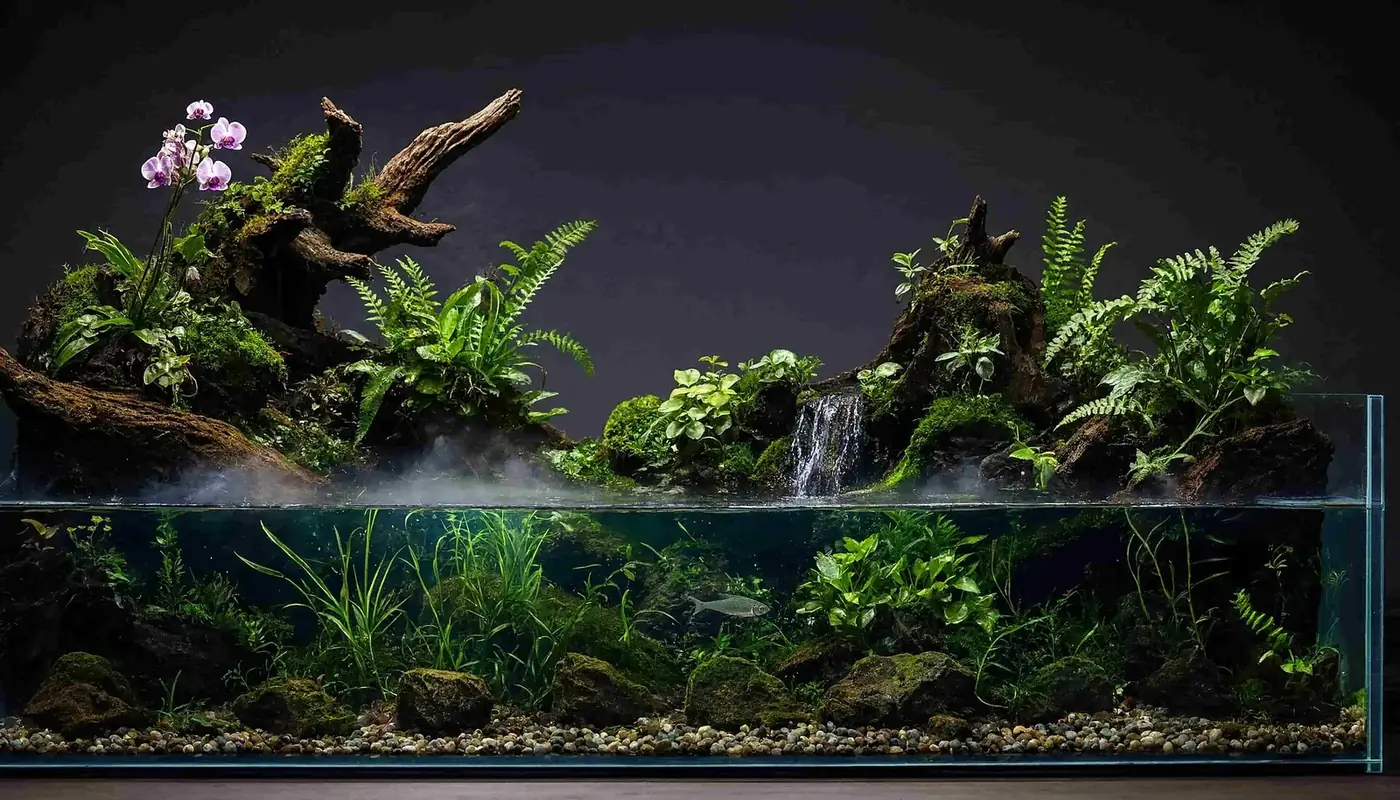
Driftwood releases tannins that lower pH. One or two small pieces do little in a large or well-buffered tank. It is a mild, slow option and a good complement to other methods. Malaysian driftwood, spider wood and cholla wood are common choices. Soak a new piece first if you want to reduce tea-colored tannins.
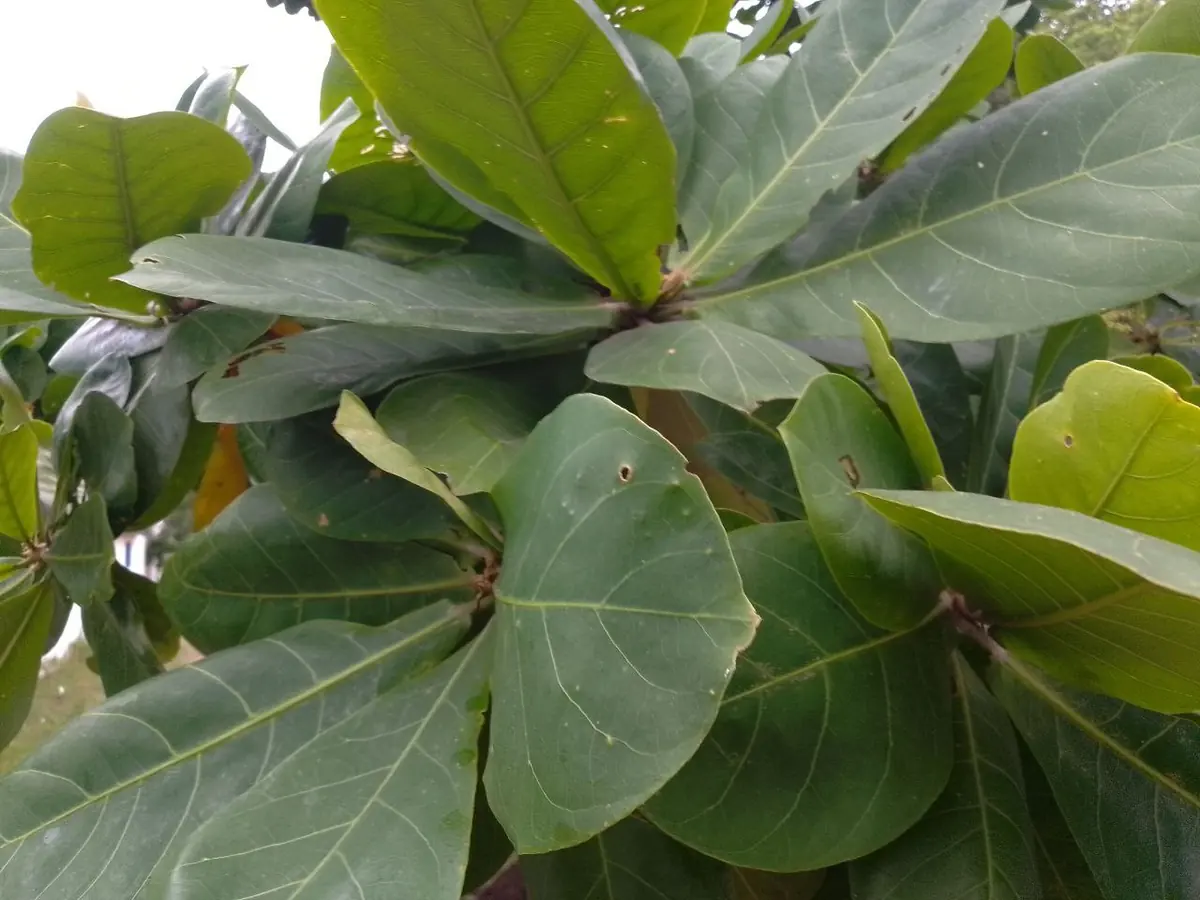
Indian almond leaves and dried tree leaves
Dried leaves release tannins and organic acids slowly, which tints the water and lowers pH slightly. Indian almond leaves (also sold as catappa leaves) are the most common choice, and many shrimp and small fish graze on them as they break down. Oak, beech and hornbeam leaves are also used, and hornbeam acts more strongly than beech. Use leaves that are fully dry, collected away from roads and factories and free of pesticides, and weigh them down because they float. For a controlled start, soak a handful in a few liters of RO water for a few days, check the pH of that water, then add it and the leaves to the tank gradually. Replace leaves as they break down.
Alder cones work the same way and are used in breeding tanks to help prevent fungus on eggs.
Aquarium-grade peat
Place peat in a mesh bag in the filter. It acts gradually and stains the water tea-colored. Use only aquarium-grade peat. It comes as liquid extract, fibers or pressed pellets, and pellets last longer and act more strongly. Follow the manufacturer’s directions, because the humic acid content varies widely, and replace the peat as it loses effect. In high-KH water the effect is brief, so soften the water with RO first.
CO2 and surface agitation
In a planted tank with injected CO2, a slightly higher CO2 level forms carbonic acid and holds pH lower. Adjust it slowly and watch your fish for gasping. Reducing surface agitation or heavy aeration can also stop CO2 from escaping, and it nudges pH down, though only slightly.
Strong acids
Some hobbyists treat water in a separate container with strong mineral acids such as muriatic acid. This is hazardous to handle, easy to overdo, and only holds for a short time because the pH rebounds as CO2 escapes over the following days. Skip it unless you have a very good reason and know the safe procedure. RO blending is safer and more controllable.
| Method | Speed | Strength | Best for |
|---|---|---|---|
| RO or DI blending | Quick, controlled with each change | Strong | High-KH tap water, larger shifts |
| Driftwood | Slow | Mild | Small tanks, soft adjustments |
| Indian almond or dried tree leaves | Slow | Mild | Soft water, shrimp and blackwater fish |
| Rainwater | Controlled with each change | Strong | Low-cost soft water, blended with tap |
| Aquarium-grade peat | Gradual | Moderate | Soft-water species setups |
| Liquid pH-down | Fast, short-lived | Unreliable | Rarely a good choice |
Crushed coral, dolomite and limestone raise pH, in case you overshoot.
How long does it take, and what is the cheapest way?
Plan on days to weeks, not hours. Blending RO or rainwater shifts pH as fast as you replace water, but a gentle pace of a few water changes over a week or two is safer. Driftwood, leaves and peat take days to weeks to show a change and only work in soft water. The cheapest routes are collected rainwater (where it is practical) and dried leaves or driftwood. RO is the pricier option if you pay for the water it wastes.
Reading Your Results
Use a liquid kit and read both pH and KH, since the two together tell you whether a method can work. If pH barely moves and KH is still high, the buffer is absorbing the change, and the fix is more dilution with RO or DI water, not more additives. Read at the same time of day, because pH can drift between morning and evening in planted tanks.
What to Avoid
Skip repeated doses of liquid pH adjusters. They often wear off, and the resulting “pH roller coaster” is very stressful to fish. Never make sudden or drastic changes while fish are in the tank. Too many tannins can also hurt: if fish gasp at the surface after you add leaves or peat, do a large water change right away and remove loose fibers. Tannin-stained water should look like weak tea, not cola. If you have fish that seem unwell, contact an aquatic veterinarian.
Pre-adjust replacement water in a separate clean container, not in the tank. Keep any chemicals and RO systems away from children and pets, and unplug heaters and filters before working in the water.
A Gradual Plan for Lowering pH
- Read pH and KH in your tap water and in the tank. Write both down.
- Decide whether a change is needed for your species.
- Prepare a blend of tap and RO or DI water in a clean container, treat it with conditioner and check the blend.
- Replace a portion of the tank water with the blend, using temperature-matched water.
- Recheck pH after the change and again the next day.
- Repeat on a regular schedule until you approach the target.
- Add driftwood or peat to support the result.
A new tank should be settled first. Our guide on how to cycle a fish tank is the place to start.
Adjust the water before you buy fish, when no animals are exposed to the change. Adjusting pH before adding livestock is the safest route.
Acclimating New Fish
The best time to settle your water chemistry is before any fish arrive. Adjust pH before adding livestock and check it regularly afterward, so the fish never experience the correction itself.
Acclimate new fish more gradually the larger the difference between the bag water and your tank. Drip or add small amounts of tank water to the bag over time. Do not drop a fish straight into water with a very different pH. Take extra time when the gap is large, and net the fish into the tank instead of pouring bag water into it.
Common Mistakes
Most pH problems come from impatience, not from the water itself.
- Changing a large share of the water in one go to hit a number quickly.
- Mixing several additives at once, so you cannot tell which one did what.
- Forgetting to treat replacement water with conditioner.
- Using RO water without remineralizing it, or not replacing peat and leaves once they are spent.
- Adjusting CO2 without watching how fish and plants react.
- Adjusting the tank in the middle of an emergency instead of fixing the underlying cause.
When Not to Change pH
FAQs
What pH is good for most aquariums?
It depends on the species. About 7 is ideal for bettas, with 6.5 to 7.8 tolerable. Check what your fish need.
How do I lower the pH of my fish tank?
Blend in RO, DI or rainwater, add driftwood, Indian almond leaves or aquarium-grade peat, and change water in small steps while you read pH and KH. Natural options work best in soft water.
How long does it take to lower pH in an aquarium?
Plan on days to weeks. Fast corrections rebound and stress fish, so a gradual change is the goal.
What is the cheapest way to lower pH in water?
Collected rainwater, driftwood and dried leaves cost the least. Their effect depends on how soft your water is.
Do liquid pH-down products work?
They may lower pH briefly, but they often wear off, leading to swings that stress fish.
Will algae problems change with pH?
Not directly. See our black beard algae guide for causes tied to carbon dioxide and waste.
Patience and consistency beat any additive. Change little, check often, and keep the pH steady. A tank that is steady, even if it is a little off the textbook value, is healthier for fish than one that is constantly being corrected.

The Pet Almanac editorial team researches, writes and edits every care guide on the site. Each guide is fact-checked before publishing and reviewed again when care guidance or equipment changes.