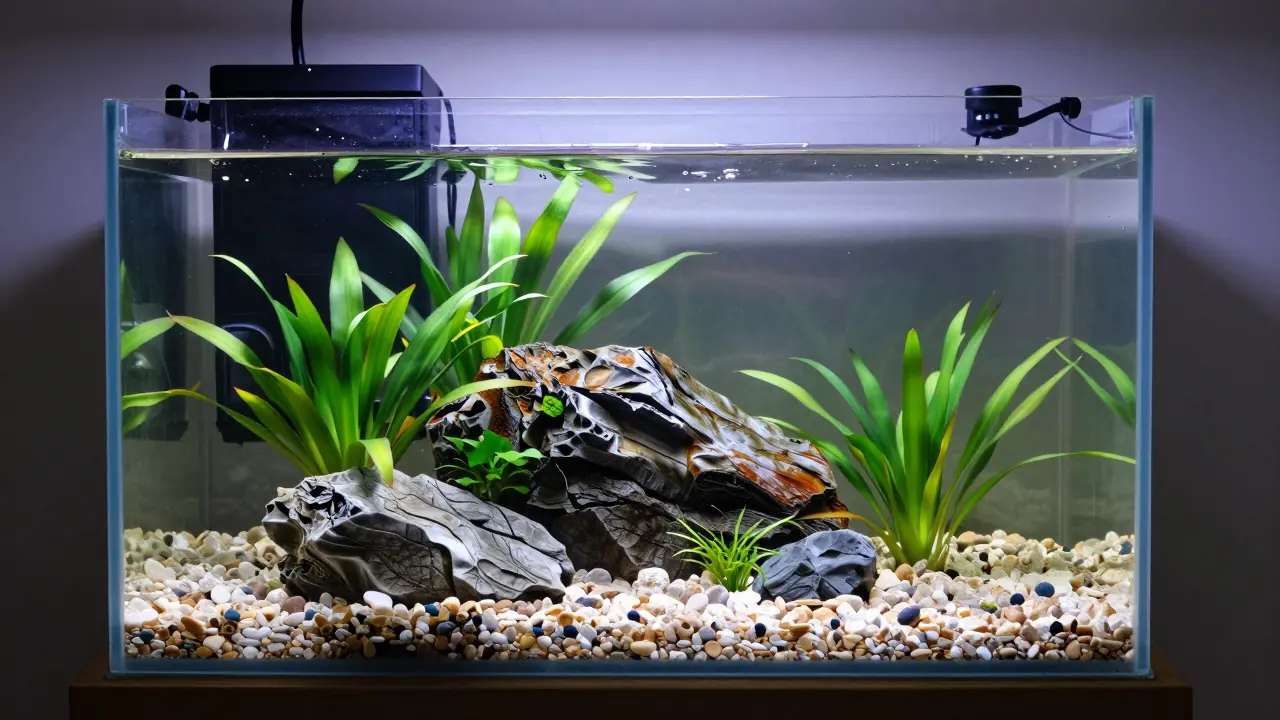
The safest way to raise pH in an aquarium is to raise carbonate hardness (KH) slowly, because KH is what holds pH steady. Crushed coral, aragonite, limestone rock or small amounts of baking soda do this. Make the change in small steps over several days, not in one dose.
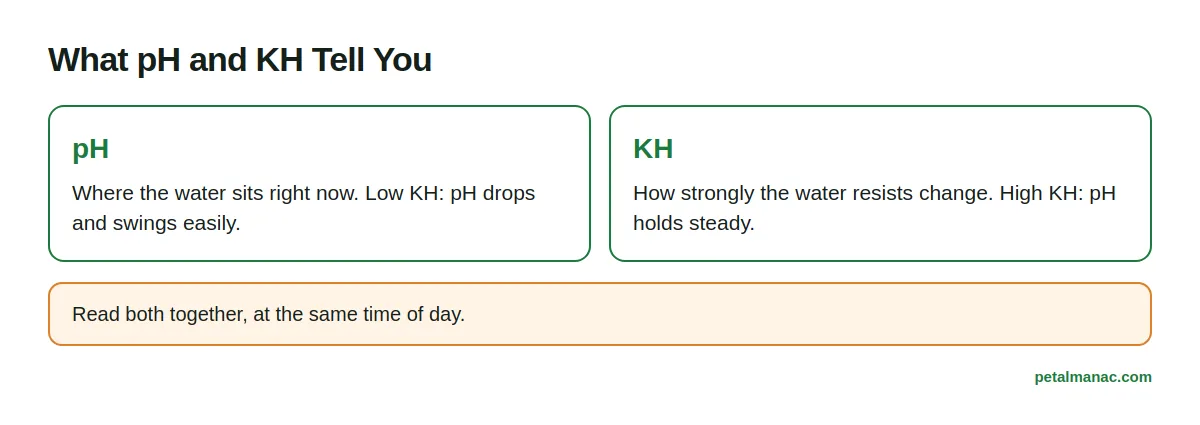
Should you raise pH at all?
Only change it when you have a reason. Most freshwater fish adapt to a range of pH values, and a stable reading in the 6s or 7s beats a perfect number reached by chemicals. Raise pH when your species needs harder, alkaline water (many livebearers and African rift lake cichlids are examples), when it has dropped over time, or when it is low enough to slow your filter bacteria. At about pH 6.5, growth of beneficial bacteria drops by roughly 90%, and near pH 6.0 they barely convert ammonia at all.
Wild water is not constant either. A lake can read 6.5 five feet down and 8.0 one foot down, and a single aquarium can swing from 7.0 to 8.6 in a day. That is why stability and slow correction matter more than hitting an exact number.
Measure pH and KH first
Read both pH and KH with a liquid kit before you do anything, and do it at the same time of day. pH tells you where the water sits. KH tells you how much it resists change. Low KH means pH drops easily and moves in big steps, while high KH means pH is difficult to shift in either direction.
Also read your tap water. If fresh tap water is already at the pH you want, the cheapest fix is simply more water changes with it.
Why pH drops
- Low KH. Waste and plant respiration use up carbonate buffer over time. Once it is gone, pH falls quickly. In old tanks this slide is gradual and easy to miss.
- Too much CO2. CO2 injection or poorly aerated, heavily stocked tanks push pH down. Higher KH absorbs more acidity and keeps pH higher.
- Decaying waste. Uneaten food and a dirty substrate acidify water. Old tank syndrome, where nitrate climbs above 160 ppm with no water changes, is a known cause of a crash.
- Driftwood, peat and leaves. They release tannins that lower pH, mostly in soft water.
- Soft source water. Rain or RO water has almost no buffer.
Methods to raise pH, from gentlest to quickest
Regular water changes with harder water
If your tap water is harder than the tank, routine changes steadily pull the tank toward it. This is the gentlest option and it also cleans the tank. Use dechlorinator, and see our water change guide.
Aeration and surface movement
Extra surface agitation drives off dissolved CO2, which nudges pH up slightly. It is a small effect, but it costs nothing and also adds oxygen. An air stone or a filter outlet aimed at the surface is enough.
Crushed coral and aragonite
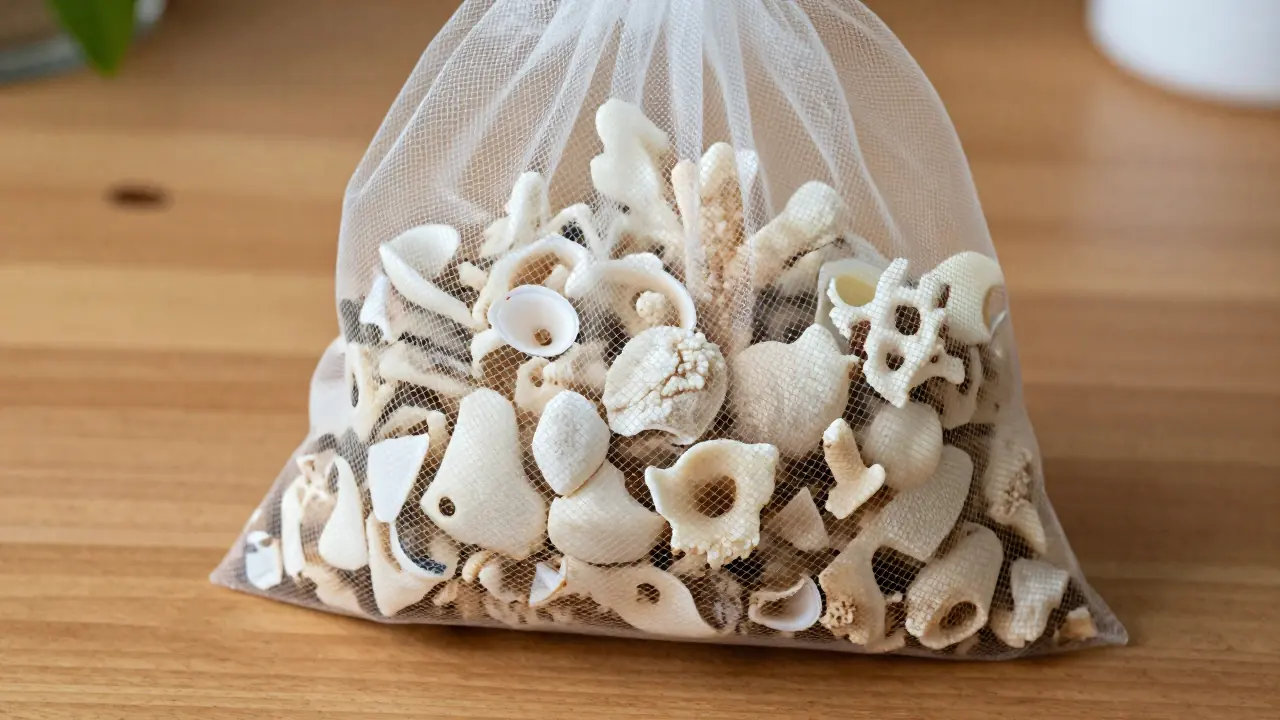
Both are calcium carbonate that dissolve slowly and add KH. Place a small bag in the filter or mix some into the substrate. They typically bring pH to about 7.6 to 7.9 within roughly two days, though readings can vary from 7.2 to 8.3, and a few tablespoons last three to six months. They take days or even weeks to settle, so add a little at a time. Because water saturates near 7.6 to 7.9, they do nothing once pH is already 8.0 or higher.
Rinse everything first and stay away from decorative rock that may contain unknown minerals.
Limestone and other calcium carbonate rock
Limestone, seashells and some hardscape stones dissolve slowly, which is useful for a slow, continuous buffer. Wash and sanitize them before use. See aquarium substrate for substrates that raise hardness.
Baking soda (sodium bicarbonate)
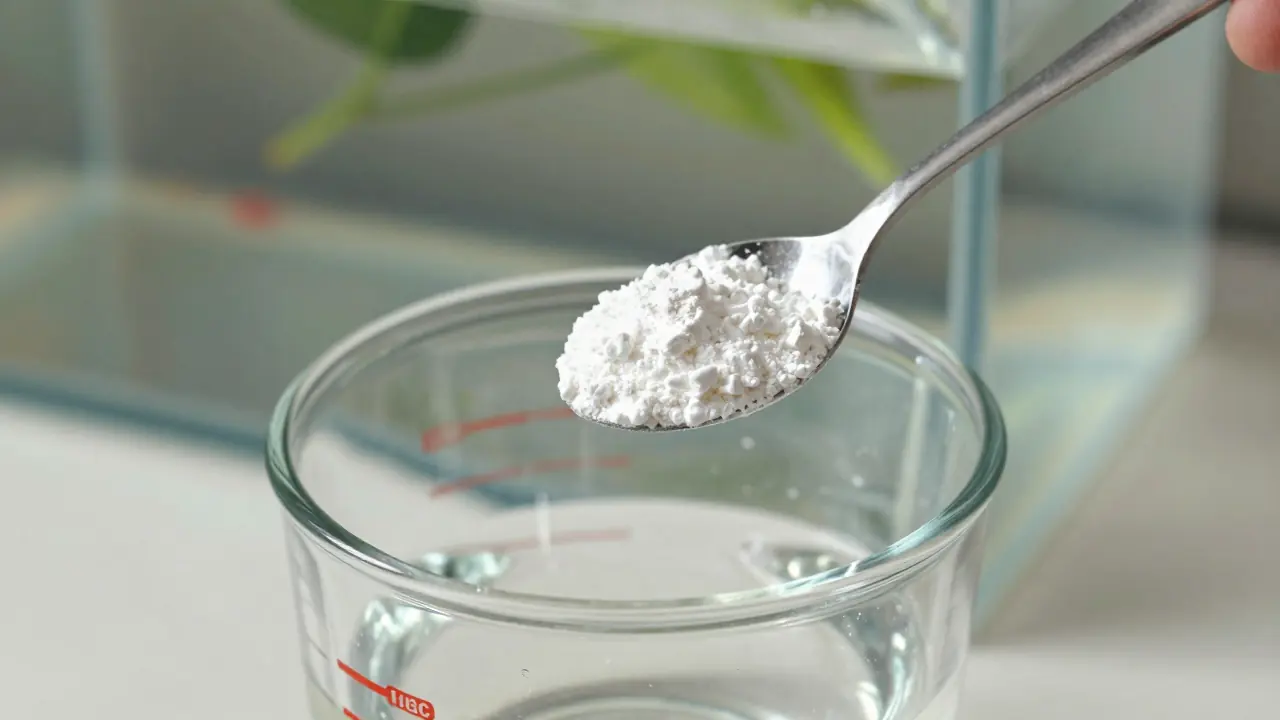
Baking soda raises KH and therefore pH. A common guideline is 1 teaspoon per 25 gallons, which typically lands between pH 7.5 and 8.0. Never add more at once. Add it only with water changes, wait a few days, read again, and stop once the pH is above 7.4. It works slowly, and it fades as buffer is used up, so the effect is not permanent.
Dissolve it in a cup of tank water first, add it away from fish, and never dose in one big batch. At normal doses it will not push a tank to extreme values. For a tank of rift lake fish that want pH 8.0, a blend of hardness salts adds minerals as well, with exact amounts printed on the product label.
Commercial pH-up products
These buffers work, but they are strong. Follow the dose on the bottle exactly, add them over several days and avoid mixing several products at once. Liquid adjusters often have only temporary effects because the pH drifts back when KH is low.
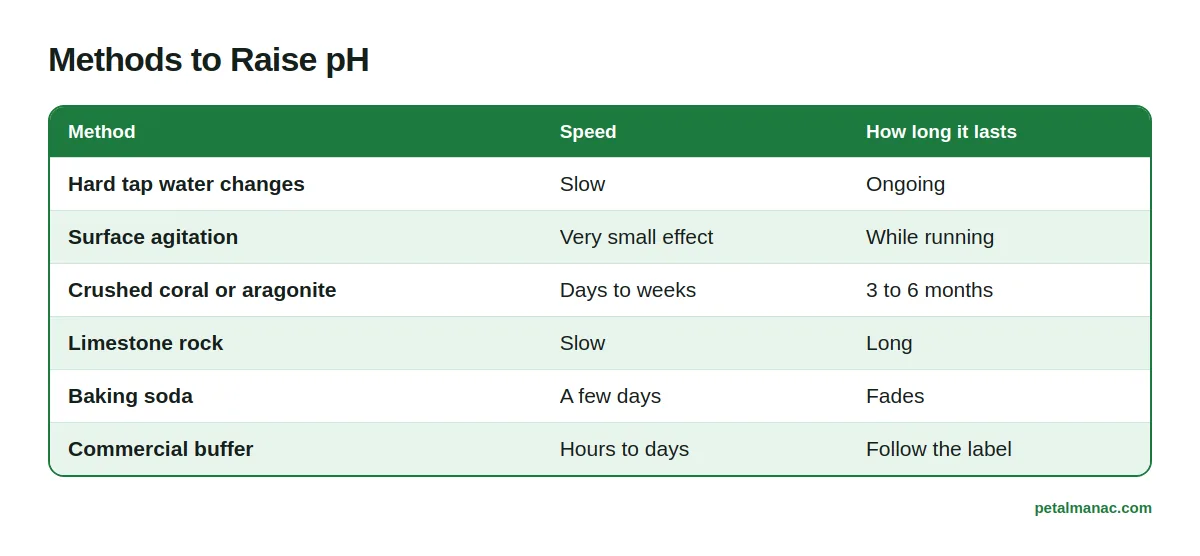
| Method | Speed | Lasts | Best for |
|---|---|---|---|
| Hard tap water changes | Slow | Ongoing | Gentle, routine correction |
| Surface agitation | Very small | While running | CO2 build-up |
| Crushed coral or aragonite | Days to weeks | 3 to 6 months | Steady buffer in the filter |
| Limestone rock | Slow | Long | Hardscape tanks |
| Baking soda | A few days | Fades | Adding KH during water changes |
| Commercial buffer | Hours to days | Short | Follow the label only |
How fast is safe?
Move pH slowly. A good plan is to change it in small steps spread over days. Fish are not instantly harmed by a small shift, but a large, quick change adds stress, and the lower the KH, the faster pH can jump after dosing. In practice, you add a little, wait at least a day, read pH and KH again, and decide the next step. When fish are new, acclimate them slowly to any difference between bag water and tank water.
Common mistakes
- Dosing without reading KH, so pH rises and then crashes again.
- Adding baking soda, crushed coral and a liquid buffer all at once.
- Chasing a number while fish are healthy.
- Adding calcium carbonate to a tank that is already near 8.0.
- Skipping water changes. Low pH from waste is cured by cleaning, not chemistry.
If your problem is the opposite and pH sits too high, read our sibling guide on how to lower pH in an aquarium.
More guides like this are in our How-To section.
FAQ
Is baking soda safe to raise pH?
Yes, in small, measured doses with water changes. Overdosing or dosing in one go is where problems start.
Will baking soda push pH above 8?
Not by itself in normal amounts. A guideline dose typically yields about 7.5 to 8.0.
How do I raise pH without chemicals?
Use hard tap water for changes, add crushed coral or limestone and increase surface movement.
Why does my pH keep dropping back?
KH is low, so the water cannot hold the change. Raise KH and keep up with water changes.

The Pet Almanac editorial team researches, writes and edits every care guide on the site. Each guide is fact-checked before publishing and reviewed again when care guidance or equipment changes.