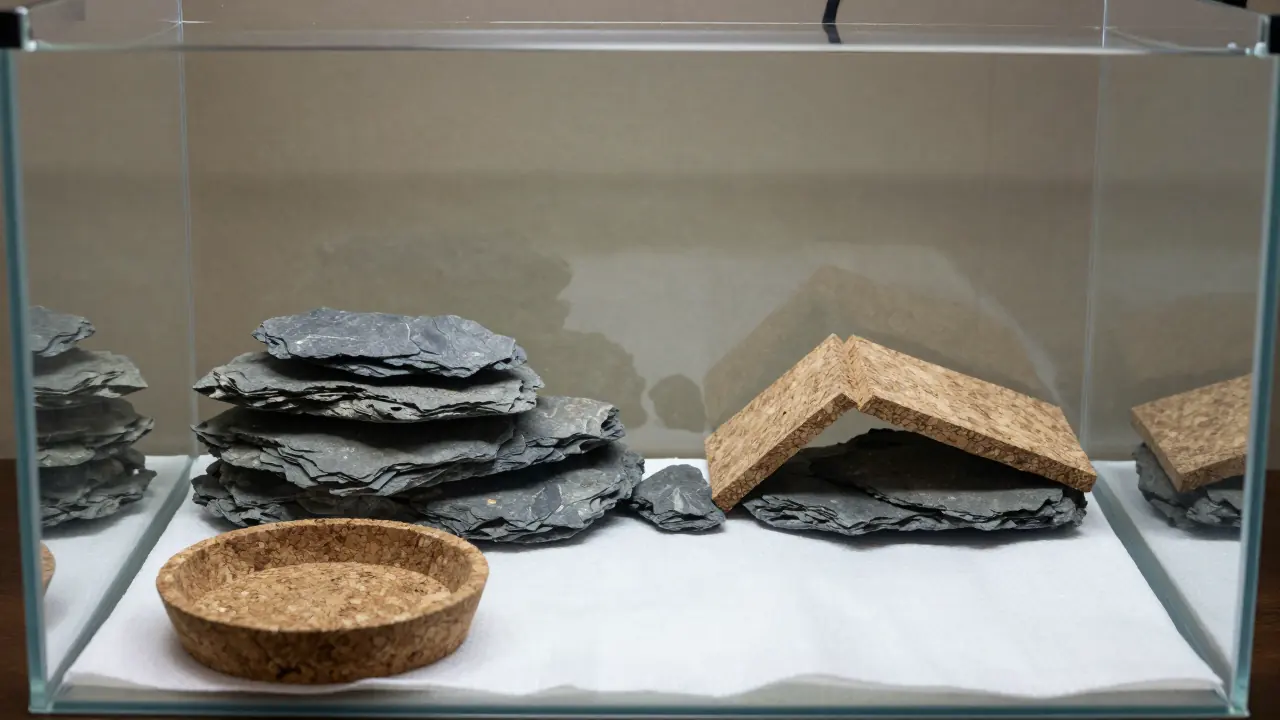
A leopard gecko needs an enclosure of at least 36 x 18 x 18 inches, which gives about 4.5 square feet of floor, with a warm side, a cool side, three hides, a dry safe substrate and shallow dishes. Floor space matters far more than height, so buy long and low, not tall.
This guide builds the enclosure in order, from the empty box to the finished layout. For the full species profile, see our leopard gecko care guide.
What size enclosure do leopard geckos need?
For an adult, plan on 36 x 18 x 18 inches with at least 4.5 square feet of floor space. That is the practical floor for a comfortable adult, and larger is better as long as the layout stays sensible. A 20 gallon tank is often quoted as the adult minimum, and 10 gallons for a baby. A 20 gallon works for a single adult in the short term, but it leaves little room for a proper temperature gradient, so treat it as a bare minimum, not a goal.
Do geckos prefer long or tall enclosures?
Long. Leopard geckos are ground-dwelling lizards, so they use floor area to walk, hunt and move between warm and cool zones. They will climb low logs, rocks and cork if you offer them, but extra height adds nothing a gecko can use. Spend your money on length and width.
Glass, wood or PVC?
All three work. Glass tanks are easy to find and easy to see into. Wood and PVC enclosures insulate well, which helps if you struggle to hold temperatures in a cool room. Whichever you choose, the enclosure needs ventilation and a secure, screened or solid lid that fits tightly.
Before you start: what to gather
- An enclosure with a secure top
- A heat source on a thermostat, plus a digital probe thermometer or temperature gun
- Three hides: warm, cool and humid
- A solid, non-loose substrate
- Two shallow dishes, one for water and one for food
- A few flat rocks, cork or logs for enrichment
How to set up a leopard gecko enclosure, step by step
Step 1: Clean and place the empty enclosure
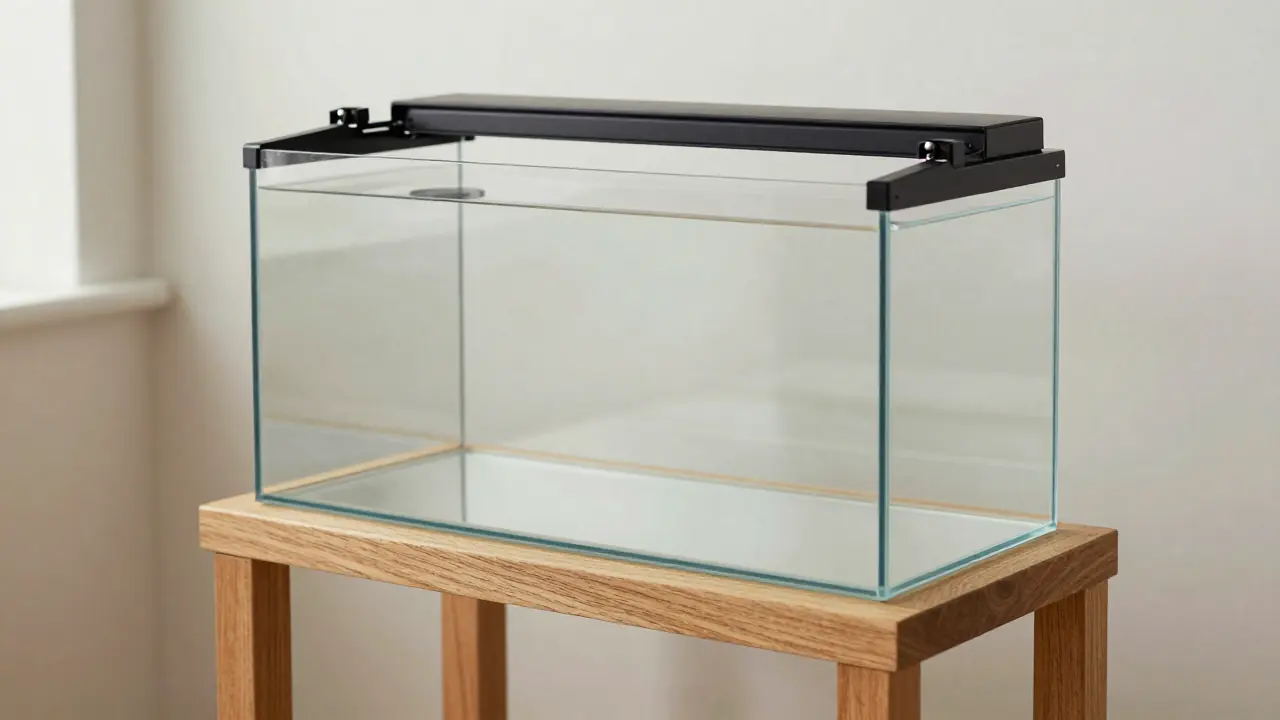
Wipe a new enclosure with plain water, dry it, and set it on a sturdy, level surface in a quiet room, away from drafts and direct sun. Choose a spot where you can reach all sides for cleaning. Leave the lid off while you work.
Step 2: Add the substrate
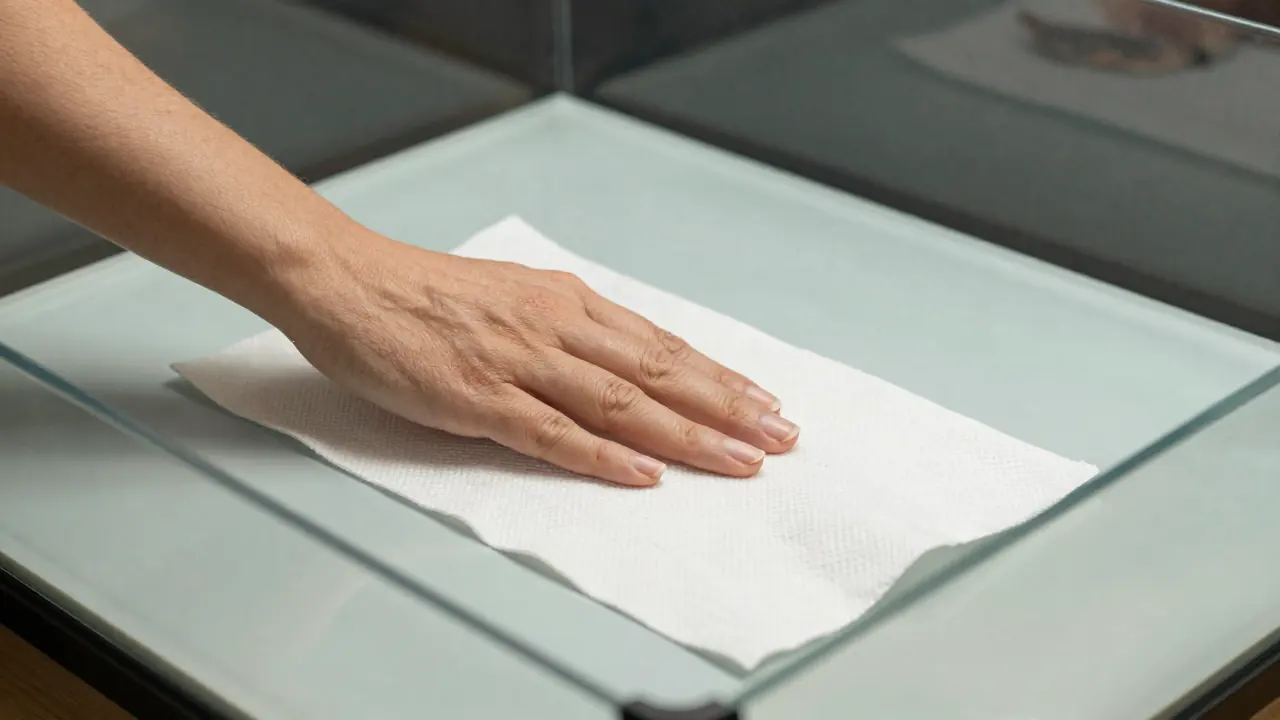
Spread your substrate across the whole floor. These options are widely used and safe:
- Paper towels, newspaper or butcher paper: cheap, easy to inspect, and replaced whenever soiled
- Reptile carpet: spot-clean daily, and deep clean or replace it monthly
- Ceramic tile: a hard, wipe-clean floor
- Aspen shavings, cypress mulch or coconut fiber: spot-scoop daily and replace entirely each month
Skip sand and calcium sand. A gecko that swallows loose sand can become impacted, and juveniles are the most at risk. Avoid heat rocks as well, since geckos are frequently burned by them.
Step 3: Place the three hides
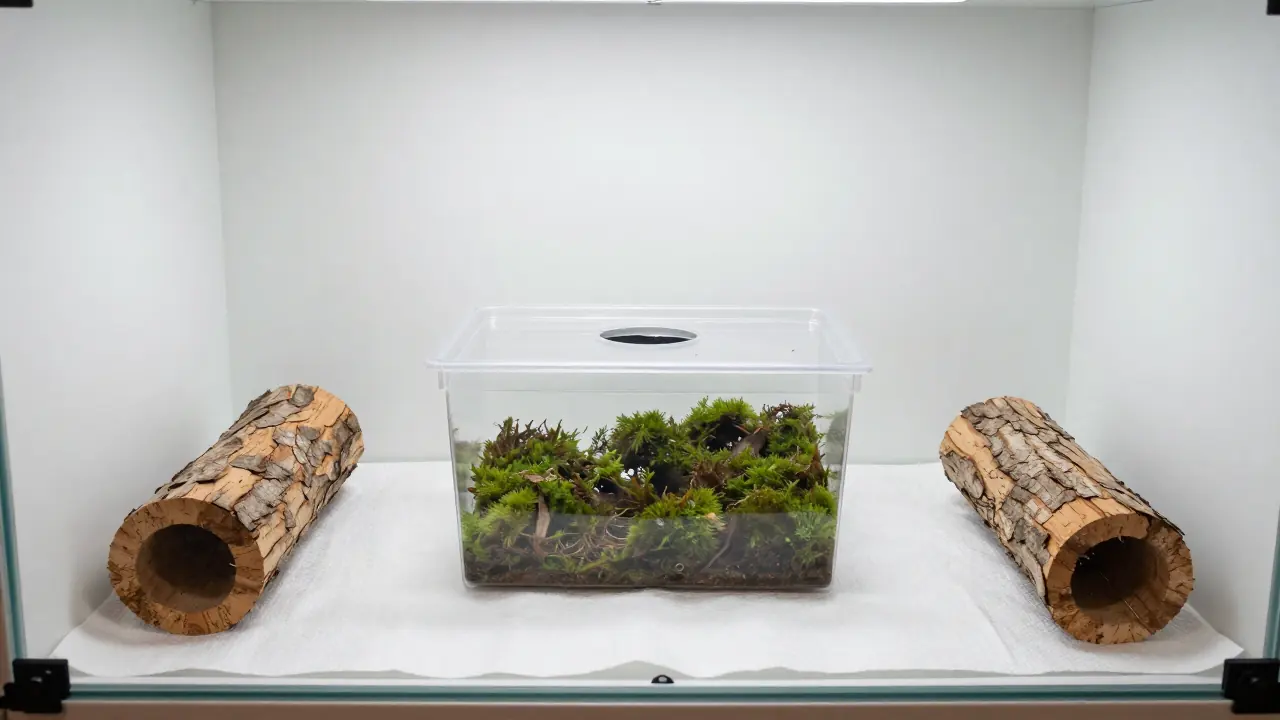
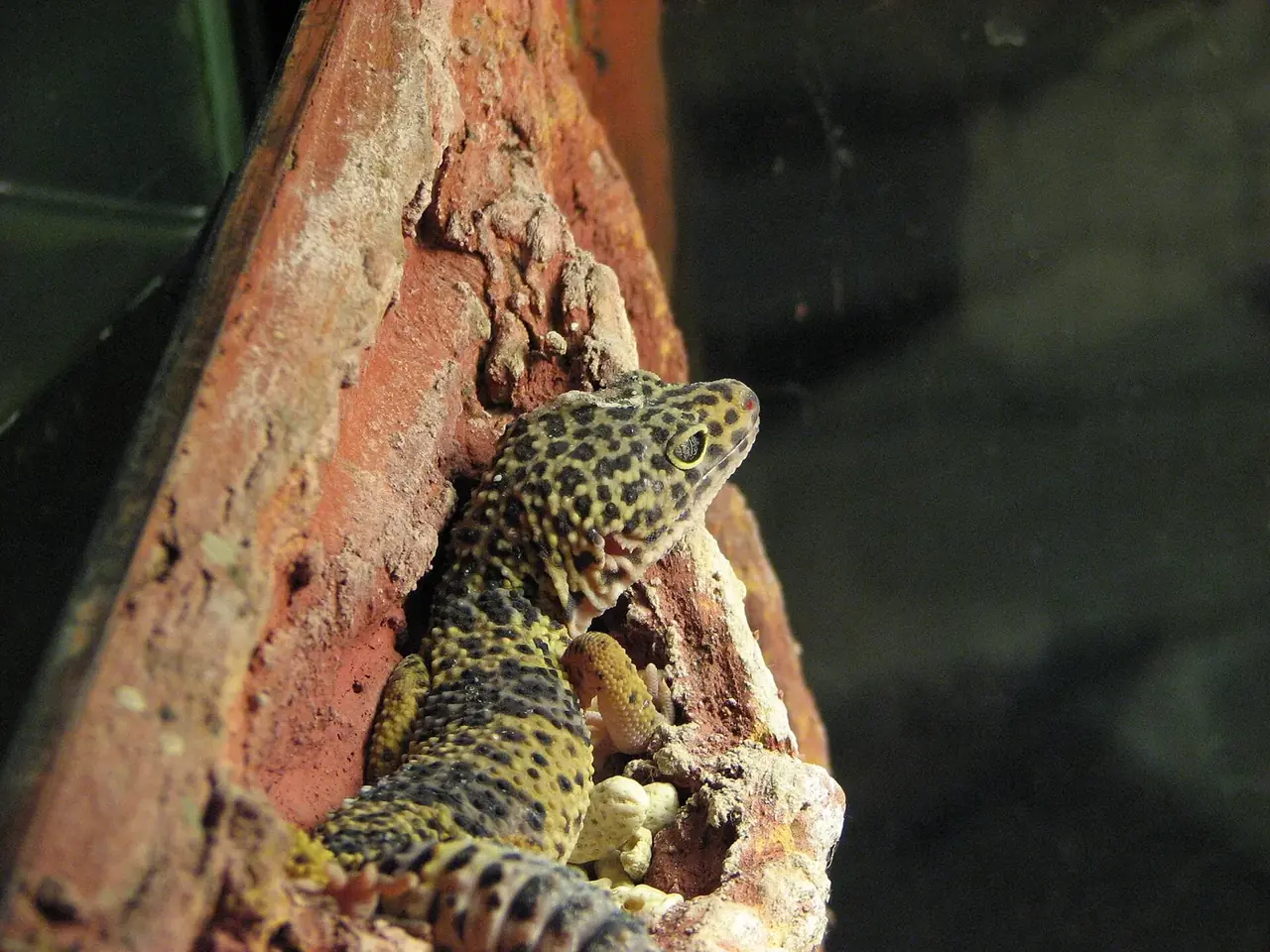
Every leopard gecko needs at least three hiding places, one warm, one cool and one humid. They look similar but do different jobs:
- Warm hide: sits on the heated side, directly over the warmest floor area, and lets your gecko rest at a good body temperature
- Cool hide: sits on the opposite end, so your gecko can cool off without leaving cover
- Humid hide: a closed hide kept damp inside, often placed on the warm side, which helps with shedding
Each hide should be snug enough that your gecko feels covered. Make sure each one is stable, and that nothing can tip over when your gecko climbs on it.
Step 4: Install the heat source and thermostat probe
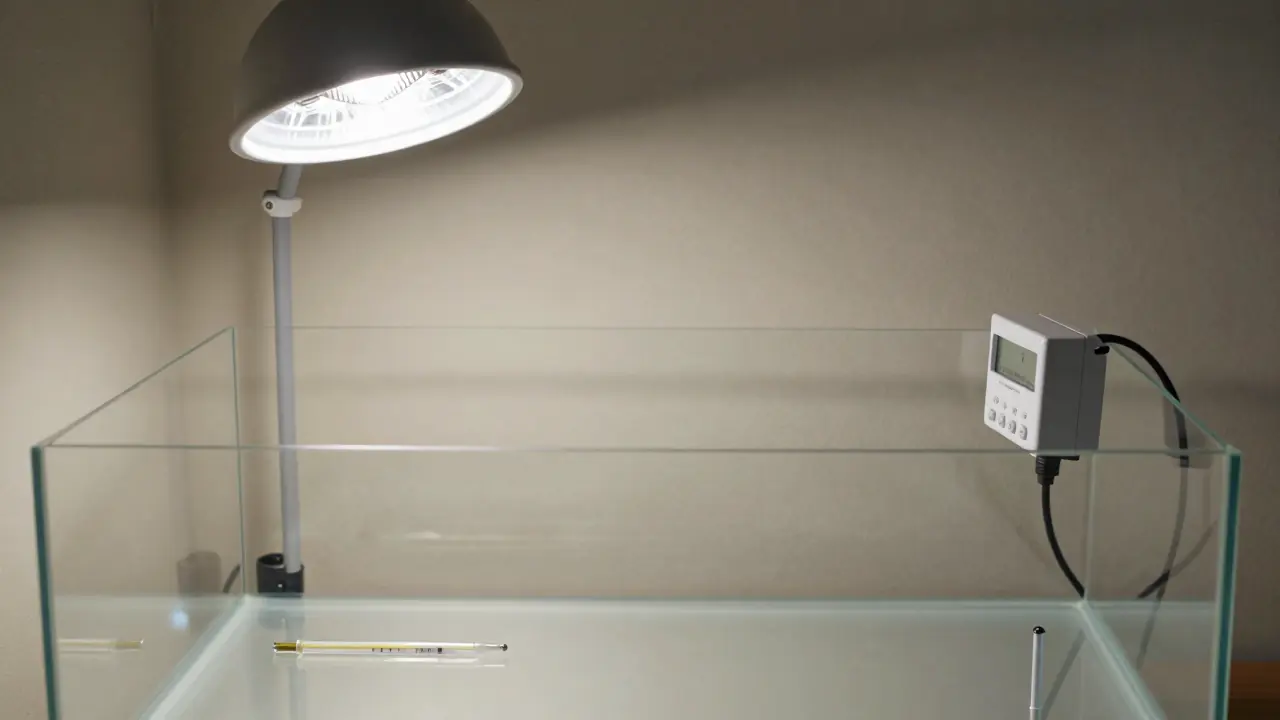
Put the heat on one end only. A gradient is the whole point: the warm side should read about 90 to 92°F, and the cool side should sit in the low to mid 70s, and never above 85°F. A basking spot on the warm side runs hotter, at roughly 94 to 97°F on the surface. Run every heat source through a thermostat, use only UL-listed equipment, and check the hot spot with a digital probe thermometer or temperature gun. Never rely on a stick-on dial. The full breakdown of lamps, mats and temperatures is in our leopard gecko heat and lighting guide.
Keep lamps and fixtures out of your gecko’s reach, protect cords from chewing and moisture, and never use a heat rock. A heat source without a thermostat can overheat the enclosure.
Step 5: Add the dishes
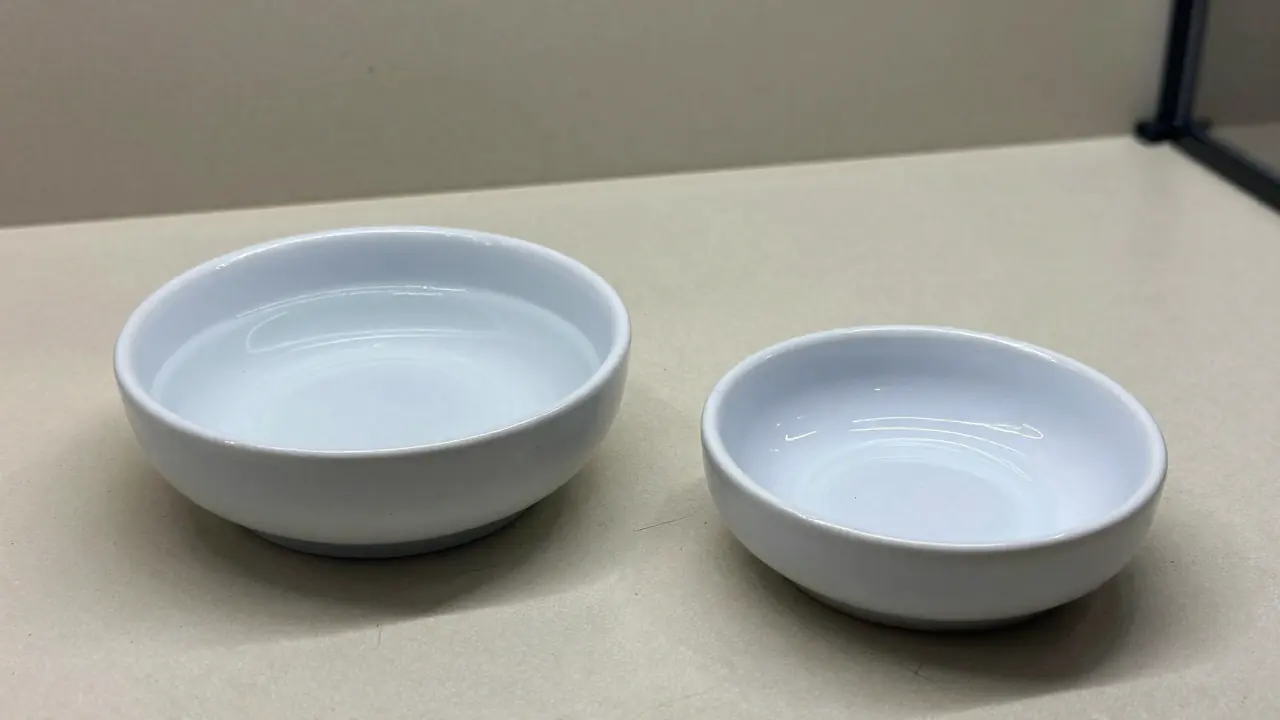
Use a shallow water dish that sits no deeper than your gecko’s ears, and empty, clean and refill it every day. A separate food dish keeps feeder insects and meals off the floor, which keeps the substrate cleaner. Place dishes on the cooler half of the enclosure, away from the humid hide, so the whole tank doesn’t turn damp.
Step 6: Finish with decor and check the gradient
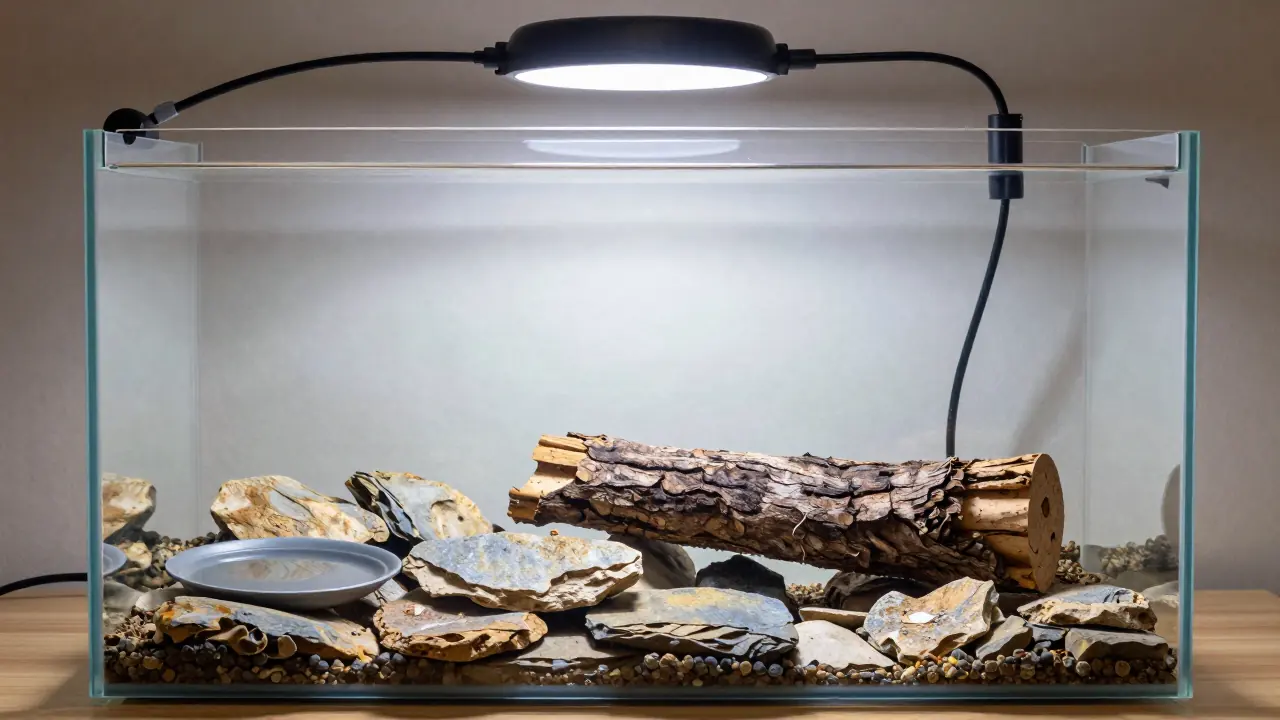
Add flat rocks, cork pieces or low logs to give your gecko something to climb and explore. Then close the lid, switch on the heat, and let the enclosure run for a day before the gecko moves in. Read the warm side, cool side and humid hide, adjust the thermostat, and recheck the next morning.
Décor and enrichment
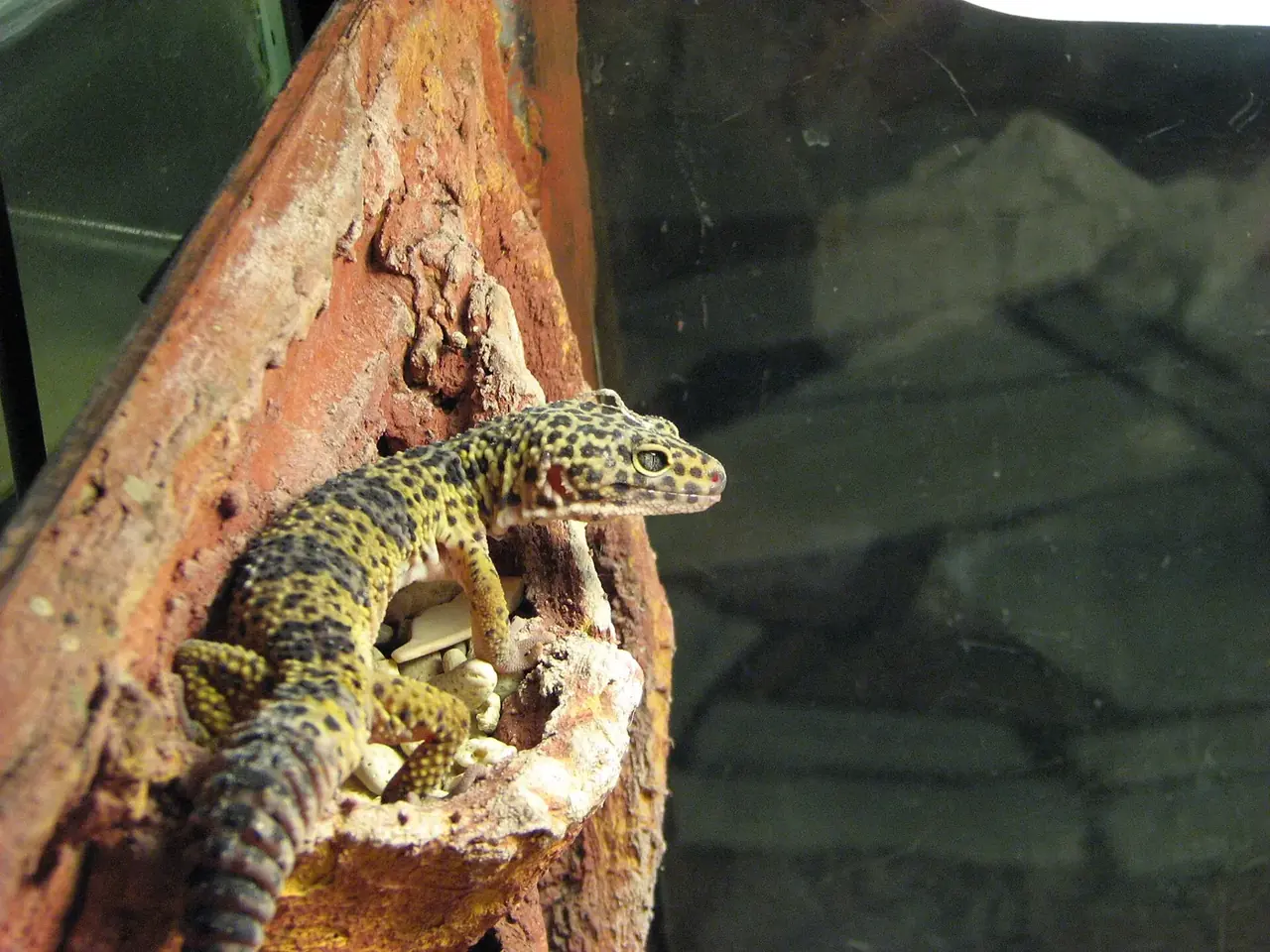
A gecko with nothing to do is a bored gecko. Offer a few textures and levels: flat rocks, rounded logs, cork bark and a variety of hide shapes. Keep everything low, stable and free of sharp edges. Rearranging items now and then keeps the enclosure interesting without adding clutter, but never move the hides out of their warm and cool positions.
Can leopard geckos live together?
No. House one gecko per enclosure. Sharing a space can lead to dropped tails, severe bite wounds and even broken bones, and a male and female together will breed whether you plan for it or not. A solo setup is the safe choice, and a single leopard gecko does not get lonely.
Cleaning and upkeep
Remove droppings at least once a week, and do a thorough clean of the substrate every two weeks. Dishes are refreshed daily. With reptile carpet, spot-clean daily and replace or deep clean monthly. Keep the humid hide damp but not soaking, and keep the rest of the enclosure dry, at about 30 to 40 percent humidity. The humid hide is the one deliberate exception.
Leopard gecko enclosure FAQ
What size enclosure do leopard geckos need?
Aim for 36 x 18 x 18 inches or larger, with at least 4.5 square feet of floor. A 20 gallon tank is the commonly quoted minimum for one adult, but a longer enclosure gives a better gradient.
Do geckos prefer long or tall enclosures?
Long ones. Leopard geckos live on the ground, so floor area matters far more than height.
What is the best substrate for a leopard gecko?
Paper towels, newspaper, reptile carpet or ceramic tile are the easiest to keep clean and safe. Avoid sand.
How many hides does a leopard gecko need?
At least three: a warm hide, a cool hide and a humid hide.
Once the gradient holds steady for a full day and night, the enclosure is ready. Stock the feeders next with our guide to what leopard geckos eat, see how long leopard geckos live to plan for the years ahead, and browse more reptile care guides.

The Pet Almanac editorial team researches, writes and edits every care guide on the site. Each guide is fact-checked before publishing and reviewed again when care guidance or equipment changes.