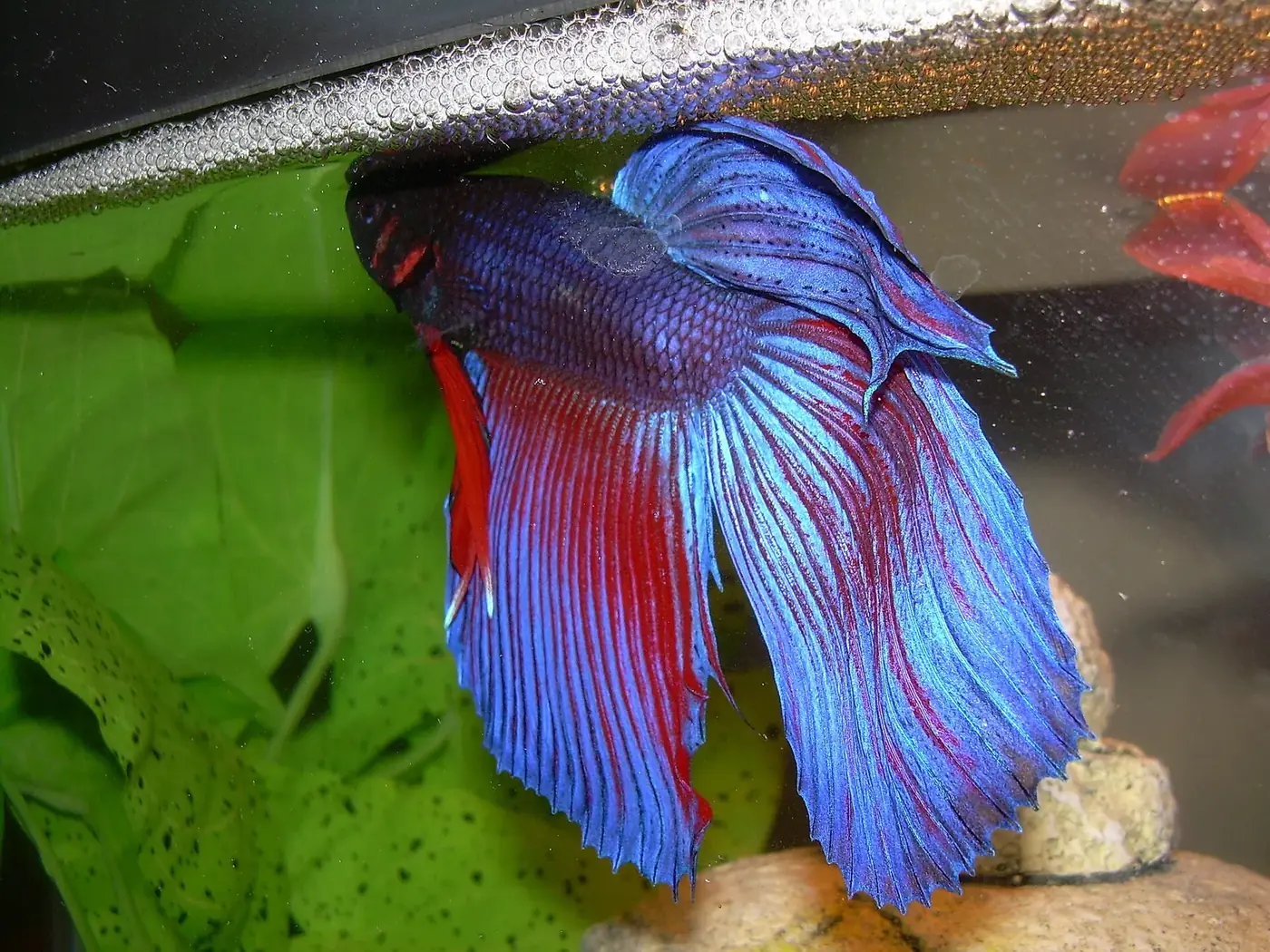
The betta in a plastic cup at the pet store sends the wrong message. It suggests a fish that needs almost nothing, when bettas are tropical fish that need warm, clean, stable water to stay active and colorful. Get four things right (tank size, heat, water quality and diet) and a betta is one of the easier fish you can keep, provided the tank is fully cycled before the fish arrives.
Care sheet: Betta fish (Betta splendens)
- Minimum tank
- 5 gal (10 gal ideal, 2.5 to 3 gal absolute floor)
- Temperature
- 76 to 81°F
- pH
- 6.5 to 7.8 (about 7 ideal)
- Adult size
- 2.5 to 3 in (body)
- Lifespan
- 2 to 5 years
- Care level
- Beginner, with a cycled tank
Choosing a Healthy Betta
Start with the fish itself. A healthy betta is active and alert, with bright color, intact fins and a good appetite. Skip a fish that is listless, bloated, clamped up or missing chunks of fin, and skip any fish sitting in a dirty cup or tank. Bettas are also labyrinth fish: they have a special organ that lets them gulp air at the surface, which is part of why they survive in poor water. It does not mean they thrive in it.
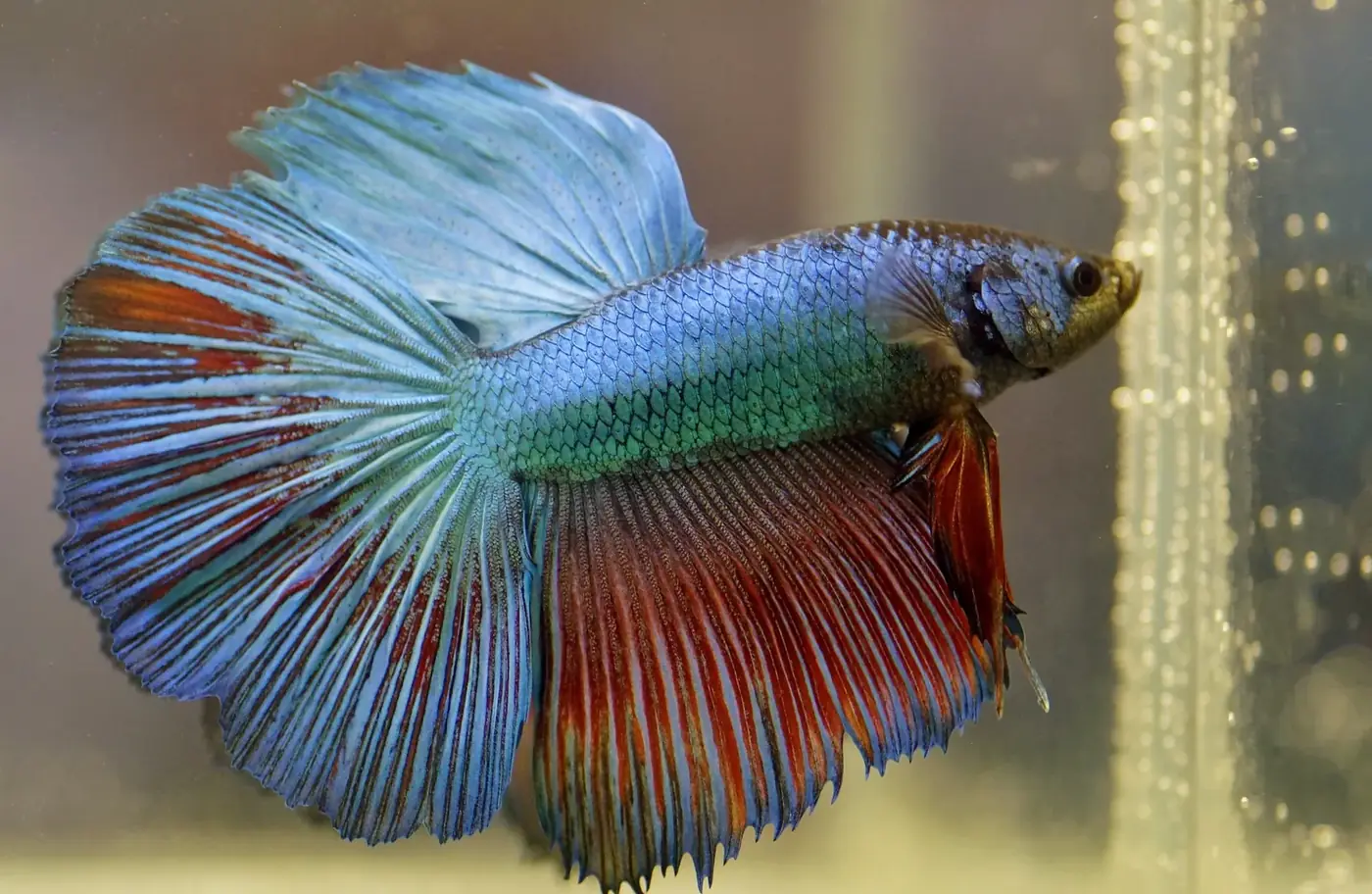
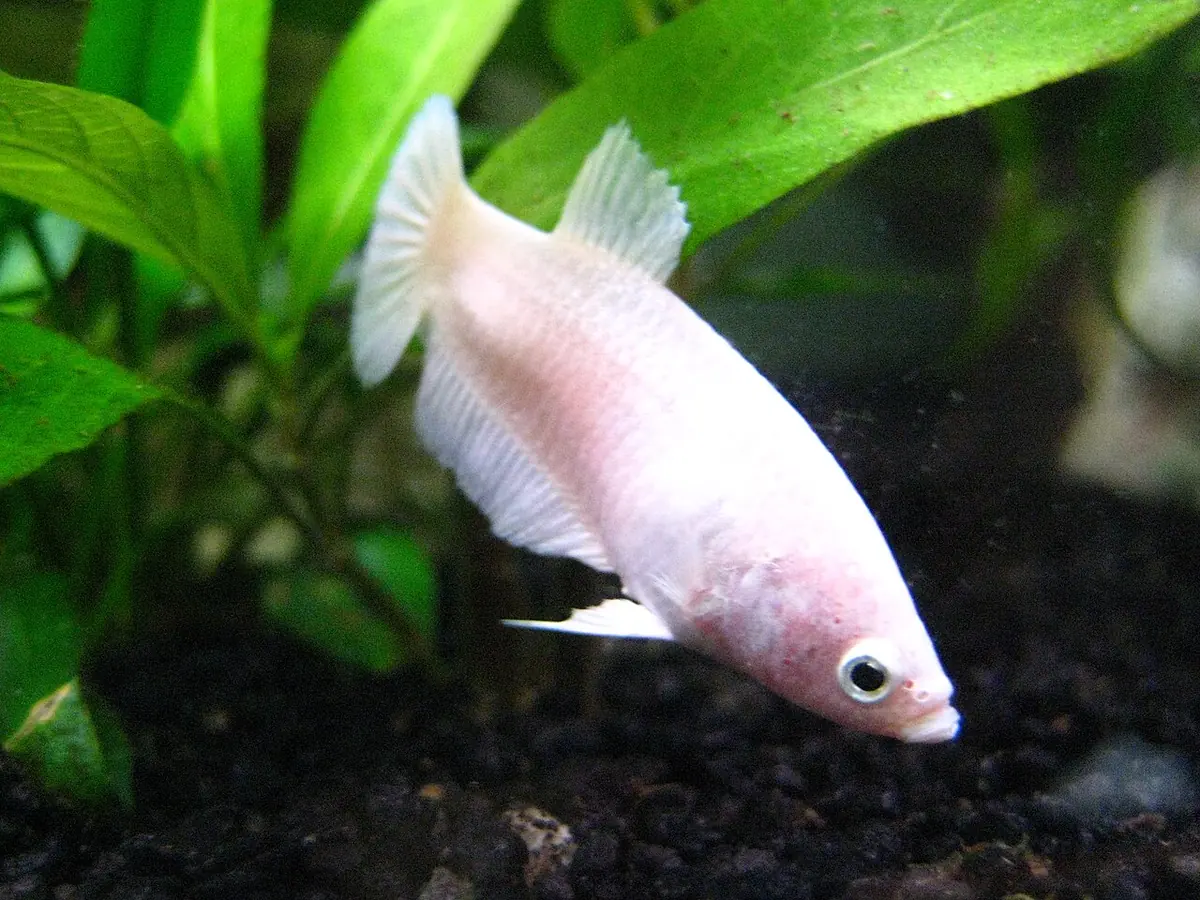
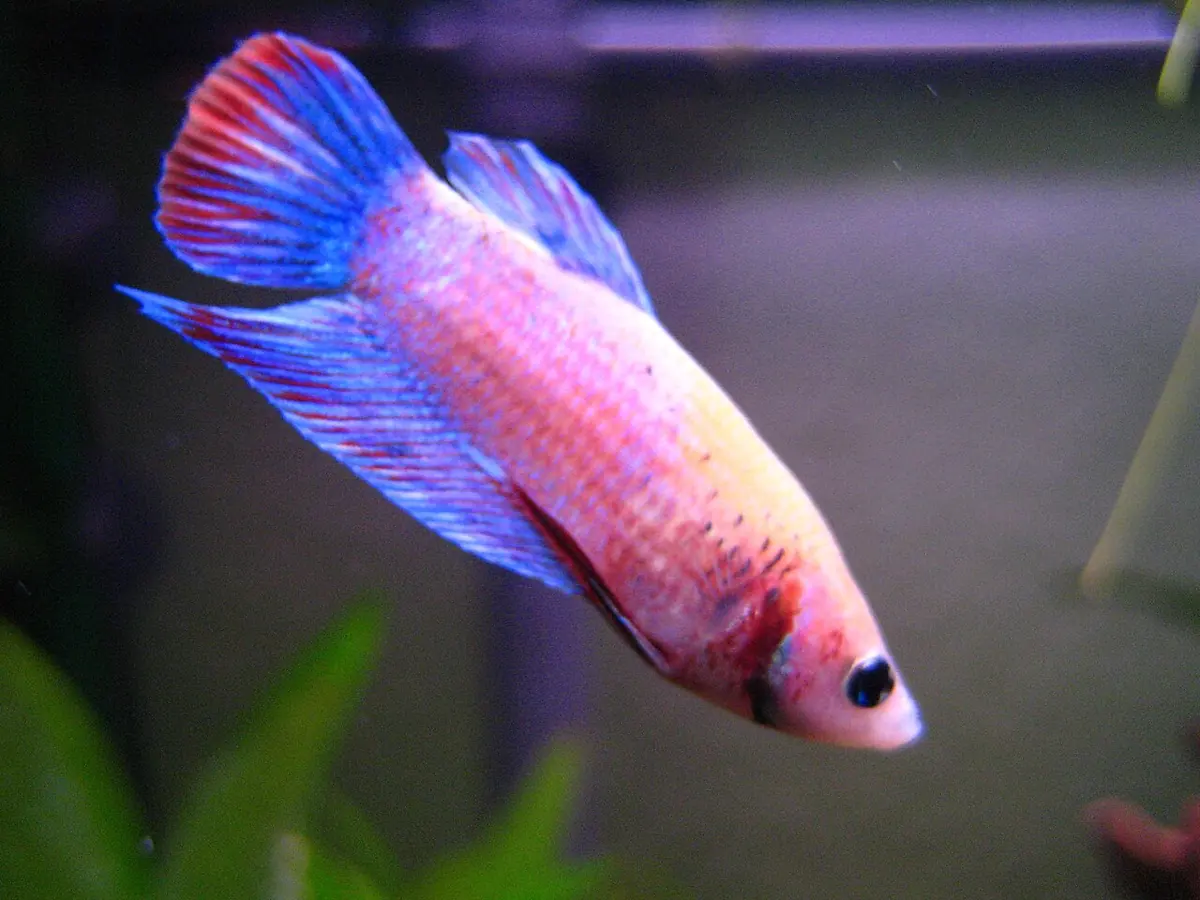
Males are the long-finned, colorful fish most stores sell. They are territorial and can be quite aggressive, and bettas are not schooling fish. Plan on one male per tank.
Tank Size and Setup
Start with a tank of 5 gallons or more. The absolute floor is 2.5 to 3 gallons, and 10 gallons or larger is ideal, but 5 gallons is the practical minimum. A bigger volume holds its temperature and water quality longer, so small mistakes take days to show instead of hours. Jars, vases and small bowls are too small. Remember that water weighs about 8.3 lb per gallon, so a 10-gallon tank holds roughly 83 lb of water before you add the glass, substrate and stand.
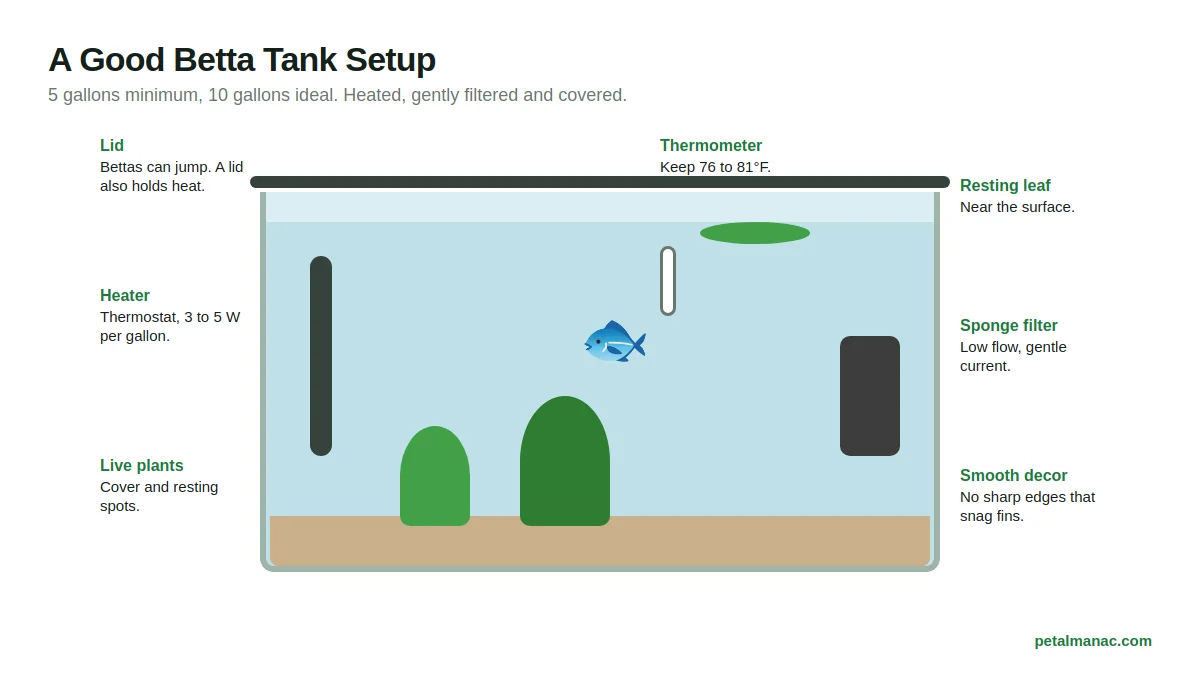
A good betta setup has:
- A lid. Bettas can jump, and a covered tank also loses heat and water more slowly. Do not fill the tank to the brim, because the fish needs open space below the lid to breathe air from the surface.
- A gentle filter. Long fins struggle in strong current. An air-driven sponge filter, a box filter or a filter with adjustable flow works well.
- A heater and thermometer. See the temperature section below.
- Plants and resting spots. Live or silk plants, plus leaves or decor near the surface where the fish can rest.
- Smooth decor. Skip sharp plastic plants and rough ornaments that can snag fins.
Assemble everything, rinse the substrate and decor in plain tap water (never soap), fill the tank, treat it with water conditioner and let the equipment run for at least 24 hours before the fish goes in. Then cycle it. A betta added to a brand-new tank meets ammonia from day one, and cycling takes about four to six weeks. Our guide on how to cycle a fish tank walks through the process. A fishless cycle is the kinder route for a betta, because a fish-in cycle exposes it to ammonia and nitrite.
Use an aquarium heater with a built-in thermostat, unplug the heater and filter before putting your hands in the water, and leave a drip loop in every power cord so water cannot run down into the outlet.
Lighting, Substrate, Plants and Decor
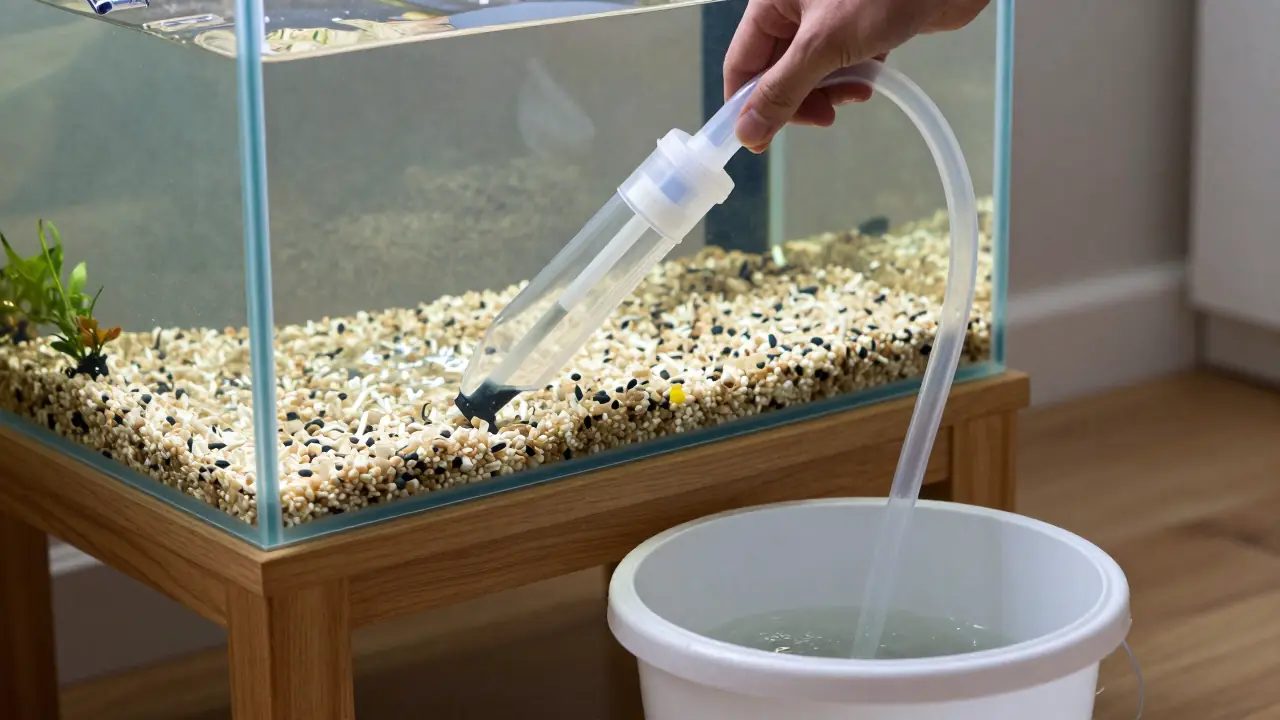
A simple LED light on a timer gives the tank a steady day and night rhythm, and about 12 hours of light a day is a reasonable schedule. It also helps live plants grow. Substrate is optional, but if you use gravel or sand, vacuum it during weekly water changes so waste does not build up.
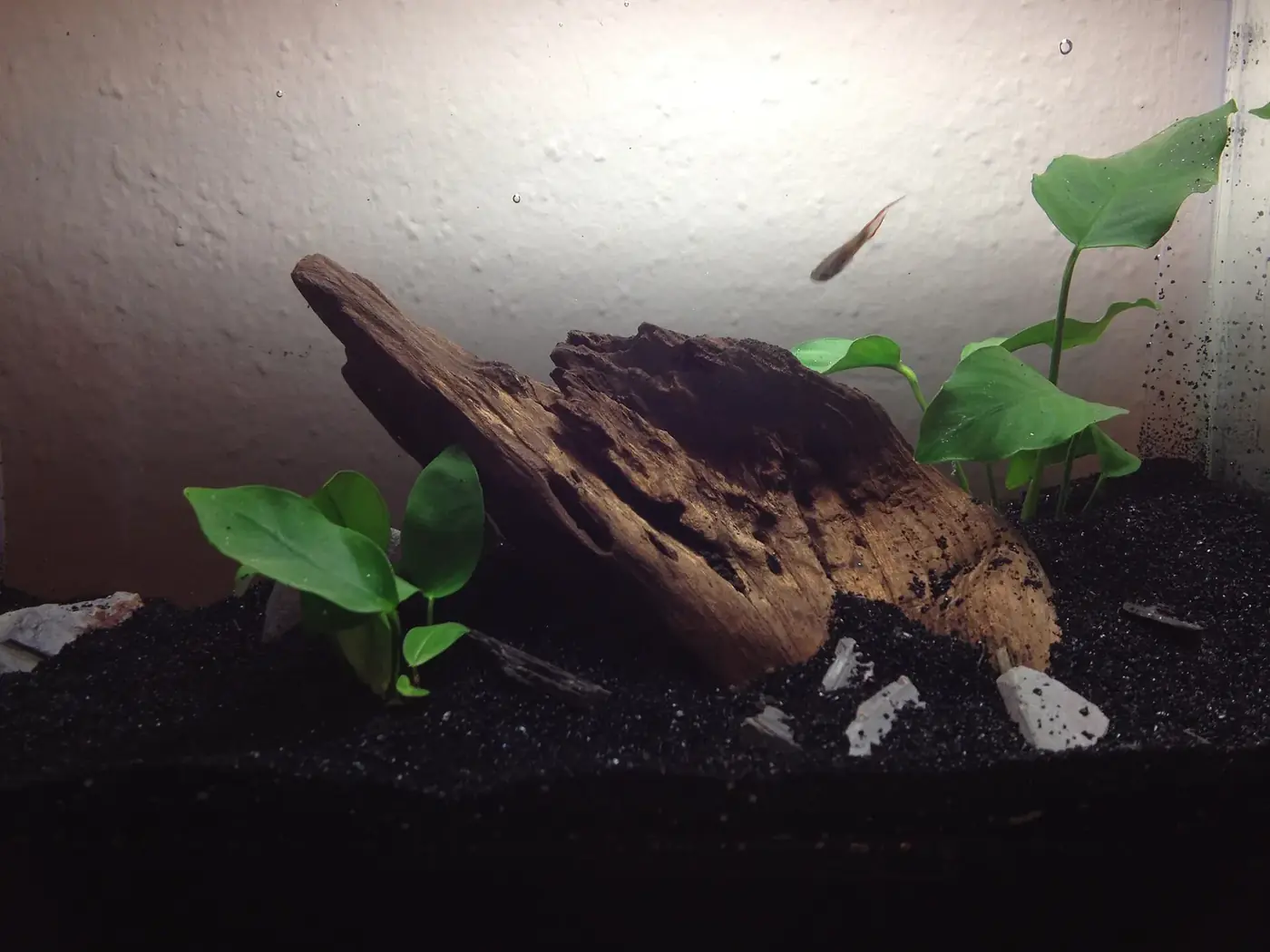
Live plants help hold water quality steady and give the fish hiding places. Live plants, driftwood and smooth, inert rock all suit a betta. Avoid sharp decorations, rusty metal, flaking painted ornaments, and shells, coral or crushed coral sand, which can change the water’s pH.
Bettas rest a lot, and a favorite resting place is a leaf or broad plant near the surface. A soft leaf perch, a floating plant or a large silk leaf gives the fish somewhere to lie without fighting the current. Rearranging or adding decor every so often creates new hiding places and territories, which keeps the fish interested in its surroundings.
Heater and Water Temperature
Bettas need warm water. Keep the tank between 76 and 81°F and, more important than any single number, keep it steady. Bettas are tropical fish, and cool water leaves them sluggish, so stay in the warm range. In most homes that means a heater, even in warm climates, because a heater prevents the swings that happen overnight.
A good rule is roughly 3 to 5 watts of heater per gallon. In practice:
| Tank size | Heater size (3 to 5 W per gallon) |
|---|---|
| 5 gallons | 15 to 25 watts |
| 10 gallons | 30 to 50 watts |
| 20 gallons | 60 to 100 watts |
Use the higher end if the room runs cold. Add a separate thermometer on the opposite side of the tank so you can confirm the heater is doing its job.
Water Quality and Water Changes
Clean water matters more than anything you put in the tank. Treat new tap water with a conditioner that removes chlorine, chloramine and heavy metals, and check ammonia, nitrite, nitrate and pH every week with a liquid kit. Here are the readings to aim for:
| Reading | Target | Act when |
|---|---|---|
| Ammonia | 0 ppm | Anything above 0 ppm |
| Nitrite | 0 ppm | Anything above 0 ppm |
| Nitrate | Under 20 ppm | Above 20 ppm |
| Chlorine | 0 ppm | Any reading, so use conditioner |
| pH | About 7 (6.5 to 7.8 tolerated) | Sudden swings |
Change 15 to 25% of the water every week. If ammonia or nitrite shows up, or nitrate climbs past 20 ppm, change water sooner. When you clean, rinse filter media in old tank water rather than tap water so you keep the beneficial bacteria, and avoid deep cleaning that removes everything at once.
Aim for pH around 7. Bettas tolerate roughly 6.5 to 7.8, and a stable reading inside that range is better than a perfect number that swings. Tap water can be used for a betta tank as long as it is treated with conditioner, and keeping the tank’s pH close to your tap water’s pH makes frequent water changes gentler. If your tap water sits far outside the range, read how to lower pH in an aquarium before you change anything.
What to Feed a Betta
Bettas are carnivores. In the wild they eat small insects and larvae, so use a high-protein food made for bettas as the staple, and feed once or twice a day. Give only what the fish eats within a couple of minutes, roughly the size of its eye, then remove leftovers so they do not rot and foul the water. Overfeeding is one of the fastest ways to ruin water quality in a small tank, and it can cause digestive trouble in the fish. Many keepers also skip one feeding a week to give the fish’s digestion a rest.
- Staple: betta pellets or a betta-specific flake.
- Variety: frozen, freeze-dried or live foods such as bloodworms, brine shrimp and mosquito larvae, offered two or three times a week.
- Skip: general tropical flakes as the only food, and plant roots in vases, which are not food.
Betta Tank Mates
Two male bettas will fight, sometimes fatally, so never house them together. A male can live alone, which is the simplest option, or with small, peaceful species in a larger, well-planted tank. Avoid fin-nippers such as tiger barbs and other long-finned fish that a betta may treat as rivals, and watch for other fish nipping the betta’s flowing fins.
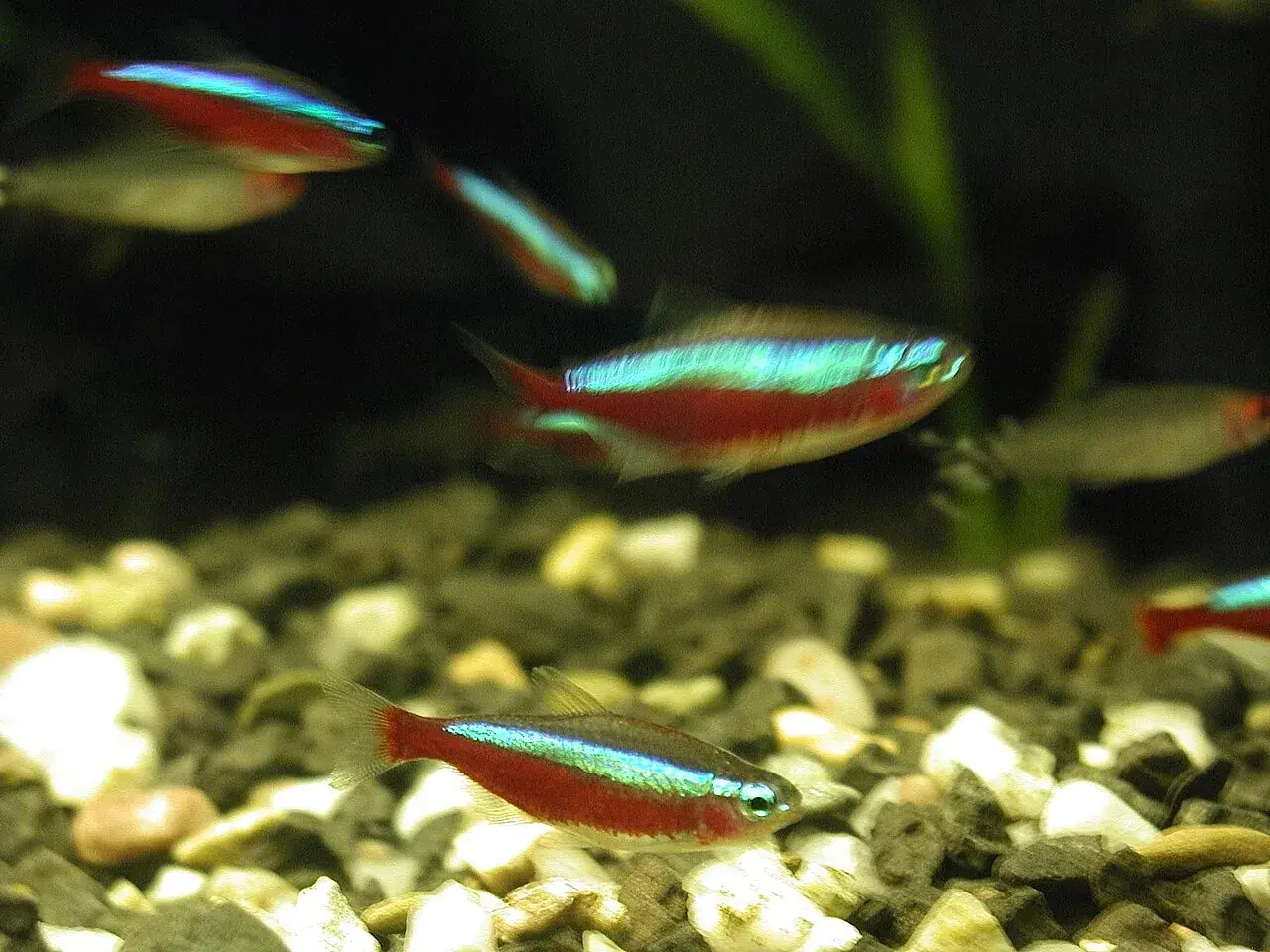
Possible companions include corydoras, mystery snails, ghost shrimp and some small tetras or rasboras. Individual bettas vary, so watch closely for the first days and always be ready to move a fish if the betta attacks or gets harassed. Quarantine any new fish for about 30 days in a separate, cycled tank before adding it, so illness does not spread.
Females can be kept as a group, often called a sorority, but only in a tank of at least 10 gallons with plenty of hiding places. Group sizes vary by keeper: some advise three to five females, others six or more, and odd numbers help spread aggression. Sororities suit experienced keepers, not first-timers.
Signs of a Healthy Betta and When to Call a Vet
A healthy betta shows bright color, intact fins, normal activity and a good appetite. Warning signs include refusing food, lethargy, unusual swimming, fins clamped against the body, scraping against objects, a thin or swollen body, worsening frayed fins, and new spots or growths.
If your betta seems unwell, check the temperature and the ammonia, nitrite and nitrate readings first, since poor water is the most common culprit, and do a water change if the numbers are off. If the fish does not improve, contact an aquatic veterinarian rather than guessing at a fix.
Who Should Not Get a Betta
Weekly Betta Care Routine
| How often | Task |
|---|---|
| Daily | Feed once or twice, check the thermometer and equipment, look over fins and behavior |
| Weekly | Change 15 to 25% of the water, vacuum the substrate, check ammonia, nitrite, nitrate and pH |
| Monthly | Rinse filter media in old tank water, trim plants, wipe algae off the glass and decor |
FAQs
Are betta fish easy to care for?
They are beginner-friendly when the setup is right: a heated, filtered, fully cycled tank of 5 gallons or more and a weekly water change. The myth that they thrive in a bowl is what makes them seem harder than they are.
What do betta fish like most in their tank?
Warm, still-to-gentle water, plenty of plants, and soft leaves or decor near the surface to rest on, plus smooth hiding places.
What are the do’s and don’ts of betta care?
Do cycle the tank, heat it, filter gently, feed small portions and change water weekly. Do not house two males together, use sharp decor, overfeed or keep the fish in an unheated bowl.
Do betta fish need a filter?
Yes. A filter keeps ammonia from building up between water changes. Choose a low-flow model such as a sponge filter so the fish is not pushed around by the current.
Can a betta live in a bowl?
It can survive for a while, but a bowl has no heater, no filter and very little water, so temperature and water quality swing constantly. A heated, filtered tank of 5 gallons or more is the right home.
Can betta fish live in tap water?
Yes, once it is treated with a conditioner that removes chlorine, chloramine and heavy metals. Never use untreated tap water.
How do you know a betta is happy?
A content betta is active, eats eagerly, explores the tank, rests on plants or leaves, and shows bright color and open, undamaged fins. Hiding constantly, hanging at the bottom or refusing food are signs to check the water.
How long do betta fish live?
Most pet bettas live 2 to 5 years, and 3 to 5 is a realistic goal with good care. See our full guide to how long betta fish live.
A betta that is warm, well fed and kept in clean, stable water rewards you with color and personality for years. Set the tank up right once, keep the weekly routine, and the rest takes care of itself.

The Pet Almanac editorial team researches, writes and edits every care guide on the site. Each guide is fact-checked before publishing and reviewed again when care guidance or equipment changes.