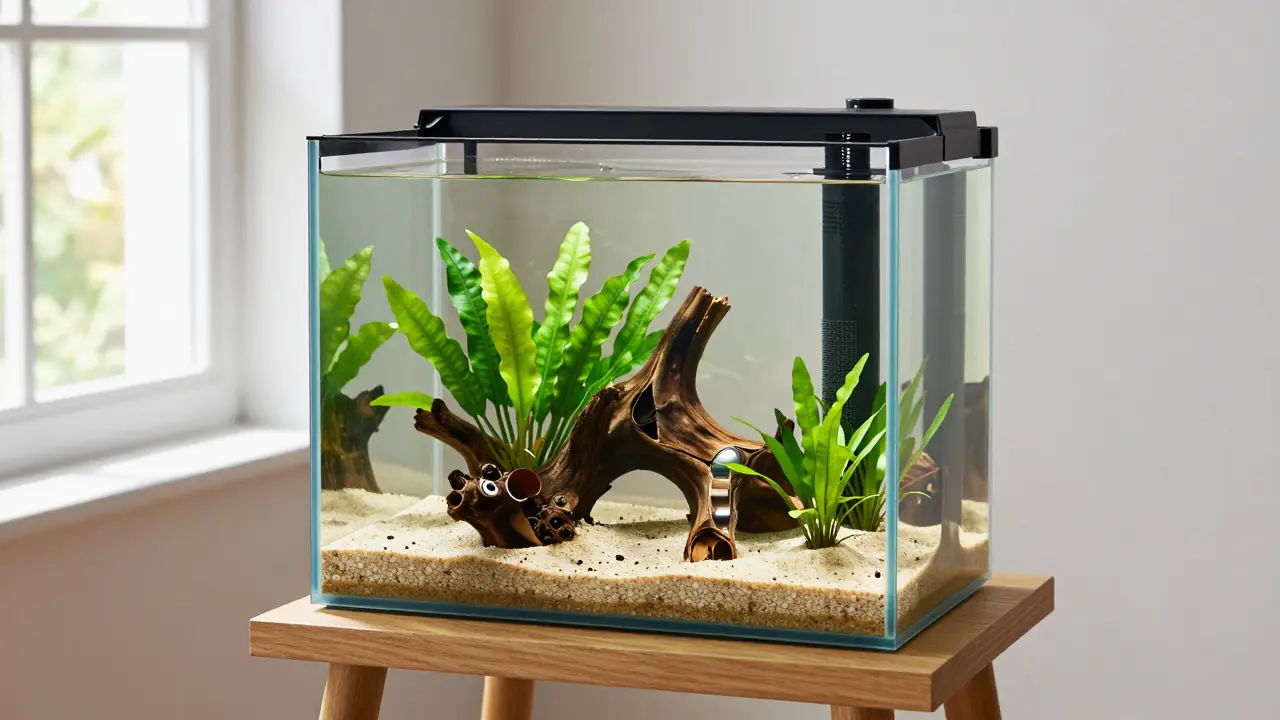
A good betta fish tank setup comes down to five things: a filtered tank of at least 5 gallons, a heater holding the water between 76 and 81°F, a gentle filter, soft decor and live or silk plants, and a tight lid. Add dechlorinated water, let the tank cycle, and only then bring the fish home.
This guide walks through the build in order, from choosing the tank to the first week with your betta. For the full species profile, see our betta fish care guide.
What size tank does a betta need?
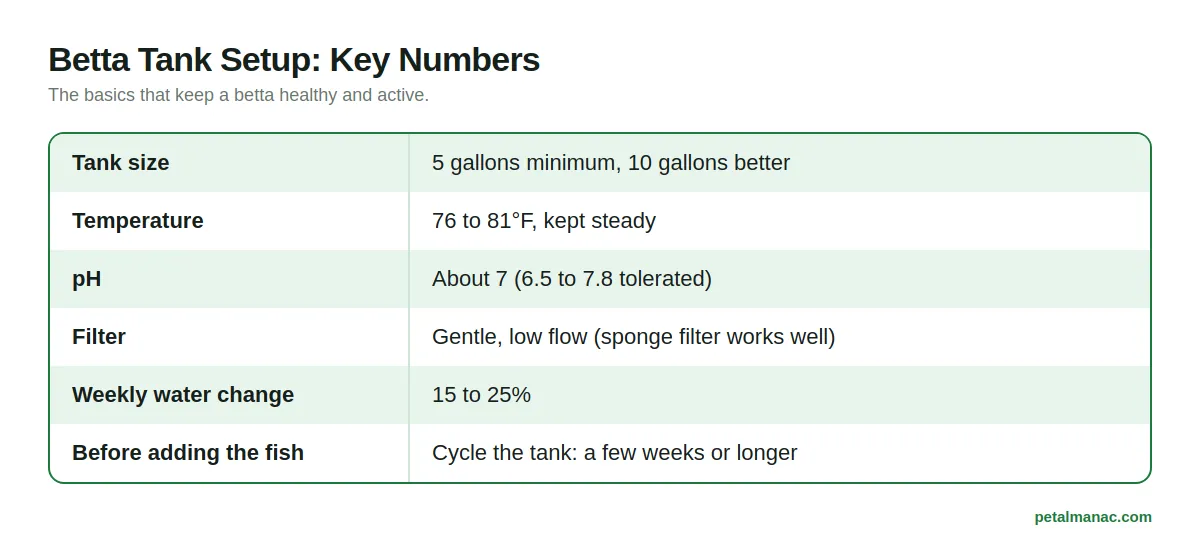
Five gallons is the practical minimum, and 10 gallons is better. The extra water dilutes waste, holds temperature steadier, and leaves room for plants and hiding spots without crowding the swimming space. Some hobbyists keep bettas in nano tanks as small as 3 gallons, but that leaves very little margin for error with temperature and water quality.
A 5 gallon betta tank is the size most beginners start with, and it is easy to find in standard glass or acrylic. Choose a tank that is long rather than tall, since bettas swim across the middle of the tank and breathe from the surface. If you are comparing footprints, our fish tank sizes chart lists common dimensions.
Can betta fish live in a bowl?
A bowl is a poor home for a betta. Most bowls are too small to hold a heater and filter, so the water swings in temperature and fouls quickly. A betta can gulp air from the surface through its labyrinth organ, but that does not mean it thrives in a bowl. A filtered, heated tank is the better choice.
Equipment you need before the fish
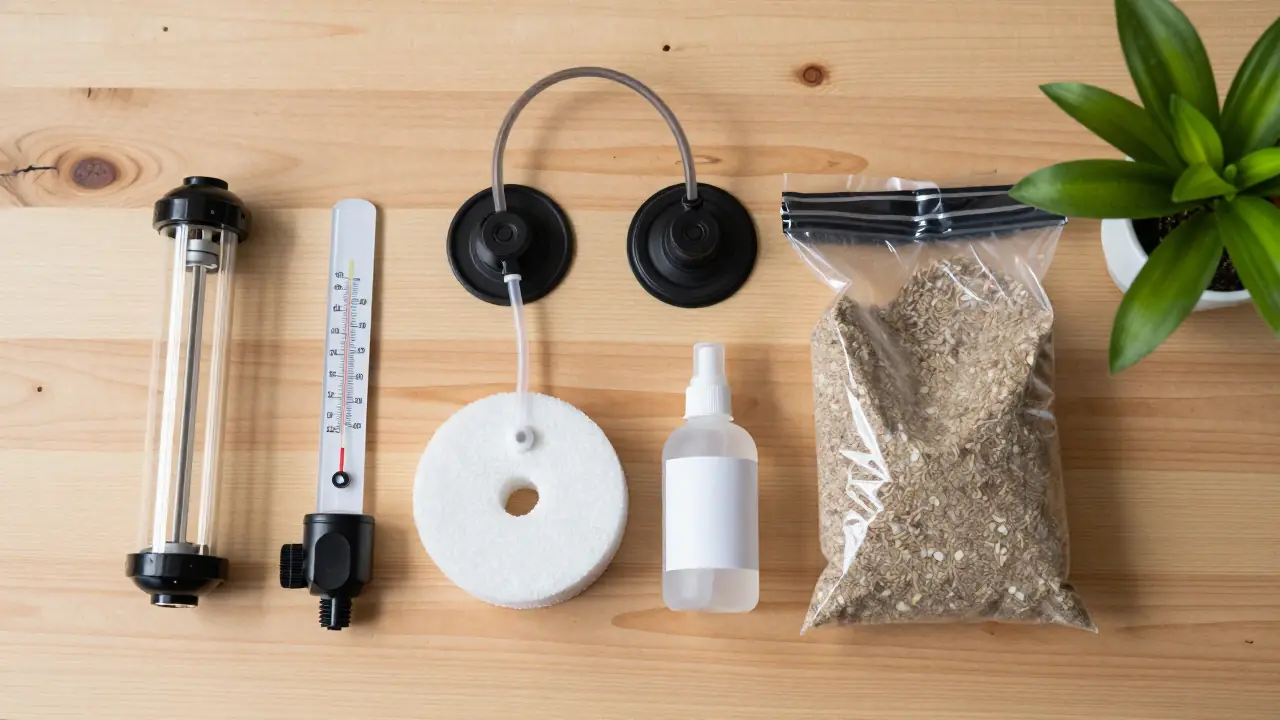
- A tank with a fitted lid or cover
- An adjustable heater and a thermometer
- A low-flow filter, such as a sponge filter
- Substrate (fine sand or smooth gravel)
- Water conditioner made for tap water
- A liquid water-parameter kit that reads ammonia, nitrite and nitrate
- A light on a timer
- Soft plants and a cave or two
How to set up a betta tank, step by step
Step 1: Place and fill the tank
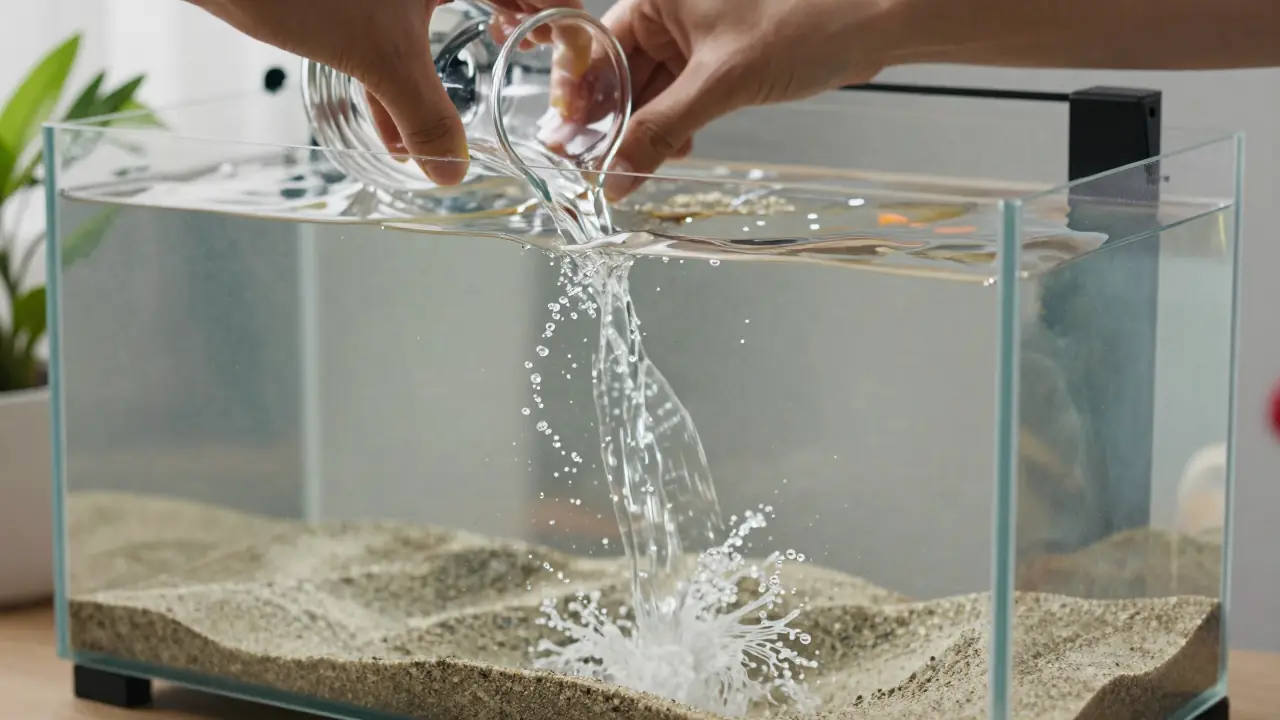
Set the tank on a level, sturdy stand away from direct sun and drafts. Rinse the substrate, add it, and fill the tank with conditioned water. Letting the filled tank sit for a day is a simple way to confirm it is watertight before anything else goes in.
Step 2: Add substrate and hardscape
Fine sand or smooth gravel both work. A layer of about half an inch of sand over a plant-friendly base is plenty for a small tank. Boil or soak driftwood before use to clean it and release some of its tannins. Avoid anything sharp or rough, because it can tear a betta’s long fins.
Step 3: Install the heater and filter
Bettas are tropical, so aim for 76 to 81°F. A heater of roughly 3 to 5 watts per gallon is a sensible starting point, and a thermometer on the glass tells you what the water is really doing. Set the heater to about 78°F. Keep the filter flow low: bettas have long fins and struggle against strong current. A sponge filter or a baffled filter is ideal.
Unplug the heater before you reach into the tank, and let it cool before lifting it out. Never run a heater out of the water.
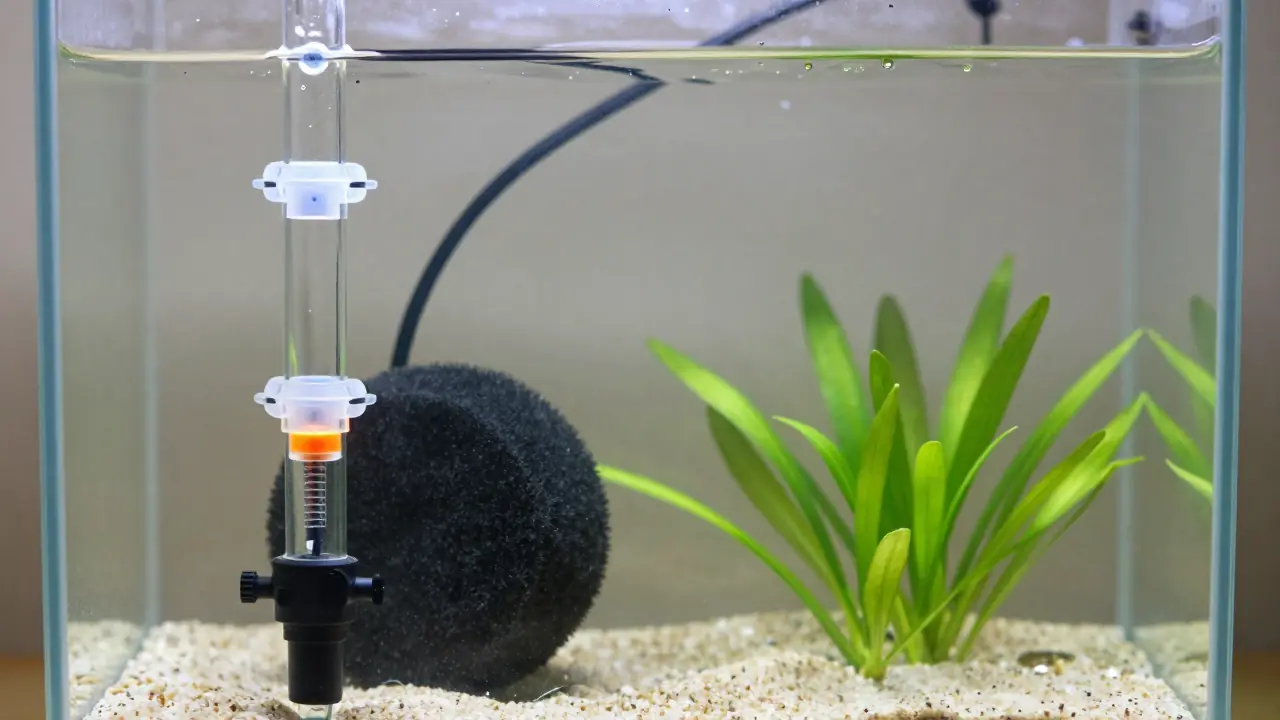
Step 4: Add plants and decor
Live plants soak up ammonia and give your betta cover. Anubias, java fern, cryptocoryne and hornwort are all forgiving choices for a low-tech tank, and many are tied or wedged to wood and rock instead of planted in the substrate. If you prefer silk plants, run a stocking over them first: if it snags, the plant will snag fins. A cave should have an entrance wide enough that it never catches fins.
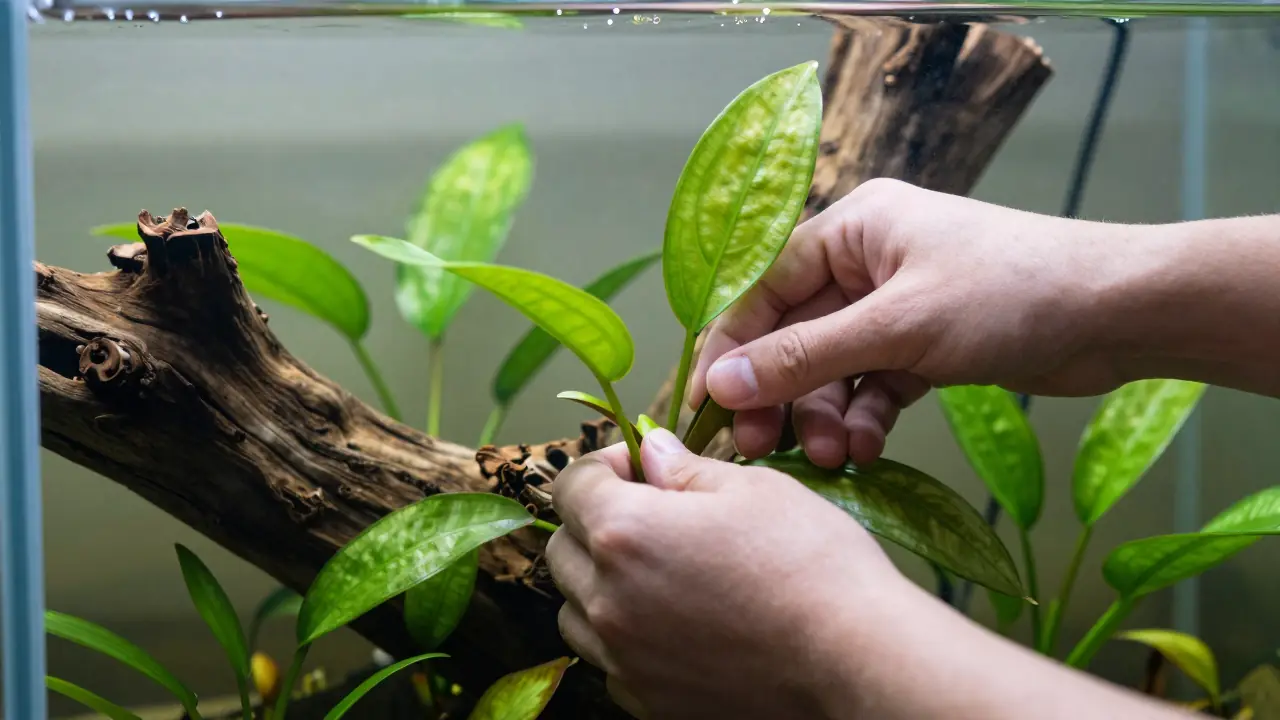
Step 5: Cycle the tank
Filter bacteria turn toxic ammonia into nitrite and then into nitrate, and building that colony takes anywhere from a few weeks to a couple of months, depending on the method. Run the heater and filter, add a small pinch of fish food or another ammonia source, and read ammonia and nitrite with a liquid kit every other day. The tank is ready when both sit at zero. Our guide on how to cycle a fish tank covers the process in detail.
Step 6: Add the betta
Match the tank temperature to the bag by floating it for a short time, then release the fish gently. Keep the light low on day one and feed lightly.
Best plants for a betta tank
The best plants for a betta tank are hardy, soft-leaved species that tolerate low light and warm water. Anubias, java fern and bucephalandra attach to wood or rock. Cryptocoryne roots into sand. Hornwort and marimo moss balls float or sit loose. Plants also help absorb ammonia as they grow, which gives the tank a little extra buffer during cycling.
Betta leaf hammock
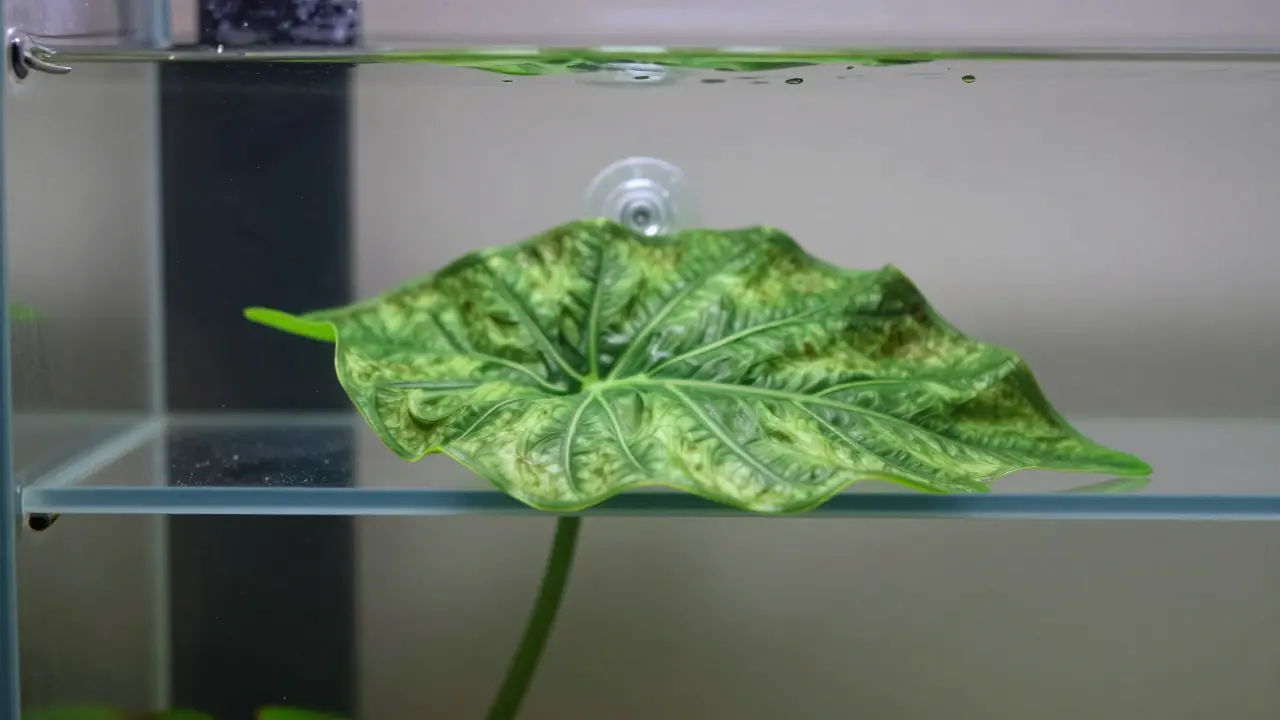
A betta leaf hammock is a broad, soft leaf or silk pad fixed just under the surface, usually with a suction cup. Bettas like to rest on it close to the air they breathe. Choose a smooth one, and place it low enough that the fish can reach the surface without bumping the lid.
Betta tank lid and lighting
A betta tank lid is not optional. Bettas jump, and a tank without a cover is an easy way to lose a fish. Leave a small gap for air exchange, since the fish gulps air at the surface, and keep the air above the water warm. A hood also holds in some heat.
For lighting, copy a normal day: run the light for about 6 to 8 hours and switch it off at night. A cheap timer does this reliably. Long lighting hours feed algae, and our guides to brown algae and black beard algae show what happens next.
Water, tank mates and upkeep
Use a conditioner every time you add tap water. Softer water suits bettas, and your pH should sit around 7, within a range of 6.5 to 7.8. If yours is far off, see how to lower pH in an aquarium.
Change about 15 to 25% of the water weekly, and squeeze the sponge filter out in used tank water about once a month rather than under the tap. Our tank cleaning guide has the routine.
Bettas are territorial, so never add a second betta. Kuhli loaches and corydoras can work in a larger tank, and corydoras need to be kept in groups. Shrimp often disappear when kept with bettas.
Tank placement and first-week routine
Place the tank where you can see it daily but away from windows, vents and loud speakers. Direct sun overheats small tanks and feeds algae. In the first week, check the thermometer each day, feed lightly, and look at the fish’s fins, color and behavior. Bettas often hide or stay still for the first day, which is normal. Keep nearby activity calm and avoid tapping the glass.
Plan the weekly water change from the start. Pull out about 15 to 25% with a small siphon, treat the replacement water with conditioner, and match its temperature to the tank so the fish isn’t shocked.
Betta fish tank setup FAQ
How long should I wait before putting a betta in a new tank?
Wait until the tank has cycled, which usually takes a few weeks or longer. Ammonia and nitrite should both read zero. Waiting a day after filling is only the first check.
What goes on the bottom of a betta tank?
Fine sand or smooth gravel. Avoid sharp edges. Plant-friendly aquasoil works for planted tanks.
What is the ideal setup for a betta fish?
A heated and filtered tank of 5 to 10 gallons, with low flow, soft plants, a cave, a lid, and a day and night light cycle.
How long do bettas live in a good setup?
Lifespan varies with care. See how long betta fish live. For feeding, read what betta fish eat.

The Pet Almanac editorial team researches, writes and edits every care guide on the site. Each guide is fact-checked before publishing and reviewed again when care guidance or equipment changes.