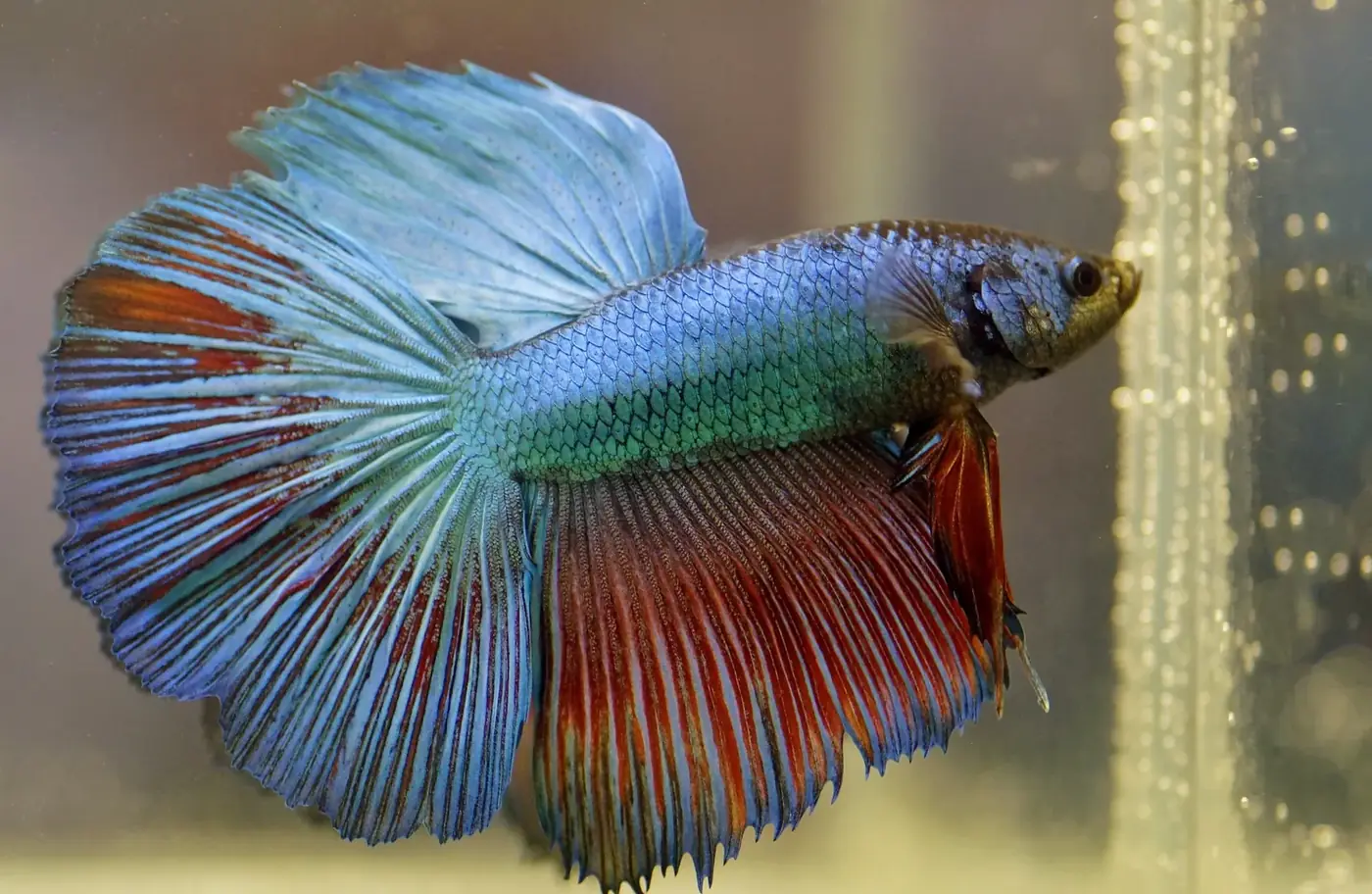
Betta fish eat meat. In the wild they hunt insects, larvae and tiny crustaceans, so the best staple in a tank is a floating, high-protein betta pellet, with frozen or freeze-dried foods as variety. Feed small portions once or twice a day.
Below is what to feed, how much, how often, and what to avoid. For the wider picture of care, see our betta fish care guide.
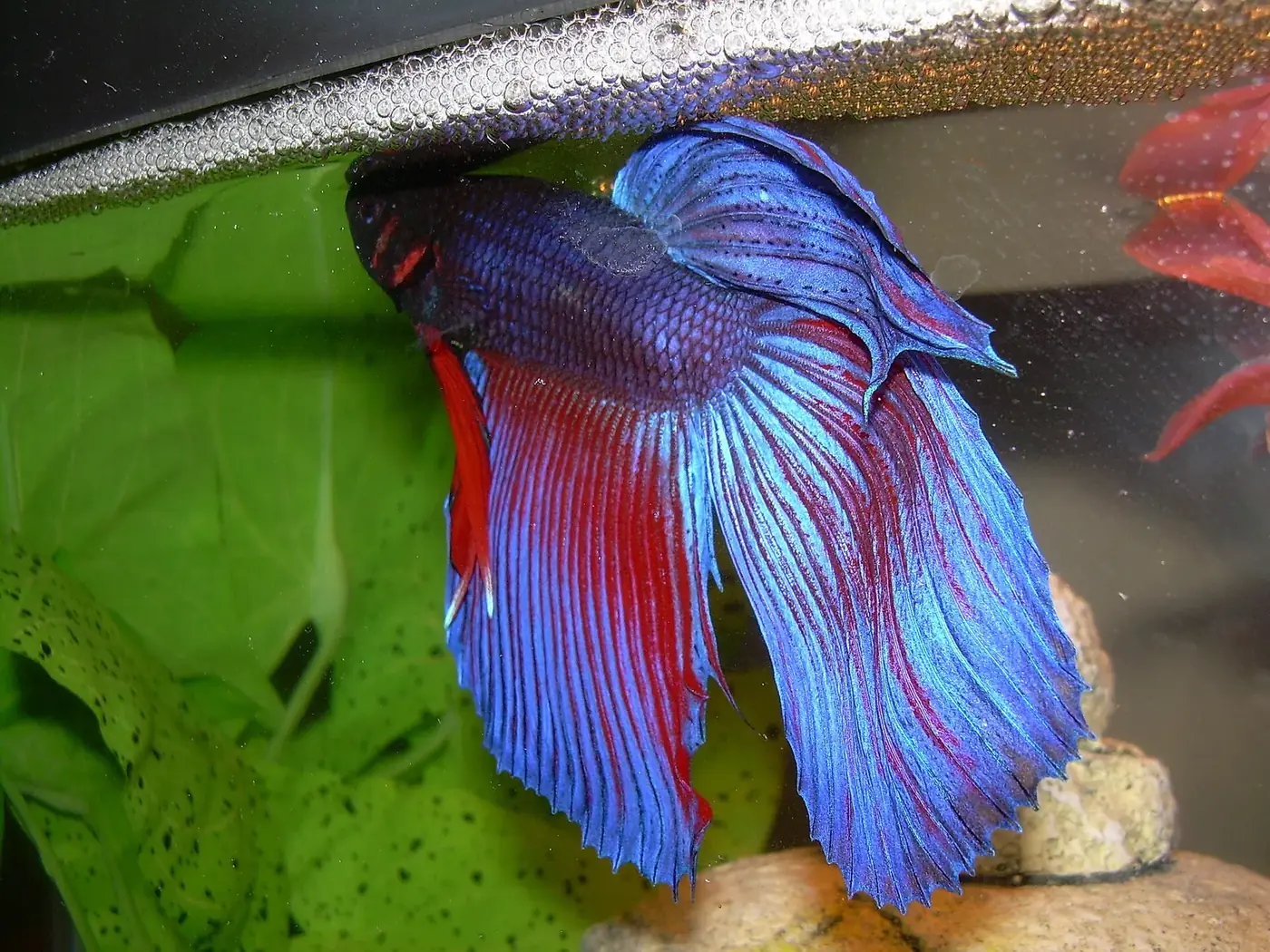
What do betta fish eat in the wild?
Wild bettas live in shallow, still waters in Southeast Asia and are opportunistic carnivores. Their prey includes mosquito larvae, flies, water fleas and small beetles, along with tiny shrimp and other crustaceans. They occasionally take very small fish or fry near the surface. Plant matter is swallowed by accident, not sought out.
That is why a betta’s gut is built for protein, and why plant-based foods such as algae wafers are a poor match.
The best staple: betta pellets
Choose a floating pellet with a named protein source, such as fish meal, krill meal or insect meal, listed near the top of the ingredients. Look for a high protein level and some fiber. Without fiber a betta can develop bloat. Small pellets suit small bettas, and worm-shaped foods suit fish large enough to eat them.
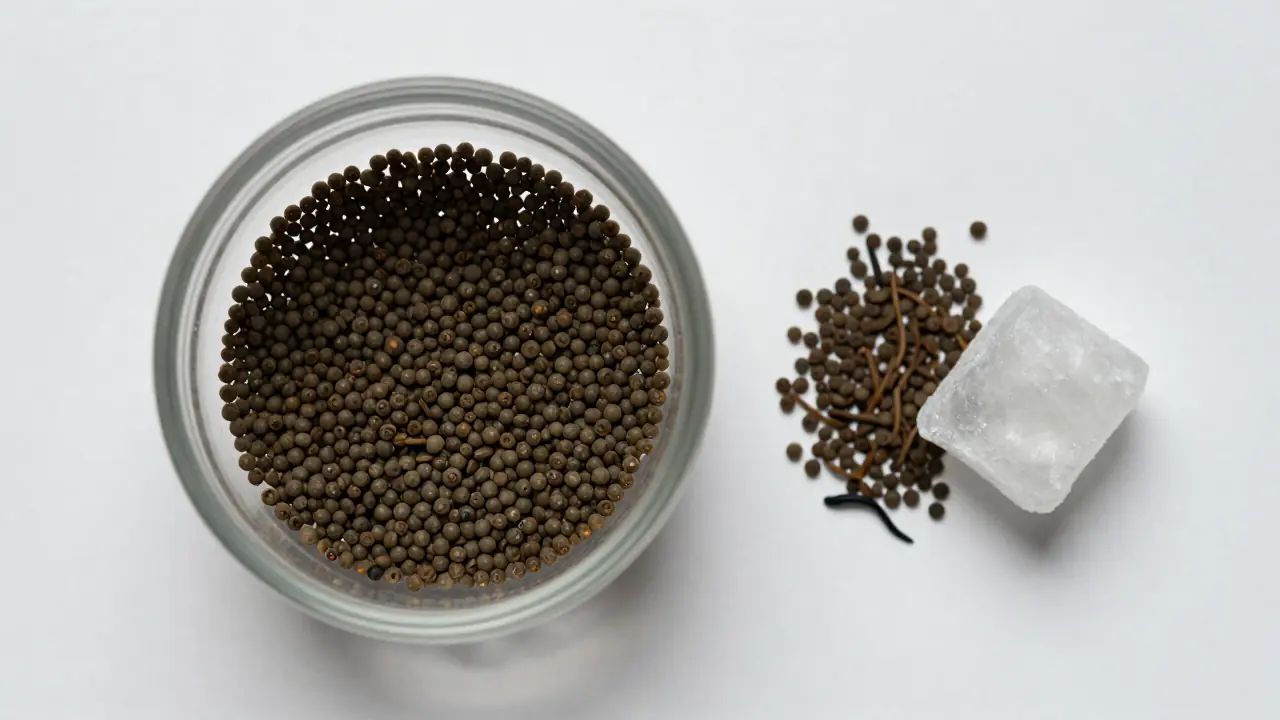
Can betta fish eat flakes?
Yes, but flakes are a weaker staple. They break up and sink, are easy to overfeed, and tend to be lower in protein than pellets. Use them if that is what you have, but pellets are the better daily food.
Frozen, freeze-dried and live foods
Variety matters. A mixed diet of live and prepared foods supports better growth and longevity than all-live or all-prepared diets. Good additions include:
- Frozen or freeze-dried bloodworms
- Brine shrimp, including hatched baby brine shrimp
- Daphnia
- Mysis shrimp
Prepared foods are dry and calorie-dense, so they should not be the only food. Treat rich foods as occasional extras and watch for overfeeding.
Bloodworms for betta
Bloodworms are a favorite, and frozen ones are a good way to add variety. Use them as a treat a few times a week at most, not as the main diet, and thaw frozen cubes in a little tank water first.
How to read a betta food label
Flip the bag over before you buy. The first ingredients should be animal protein, not wheat, corn or generic fillers. A higher protein percentage suits a carnivore, and a modest fiber figure helps digestion. Pellet size matters as much as ingredients: if a pellet is too large for the mouth, the fish will spit it out or swallow it poorly, so pick a size that fits comfortably.
Because pellets are dry, they swell once they absorb water. Some keepers soak them in a spoonful of tank water for a minute before feeding. This is a habit, not a requirement, but it can ease digestion in fish that gulp air along with food.
How much to feed a betta fish
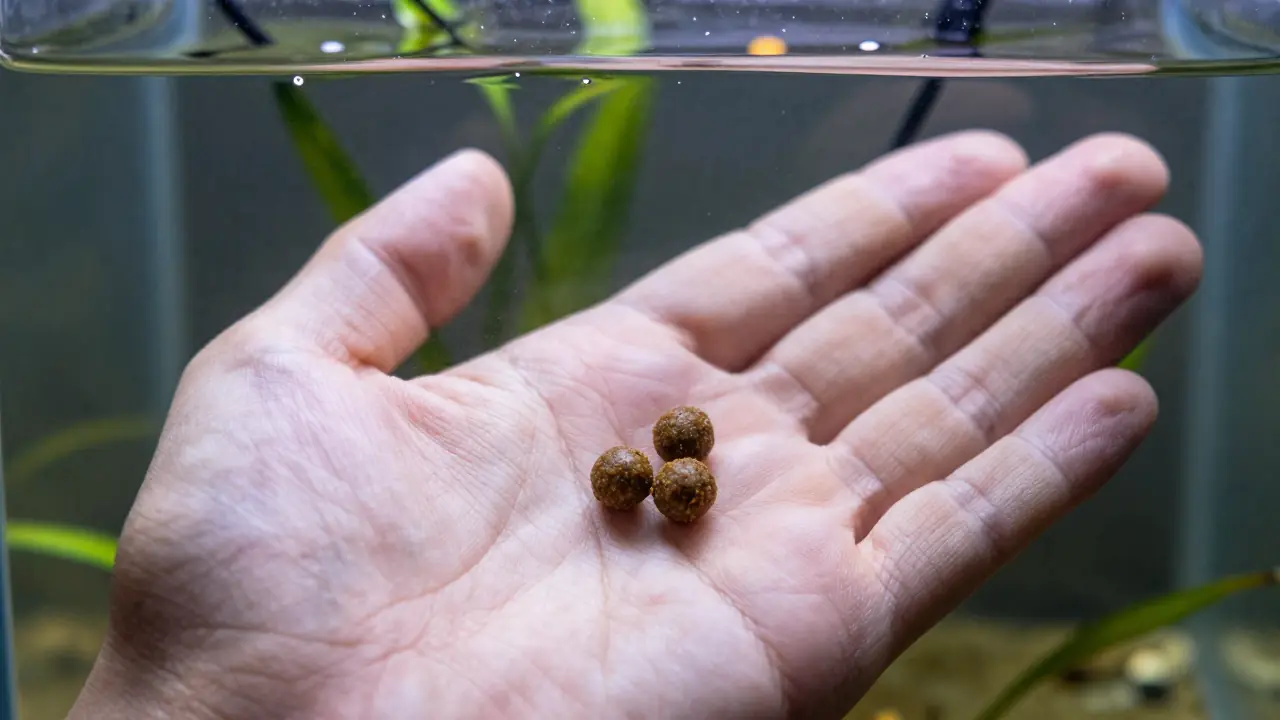
Start with about 3 pellets per day, adjusting for size. A larger fish may take a few more. Watch the belly: it should not be sunken in, and it should not be overly round. Another useful rule is to offer only what your fish finishes in about 60 seconds. If your betta shows no interest in the food, stop feeding for that day.
Uneaten food fouls the water, so scoop out leftovers. A clean tank follows from the routine in our tank cleaning guide.
How often to feed a betta fish
Once or twice a day. Splitting the daily amount, for instance one pellet in the morning and two in the afternoon, works well. Feeding 6 days per week and fasting one day gives the digestive system a rest and helps prevent constipation and bloat.
Keep any flaring sessions short and occasional, since constant flaring stresses a betta. Stress affects appetite.
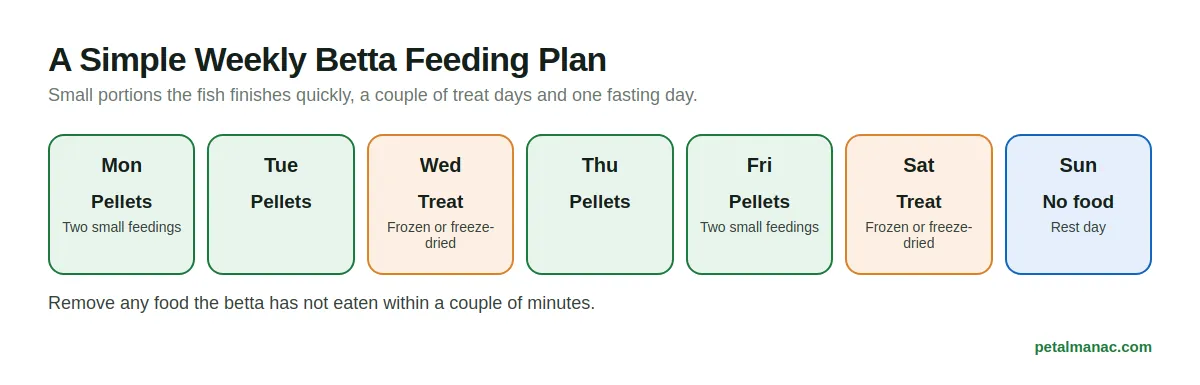
A simple weekly feeding plan
Here is a routine you can follow without much thought, using the amounts above:
| Day | What to feed |
|---|---|
| Monday | Pellets, split into two small feedings |
| Tuesday | Pellets |
| Wednesday | Frozen or freeze-dried treat, thawed first |
| Thursday | Pellets |
| Friday | Pellets, split into two small feedings |
| Saturday | Treat, such as brine shrimp or daphnia |
| Sunday | No food (fasting day) |
Adjust to your fish. A young, active betta may want a little more, and an older fish a little less.
Live foods and cultures
Live foods are the closest match to a wild diet. Daphnia can be kept in a simple bucket with an air stone, and brine shrimp eggs keep for a long time in a cool, dry place before you hatch them in a small kit. Both give your betta something to chase, which is useful enrichment. Rinse live foods before feeding and offer small amounts.
Be careful with tank mates. Shrimp often vanish when kept with a betta, since they look like prey. If you plan to add companions, review our betta tank setup guide first.
How long can a betta go without food?
A healthy adult betta can usually go about a week without eating, and sometimes longer. Longer than that is risky, so plan for a sitter on longer trips.
Betta fish vacation feeder
For a weekend you do not need one. For a week, many keepers rely on a fasting period instead, because slow-dissolving feeder blocks can foul the water. If you will be away longer, ask a friend to feed measured portions, with each day’s pellets in a labeled container.
Why variety and fiber matter
Bettas can get bloated or constipated when a diet is narrow, too rich or too dry. Rotating foods spreads out the nutrients, and a bit of fiber from insect or crustacean shells keeps things moving. Fish also carry a large community of gut microbes, so sudden diet swings can upset digestion. Change foods gradually, introduce one new item at a time, and note how your betta responds over a few days.
Fasting one day a week fits the same idea. It gives the gut time to clear, and it is a normal part of a healthy routine, not a punishment.
Feeding mistakes to watch for
- Dropping in extra food because the fish “looks hungry.” Bettas will beg even when full.
- Leaving frozen cubes to thaw in the tank, which clouds the water.
- Switching brands often without a gradual transition.
- Overlooking leftovers on the bottom, which break down into ammonia.
If your water turns cloudy or smells off after meals, cut the portion and clean up sooner. A reliable water-parameter kit helps you see ammonia early.
Foods to avoid
- Peas and other plant foods, including algae wafers
- Large portions of rich frozen foods
- Human table food
- Anything left to rot in the water
If your betta stops eating, looks bloated or floats oddly, contact an aquatic veterinarian. Do not try home treatments. Poor diet and no fasting day can lead to bloat, constipation and swim bladder problems.
Betta feeding FAQ
How often should a betta fish eat?
Once or twice a day, in small portions, with one fasting day a week.
Is 2 pellets a day enough for a betta?
For a small betta it can be, but about 3 pellets is a common starting point. Watch the belly shape and adjust.
How do I know if my betta is hungry?
A hungry betta swims to the front when you approach and takes food eagerly. If it ignores food, stop for the day.
What do betta fish love the most?
Most go for frozen or freeze-dried bloodworms and brine shrimp. Keep them to treats.
Does diet affect lifespan?
Yes. See how long betta fish live. For housing, read our betta tank setup guide.

The Pet Almanac editorial team researches, writes and edits every care guide on the site. Each guide is fact-checked before publishing and reviewed again when care guidance or equipment changes.