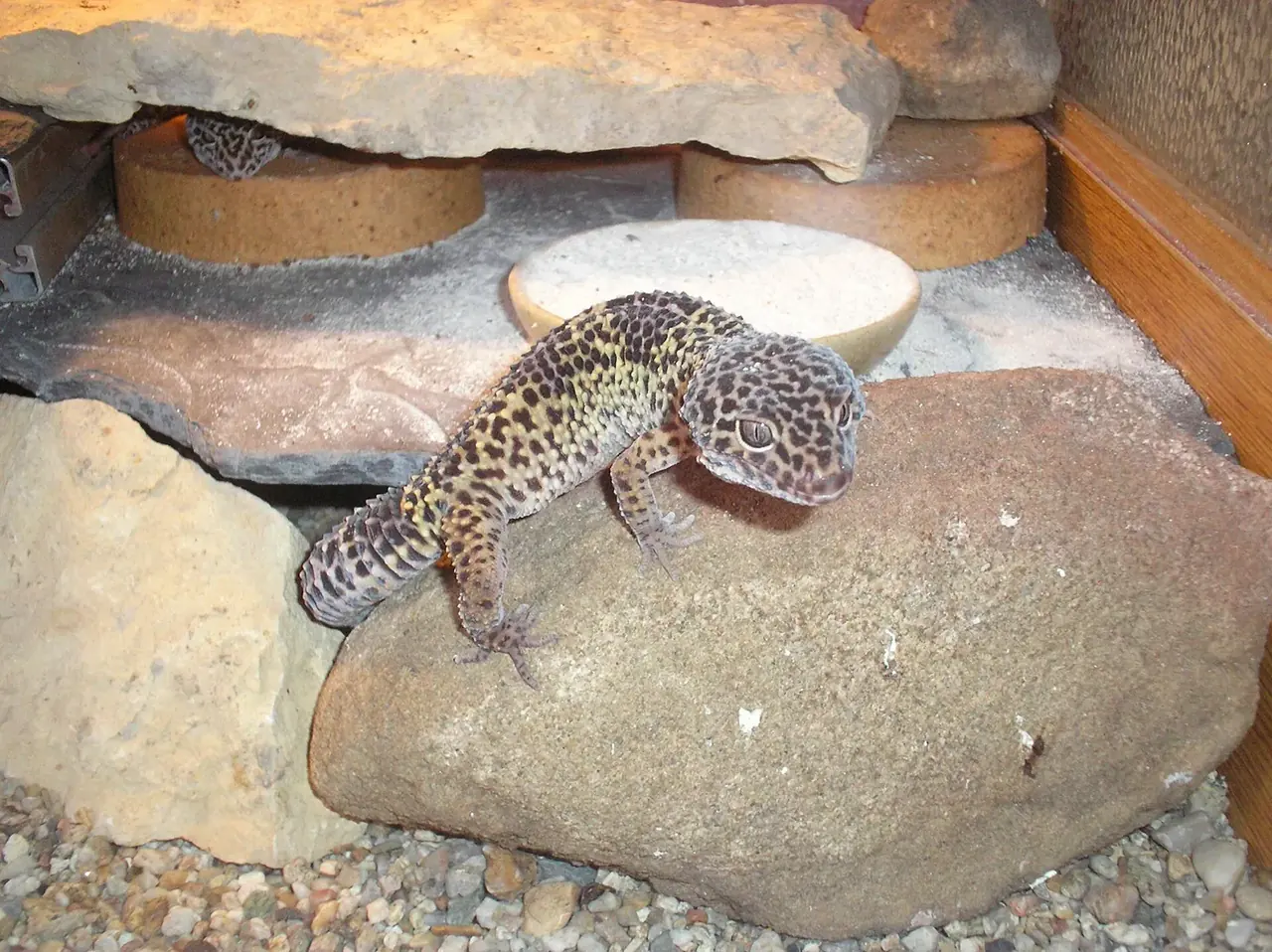
A leopard gecko is one of the easiest lizards to keep well, as long as the basics are right: an enclosure of at least 36 by 18 by 18 inches, a warm side and a cool side, live insects fed on a schedule, and a gentle hand. Most adults reach 7 to 10 inches and live 10 to 20 years, so this is a long commitment, not a short one.
Leopard gecko care at a glance
These are the working ranges for a healthy adult. Each line links out to a dedicated guide further down.
Care sheet: Leopard gecko
- Adult size
- 7 to 10 inches, females generally smaller
- Lifespan
- 10 to 20 years, 15 to 20 with good care
- Enclosure
- 36 x 18 x 18 inches minimum for one adult
- Basking surface
- 94 to 97°F
- Cool side
- 70 to 77°F
- Humidity
- 30 to 40%, plus a humid hide
- Diet
- Insectivore, live gut-loaded insects
- Activity
- Crepuscular, active at dawn and dusk
- Care level
- Beginner
Where leopard geckos come from
Leopard geckos come from the dry regions of Afghanistan, Pakistan, India and Nepal. In the wild they shelter in holes, crevices, under stones and loose bark, and old stone walls suit them well. That tells you what to build: dry air, a hot spot, a cool retreat and plenty of snug hides.
They are crepuscular, so expect them to wake up in the evening. Unlike most geckos they have eyelids and lack sticky toe pads, which means they cannot climb smooth vertical surfaces. Floor space matters far more than height.
Enclosure and substrate
One adult needs an enclosure no smaller than 36 inches long, 18 inches wide and 18 inches tall. A front-opening enclosure is better than one that opens from the top. Smaller tanks are still sold for geckos, but a larger footprint gives you better temperature control and a more active gecko. Give a new setup at least a month to settle in before you judge how it runs.
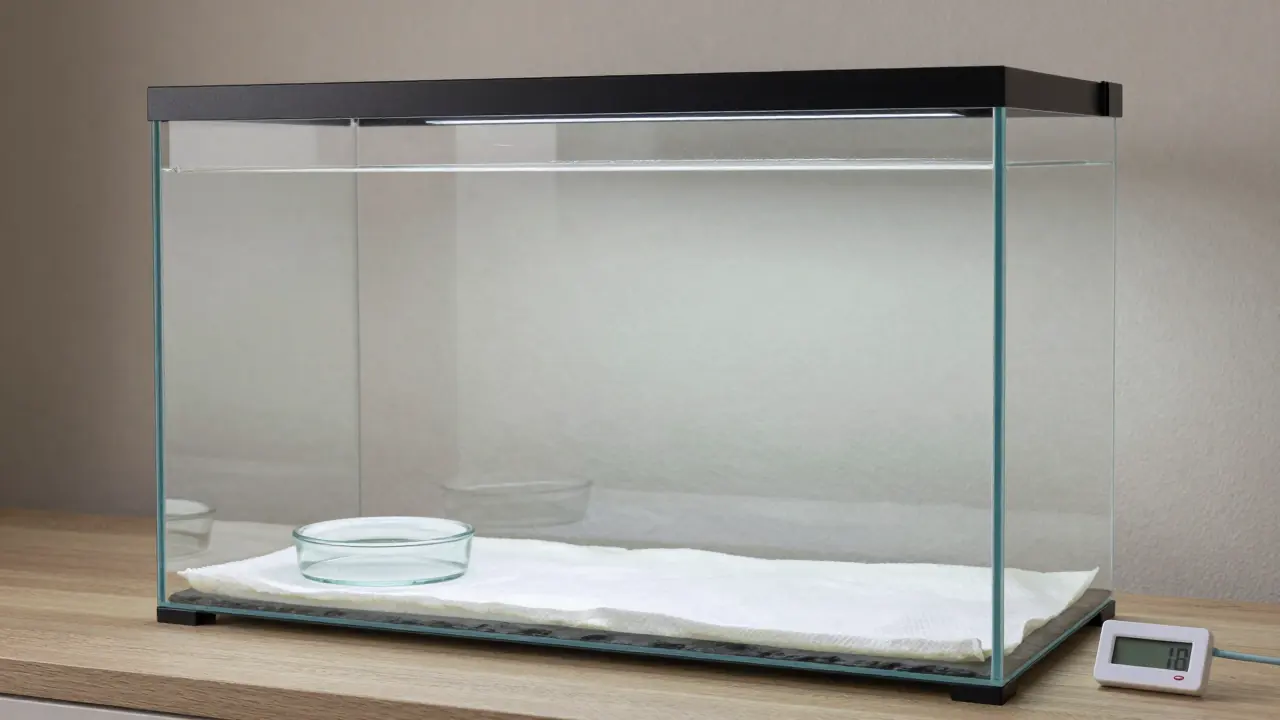
Avoid loose coarse sand, corncob, walnut shell, gravel and wood chips, all of which carry a risk of impaction or abrasion. Paper towels or reptile carpet are the simplest choices for young geckos. For layout, hides and substrate options, read our leopard gecko tank setup guide.
Heat, light and humidity
Build a gradient. A basking surface of 94 to 97°F, a warm side of 90 to 92°F and a cool zone of 70 to 77°F let the gecko regulate itself. Measure the surface under the heat source, not the air, because air at the warm end always reads lower. Heat can be switched off at night as long as the enclosure does not drop below 60°F, and the low 70s is more comfortable.
Run every heat source through a thermostat, and check the hot spot with a digital probe thermometer or temperature gun, not a dial. Use UL-listed equipment. Hot rocks are not recommended because they cause burns.
UVB is widely recommended, but at a low output, and the right index depends on the bulb, the distance and the gecko’s coloring. Pale and low-pigment geckos with red or pink eyes are extra sensitive to bright light. Ambient humidity should stay around 30 to 40%, with a hide kept at 70 to 80% for shedding. Full details are in the heat and lighting guide.
What leopard geckos eat
Leopard geckos are insectivores. Crickets, dubia roaches, silkworms and similar feeders make up the diet, with fatty worms kept as treats. Offer insects no wider than the gecko’s head, gut-load them first, and dust them lightly with calcium. Juveniles eat daily, young adults every other day or every third day, and adults less often, with smaller portions for a gecko whose tail is thicker than its neck. Fruit and vegetables do not belong on the menu.
Always keep a shallow dish of clean water in the enclosure. Our leopard gecko feeding guide has the full feeder table and schedule.
Temperament and handling
Leopard geckos have a docile, calm nature and tolerate handling better than most reptiles. Still, a new gecko needs about two weeks to settle in before you handle it. Wait until a young gecko is 5 to 6 inches long. Juveniles are often skittish, and trust builds slowly with short, regular sessions.
- Move slowly and scoop from below, supporting the whole body.
- Never grab from above, chase the gecko or pull it out of a hide.
- Never hold or pull a gecko by the tail.
- Leave a shedding gecko alone, and do not pull loose skin.
- Wash your hands before and after handling, because reptiles can carry Salmonella.
Shedding, tails and routine upkeep
Most leopard geckos shed every 4 to 8 weeks. A humid hide with a moist (not wet) interior helps the skin come off cleanly. If skin stays stuck on the toes or tail, contact an exotic vet rather than pulling it off.
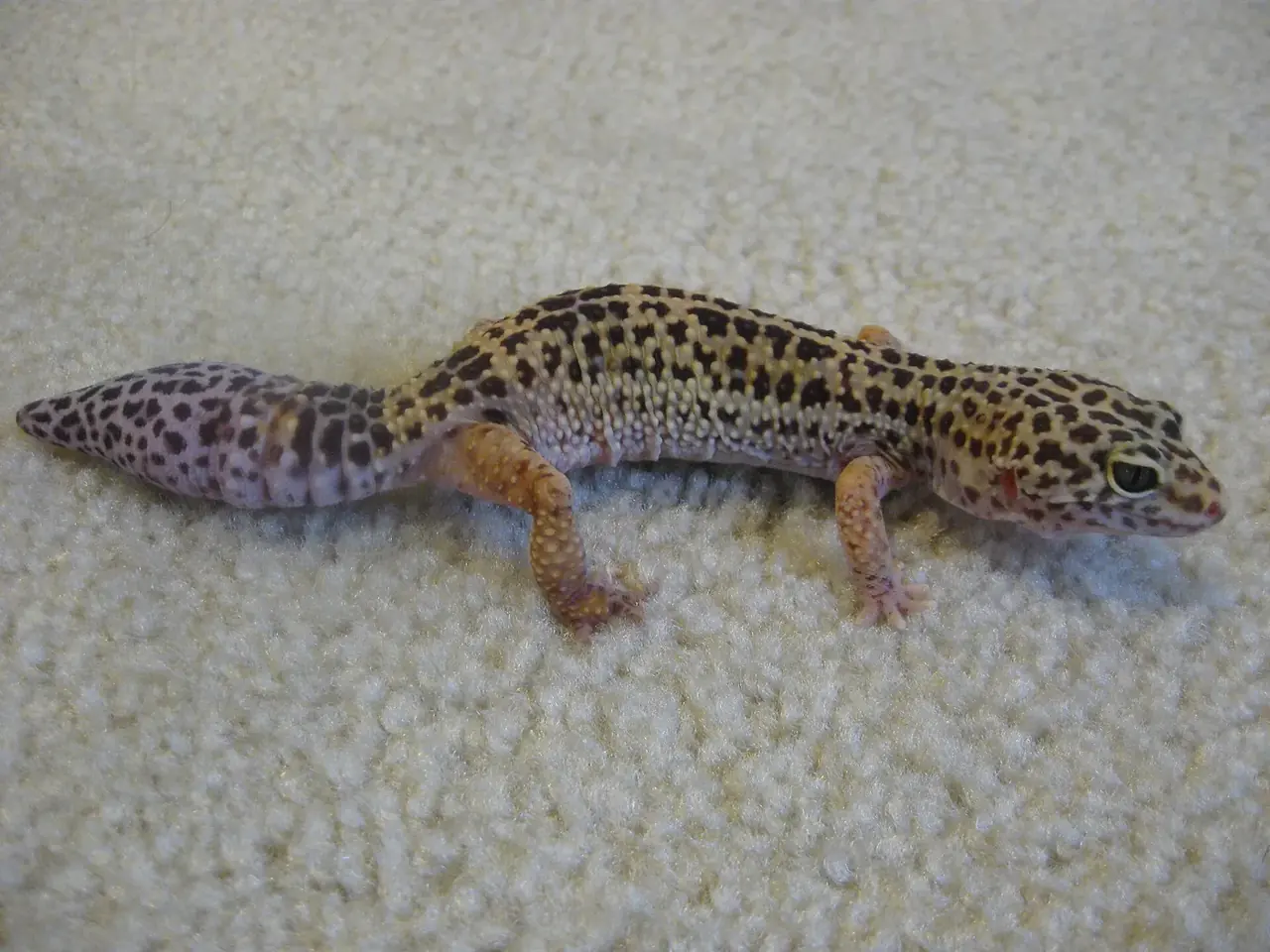
The tail stores fat, and a gecko can drop it when frightened. It regrows in about a month, but the new tail is shaped and patterned differently from the original, as in the photo above. Spot-clean droppings daily, wash the water dish and food dish daily, and do a full clean and disinfection every one to two weeks. Schedule an annual checkup with an exotic vet.
Telling a leopard gecko from other geckos
Many pet geckos look alike at a glance, so check the feet and eyes. A leopard gecko has lidded eyes and no sticky toe pads, which is why it stays on the ground and cannot walk up glass. Geckos with sticky pads climb walls and have different needs, so confirm the species before you build anything.
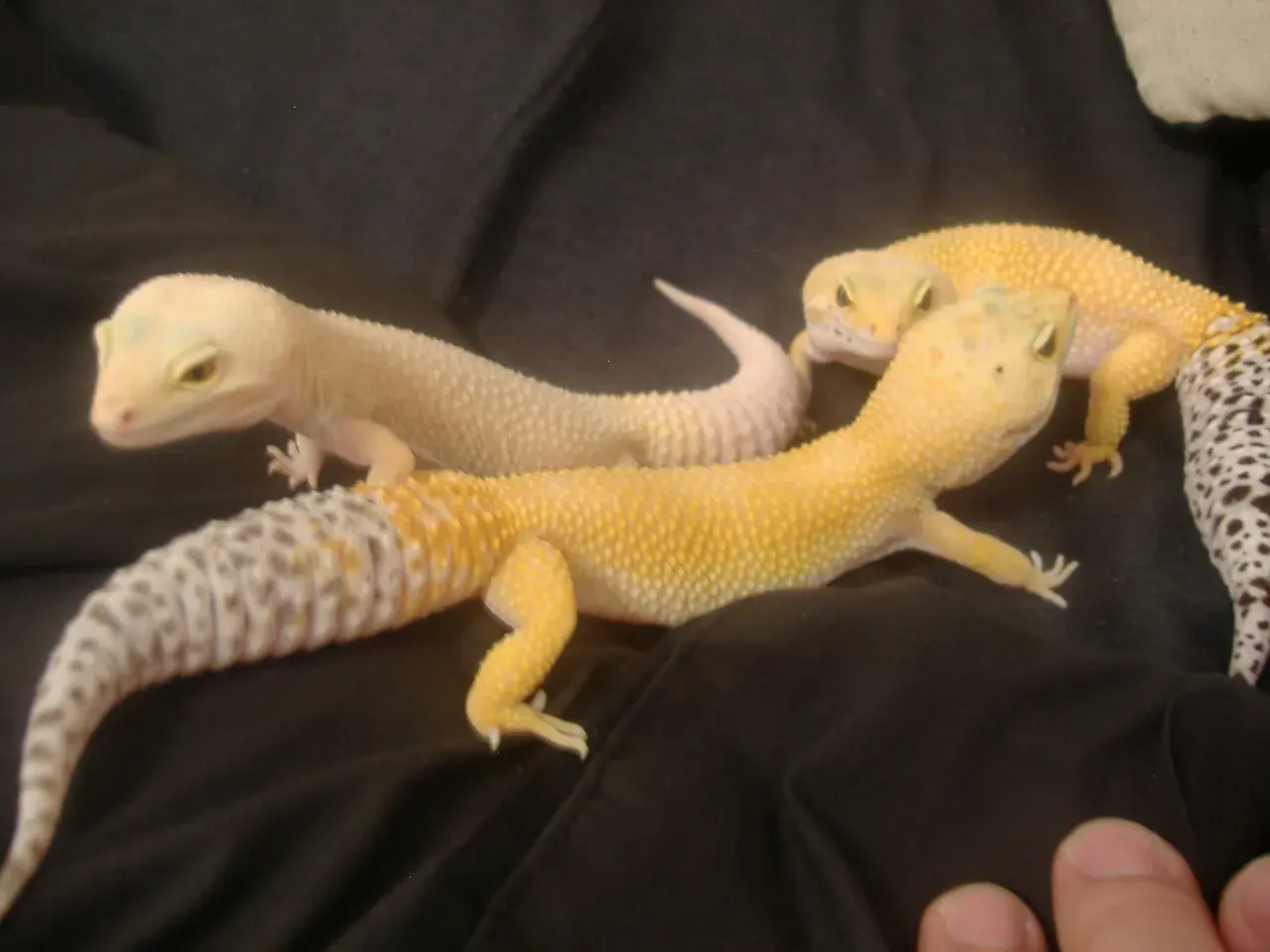
Captive-bred leopard geckos come in many colors and patterns, called morphs. Morph does not change the basic care, but some pale, low-pigment geckos need gentler light.
Common mistakes keepers make
- Skipping the thermostat. Heat sources without one overheat, and the risk is a burn or worse.
- Keeping the enclosure bone dry. Without a humid hide, shedding problems and dehydration follow. Light misting is usually not enough.
- Using loose coarse sand or hot rocks. Both are linked to injuries.
- Housing geckos together. Keep one per enclosure. Males fight, and a single gecko is perfectly content alone.
- Over-supplementing. Too many vitamins can be as harmful as too few, so follow a schedule.
- Handling too soon or too often. A shedding or newly arrived gecko needs space.
- Using the wrong lamp. A hardware-store fixture is not a reptile UVB lamp.
- Leaving live insects in the enclosure. Remove uneaten ones.
Who should not keep a leopard gecko
If you do want one, consider adopting. Rescues and local classifieds have no shortage of leopard geckos needing homes.
Leopard gecko care FAQ
Is a leopard gecko easy to take care of?
Yes, once the enclosure is dialed in. Daily upkeep is short: fresh water, spot cleaning and a feeding every day or every few days. Most problems come from the setup, not from daily work.
Do I turn off the heat lamp at night?
Yes. Heating can be switched off at night as long as the enclosure stays above 60°F, and the low 70s is more comfortable. If your room runs cold, a thermostat-controlled heat source keeps a safe floor.
How many days can you leave a leopard gecko alone?
A healthy adult can go up to two weeks or more without eating, but it still needs clean water and working, thermostat-controlled heat. For a weekend trip, leave water and a stable setup. For longer, arrange for someone to check in.
What makes a leopard gecko happy?
A proper temperature gradient, snug hides on both sides, a clean enclosure, a steady feeding routine and little handling stress. A gecko that explores in the evening and eats well is doing fine.
Keep going with our lifespan guide, or browse more in Reptiles.

The Pet Almanac editorial team researches, writes and edits every care guide on the site. Each guide is fact-checked before publishing and reviewed again when care guidance or equipment changes.