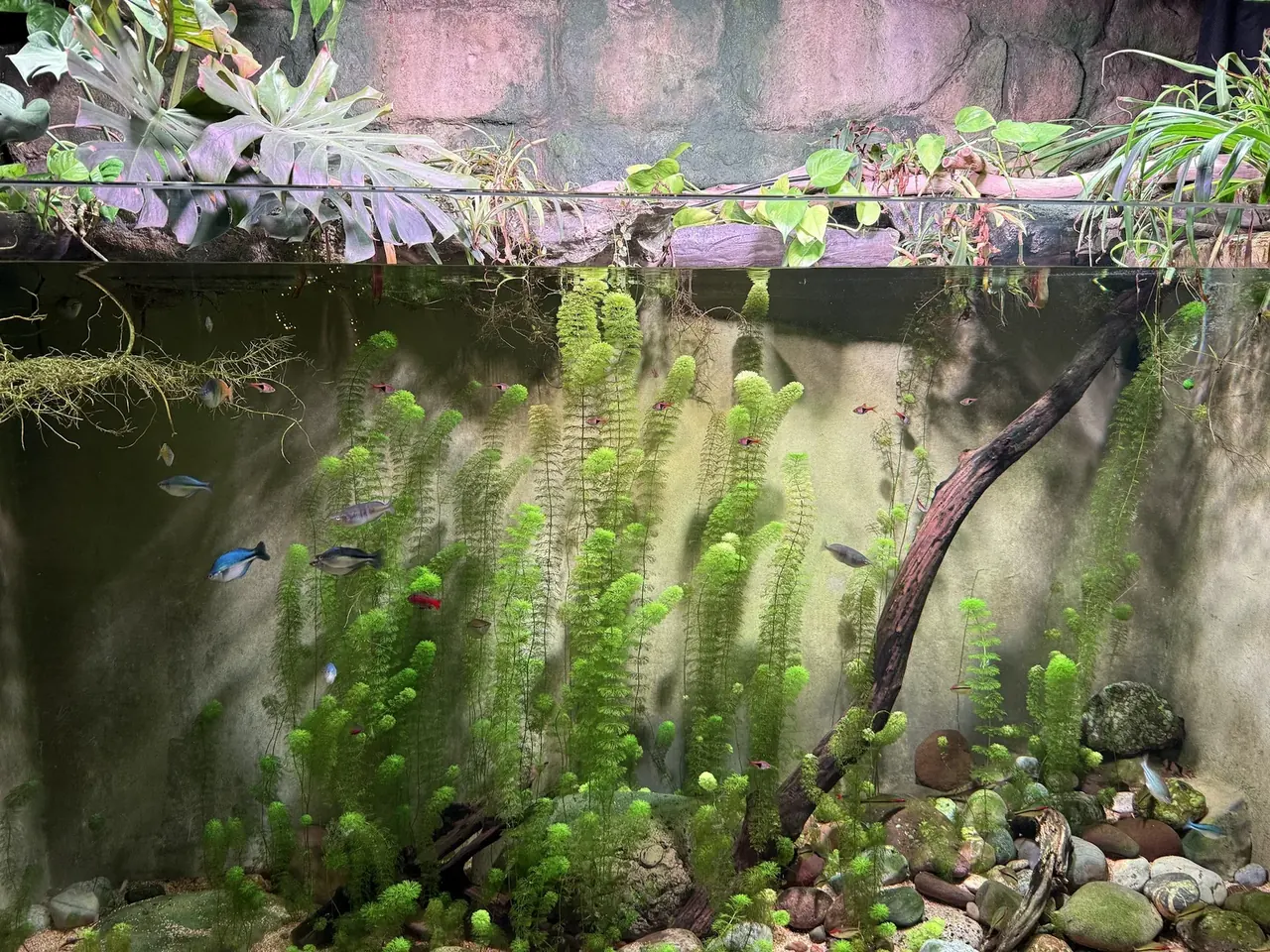
Cloudy aquarium water is almost always one of four things: a bacterial bloom (milky white or gray haze), loose dust from new substrate or decor, a tank that is overfed or overstocked, or free-floating algae (green). Identify the color first, then follow the matching fix below. Most hazes clear on their own once you stop disturbing the tank and feed less.
The temptation is to scrub, replace the filter media and change half the water. That usually makes a bloom last longer, because the haze is a sign the tank’s biology is still catching up.
Cloudy water by color: cause and fix
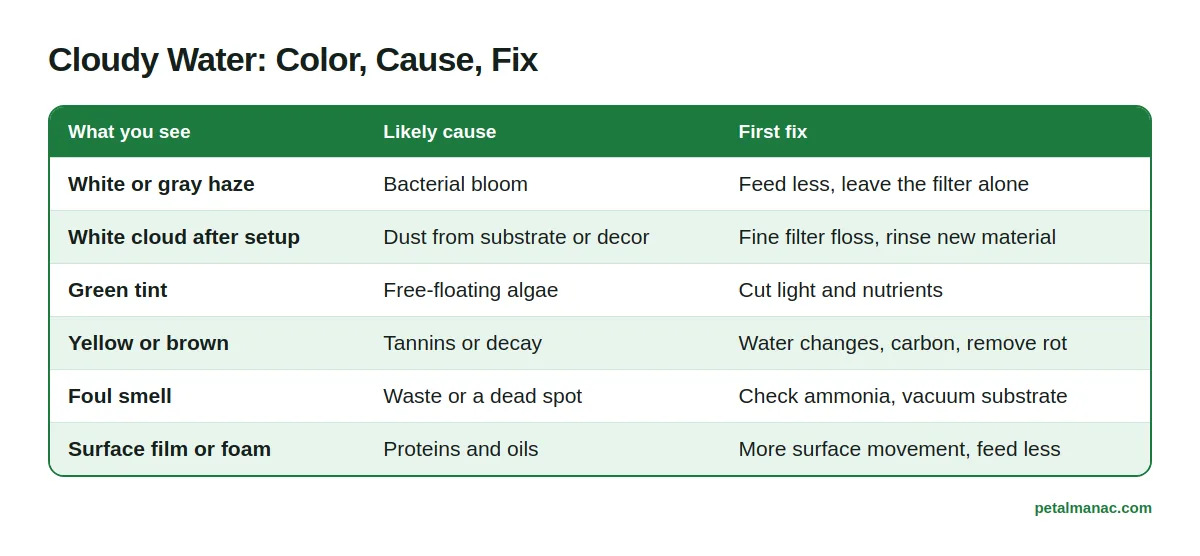
Color narrows the cause faster than anything else. Use this table, then jump to the section that matches.
| What you see | Most likely cause | What to do |
|---|---|---|
| Milky white or gray haze in a new or recently disturbed tank | Bacterial bloom | Feed less, leave the filter alone, wait. Do not over-clean |
| White or gray cloud right after setup or after rearranging | Dust from substrate, sand or decor | Run the filter, add fine filter floss, rinse new material next time |
| Green tint, see-through but murky | Free-floating algae | Cut light and nutrients. See green aquarium water |
| Yellow or brown tea tint | Tannins from driftwood or decay | Water changes, filter carbon, remove decaying matter |
| Cloudy with a foul smell | Waste buildup or a dead spot | Check ammonia, vacuum the substrate, find and remove rot |
| Film or foam on the surface | Proteins and oils from food and waste | Increase surface movement, feed less, skim |
White or gray cloudy water: bacterial bloom
A new tank starts with almost no bacteria in the water. When waste and food appear, free-swimming bacteria multiply into a visible haze. They can double in numbers in 15 to 20 minutes, so a tank can turn from clear to milky overnight.
A bloom is not the same as the filter bacteria that matter for the nitrogen cycle, but it is part of the same settling-in process. It also happens in older tanks after a big disruption: a filter cleaned too hard, a large water change, a sudden jump in feeding or a dead fish decaying out of sight. Over-cleaning, large irregular water changes and overfeeding all upset an established tank’s balance.
How long it takes to clear
Expect anywhere from a few days to a couple of weeks. A bloom in a new tank typically runs about a week, and a bloom in a tank that is filtered correctly typically resolves within 2 to 4 weeks at the outside. If the haze is still there after a month, the cause is probably something else, so recheck the list above.
What to do
- Feed sparingly. Offer food about once every other day while the water is cloudy. Healthy fish go days without eating, and uneaten food fuels the bloom.
- Leave the filter alone. Avoid cleaning it and avoid water changes for at least a week unless ammonia or nitrite is readable, and stop feeding for a week if the haze is heavy.
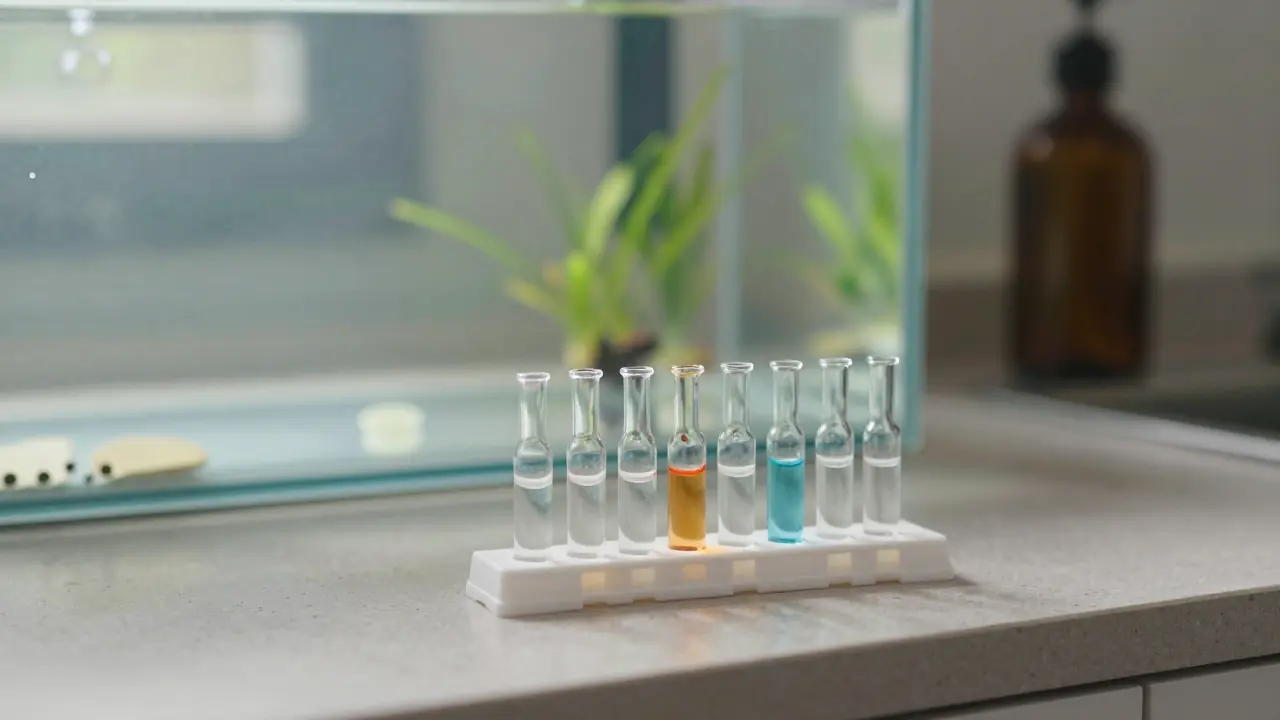
- Check the water daily. Use a liquid kit for pH, KH, ammonia, nitrite and nitrate. In a settling tank, ammonia and nitrite should read zero, nitrate should rise slowly, and pH and KH should drift down slowly.
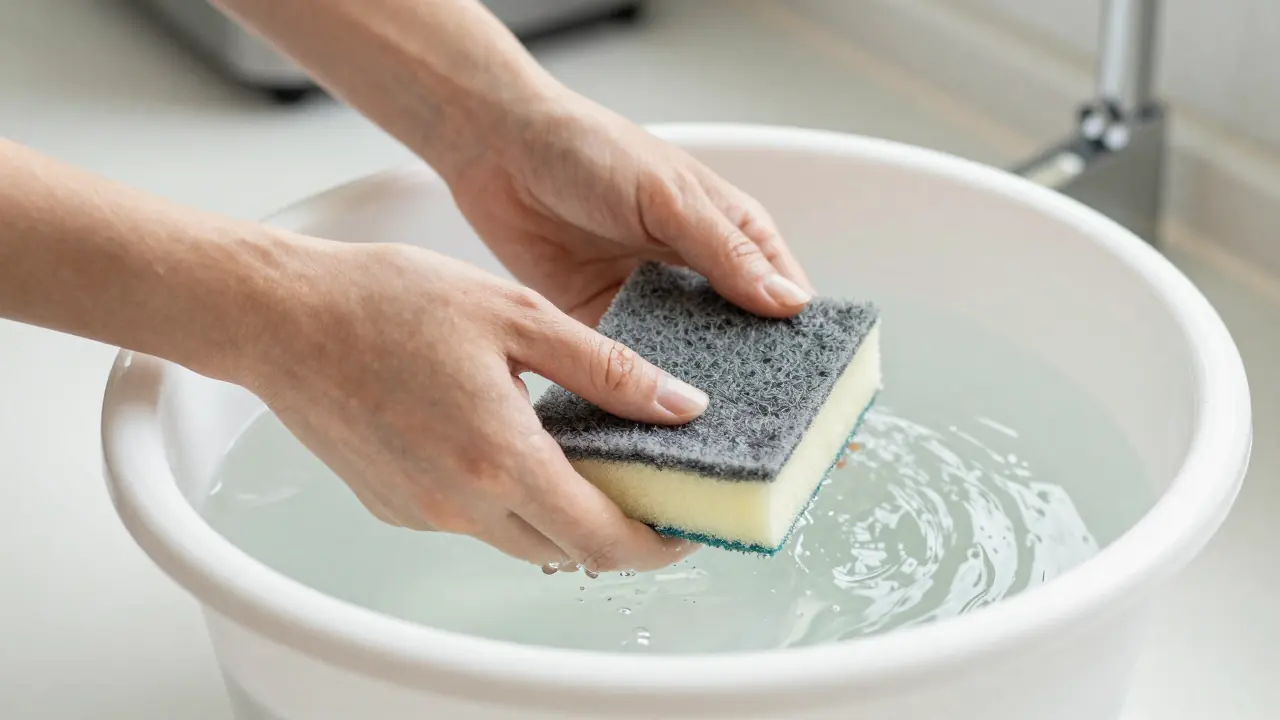
- Add mechanical polishing. Fine filter floss catches particles too small for standard sponge media. See aquarium filter types for what each style can hold.
- Seed the tank if you can. A few handfuls of gravel from a healthy, established tank speeds up the biology that clears the water.
If ammonia or nitrite reads above zero, that changes the plan. Do a partial water change with conditioned water and read how to cycle a fish tank to understand what the numbers mean.
Cloudy after a water change
If the tank turns cloudy within a day or two of a water change, one of three things happened. You stirred up debris, your tap water carries minerals or silicates that cloud on contact, or the change was big enough to upset the bacteria balance. A fresh water change clears the water for 24 hours at best if the real cause is a bloom, so repeating changes to chase the haze usually backfires.
Make the next change smaller and steadier. Weekly changes of 10 to 25% suit most tanks. Treat the new water with a dechlorinator, match the temperature, and pour it slowly onto a plate or your hand instead of onto the substrate. The full routine is in how to clean a fish tank.
Dust and particles: new substrate, sand and decor
Fine dust from unrinsed substrate, sand, rock or ornaments floats for hours. It is not toxic and it is not biological, so it will settle and filter out. Floating particles cannot be removed at once by a normal filter, and fine floss helps most. A flocculant water clarifier clumps particles into larger pieces your filter can catch, so use one only as the label directs and rinse the floss afterward.
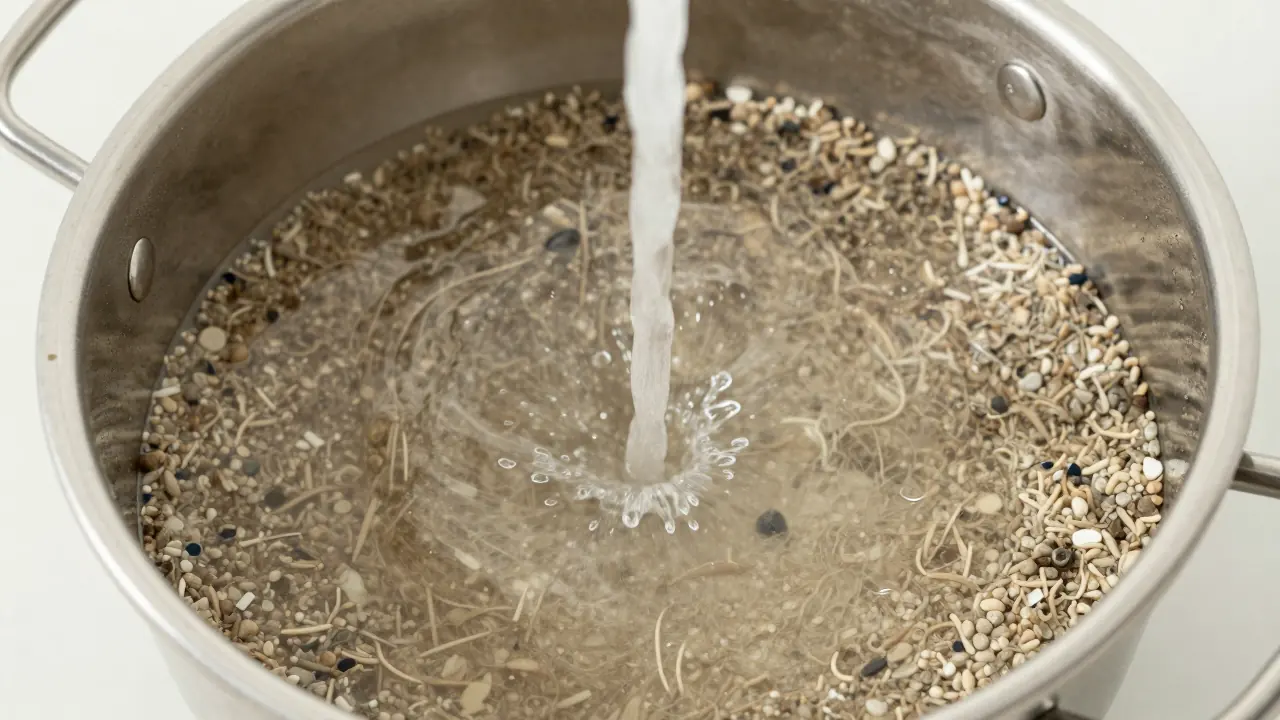
Prevention is simple: rinse new substrate, sand and rock in a bucket until the rinse water runs clear, and fill the tank slowly. Read aquarium substrate for how each type behaves when wet.
Green cloudy water
A green tint means free-floating algae in the water column, usually caused by strong light plus excess nutrients. It is a separate problem from a bacterial bloom, and the fixes are different: cut light, reduce feeding, add fast-growing plants, and consider a UV clarifier. Our guide to green water in a fish tank covers each option in order.
Yellow or brown water
A tea tint usually comes from tannins leaching out of driftwood, leaf litter or some decor. Tannins are not harmful, but they can soften and slightly acidify the water. They can also mean decaying plant matter or built-up waste. Remove dead leaves, vacuum the substrate, and run activated carbon in the filter if you want the water clear again. Boiling or soaking driftwood before use releases much of it in advance.
Brown film on glass and decor is a different thing: diatoms. That has its own page, brown algae in a fish tank.
Cloudy water with a smell
Healthy tank water has almost no odor beyond a faint earthy note. A fishy or sour smell points to waste, rotting food or a dead plant. A rotten-egg smell usually means a dead zone: compacted substrate, a clogged filter or a hidden corpse where water barely moves. Find the source, remove what is rotting, and vacuum the substrate gently. Then check ammonia and nitrite. Do not stir a smelly substrate in one go in a heavily planted or deep sand bed, because trapped gases can release quickly. Work in small sections across several days.
Film, foam and bubbles on the surface
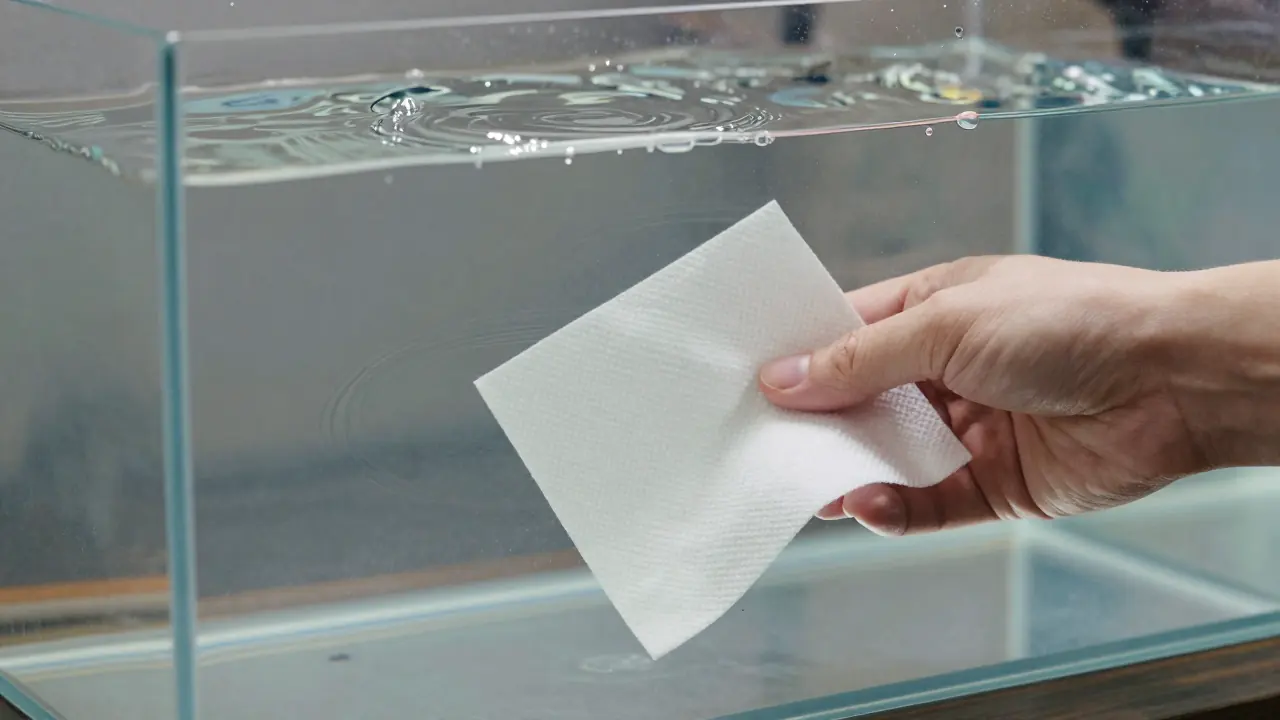
A greasy, dusty or oily film on the surface is a buildup of proteins and oils from food and waste. It blocks gas exchange and looks bad. The fix is more surface movement: point the filter outlet so it ripples the surface, or add an air stone. Skim it off with a paper towel laid flat on the water. Feeding less, rinsing food, and removing uneaten food prevents most films.
Foam and bubbles that last on the surface are the same kind of organic buildup, often around the filter outlet. A few short-lived bubbles are normal. Dense foam that lingers means too much dissolved waste, so do a water change and cut back on feeding.
How to prevent cloudy water
- Do not overfeed. Feed only what fish finish quickly and skip a day now and then. Fish handle days without food far better than they handle a fouled tank.
- Do not overstock. Too many fish overload the filter. Use the tank size and adult size of each species to plan, and see the fish tank sizes chart.
- Stage your filter care. If a filter needs cleaning in under the first 30 days, the tank is probably overfed or overstocked. Rinse media in old tank water, and only one piece at a time.
- Keep changes regular and moderate. Small weekly changes beat large occasional ones.
- Add live plants. They take up waste nutrients that would otherwise feed blooms.
- Use filter carbon or fine floss if you want extra polishing, replacing it on the maker’s schedule.
Is cloudy water harmful to fish?
Usually the haze itself is not toxic. A bloom does use up oxygen, though, and the same overfeeding and waste that cause the haze can push ammonia and nitrite up. That is why checking the water with a kit matters more than how the tank looks. Clear water can still be unsafe, and cloudy water can be fine.
FAQ
How do I fix cloudy fish tank water fast?
There is no safe instant fix for a bloom. Fine filter floss, a smaller feeding schedule and patience do the work. For dust or green water, polishing floss and a UV clarifier clear the water faster than waiting.
How long does cloudy water take to clear?
A few days to a couple of weeks is typical, and up to 4 weeks is possible in a new tank. Dust settles in hours to a day or two.
Can fish live in cloudy water?
Yes, for a while, as long as ammonia and nitrite read zero and there is plenty of surface movement. If readings are off, act on the numbers first.
Why is my tank cloudy after one day?
A brand-new tank with milky water on day one or two is a bacterial bloom or substrate dust. Rinse the next batch of substrate better, and feed lightly.
Should I add a bacteria product?
It can help a new tank get started, but it does not replace feeding less and leaving the filter alone. Use it as the label directs.

The Pet Almanac editorial team researches, writes and edits every care guide on the site. Each guide is fact-checked before publishing and reviewed again when care guidance or equipment changes.