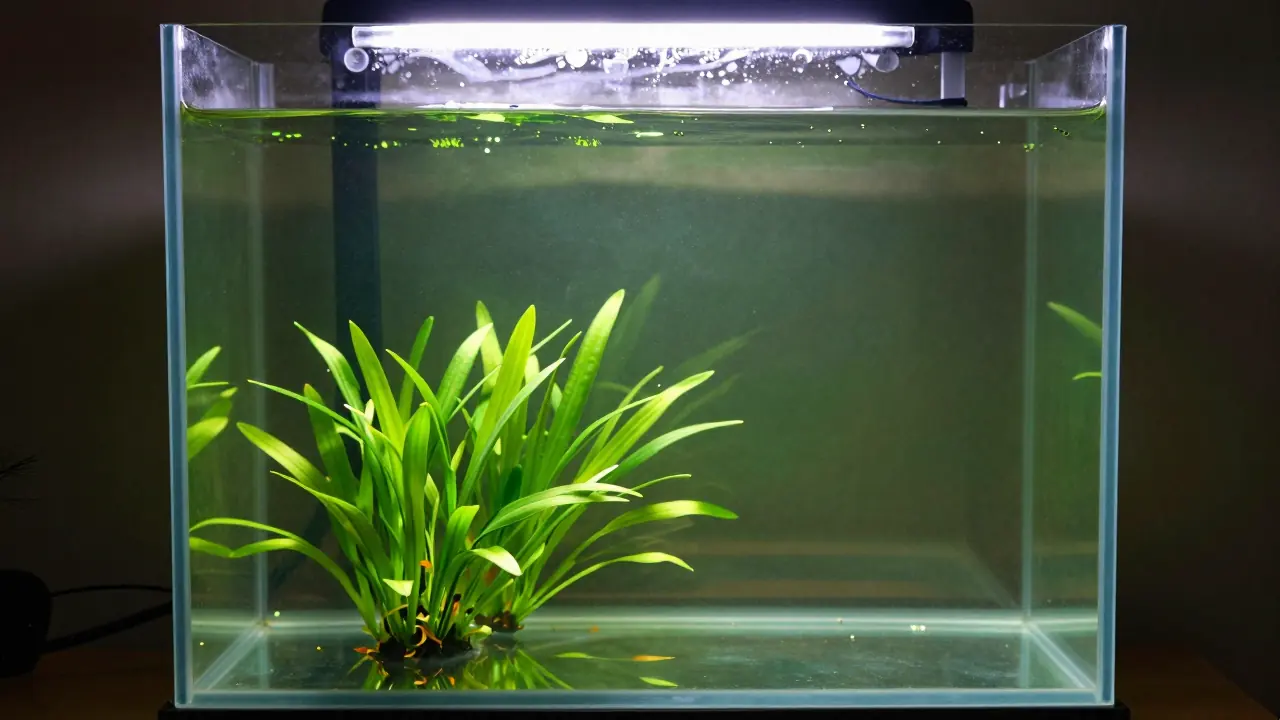
Green water is a population explosion of microscopic algae drifting freely in the tank. It happens when the algae get more light and nutrients than the tank’s plants and filter can use. To clear it, cut the light, trim the nutrients, and either block the light for a few days or run the water through a UV clarifier. Water changes alone rarely fix it.
The good news is that green water is a balance problem, not a sign the tank is failing. Once you correct what feeds it, the water clears and stays clear.
Why aquarium water turns green
The green color comes from single-celled algae suspended in the water column. They reproduce by the billions in a short period of time when conditions favor them. Unlike the algae that coat glass and decor, these cells never attach to anything, so scrubbing does nothing. The problem sits in the water itself.
Four things set it off, and usually more than one is at work:
- Too much light. Lights on for too many hours, or a tank that catches direct sunlight from a window.
- Excess nutrients. Nitrate and phosphate come mostly from fish food and fish waste, and some tap water already carries them.
- A new tank. Blooms are very common in the first 1 to 3 months, while plants and bacteria are still settling in.
- Overfeeding and weak maintenance. Uneaten food, dirty filter media and skipped water changes add to the nutrient load.
Light and sunlight
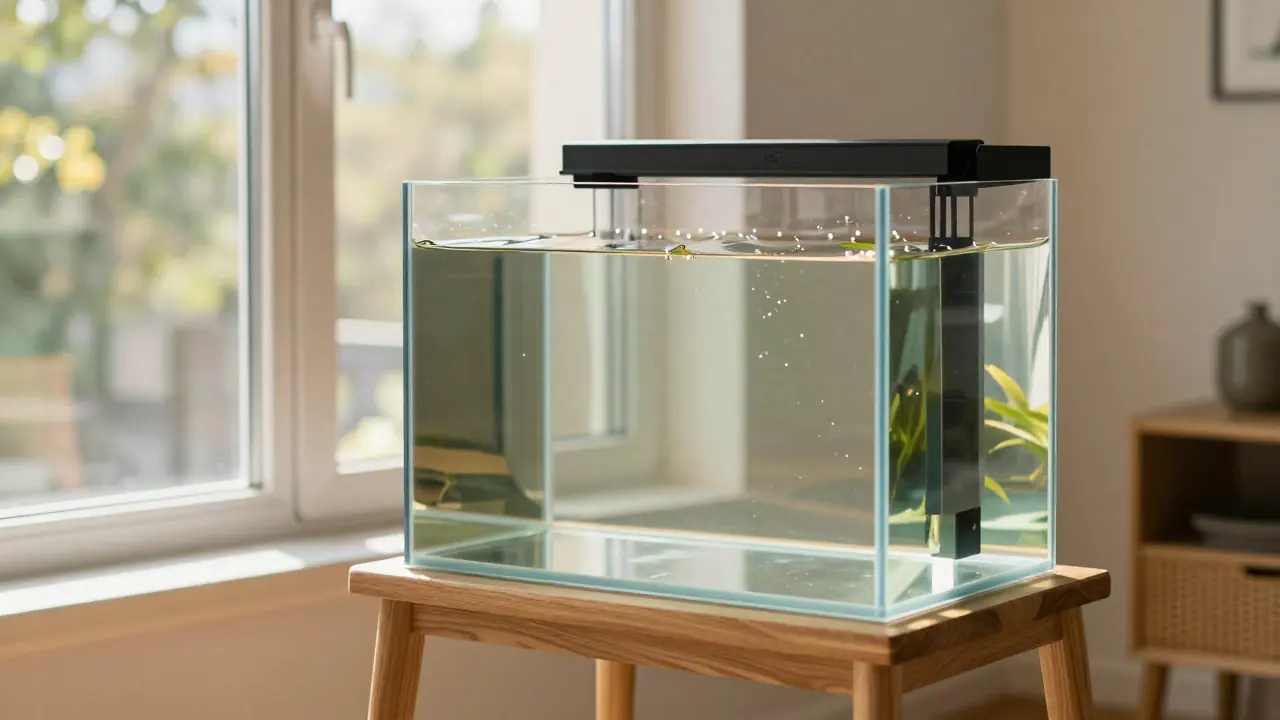
Most tanks do well with light on a timer. Planted tanks usually need 8 to 12 hours of light daily in the broadest range, but a tank fighting algae should stay near the low end, at 8 hours or less. A tank without plants can get by on 6 hours or less. Indirect daylight is enough to feed a bloom, so move the tank away from the window or shade the back and sides. Tank lights that sit on for a dozen or more hours a day are a classic cause.
Nutrients, feeding and stocking
Feed only what your fish finish in about 30 seconds to 2 minutes, once or twice a day, and skip a day each week. Overstocking has the same effect as overfeeding, because every fish makes waste. A common starting rule is about 1 inch of adult fish per gallon of water, though body shape and species matter. Check your tap water for nitrate and phosphate as well. If your source water is high, mixing in purified or reverse osmosis water reduces what you add with each change.
Is green water harmful to fish?
Usually not. The algae themselves are not toxic, and some freshwater breeders even culture similar organisms as a first food for tiny fry. A heavy bloom does block light from plants and can lower oxygen overnight, when algae stop making it and consume it instead. Surface movement from an air stone or a filter outlet that ripples the water helps. If your fish are active and eating normally and ammonia and nitrite read zero, green water is a nuisance to fix, not an emergency.
How to clear green water: fixes in order
1. Reduce the light
Cut the light period to 6 to 7 hours for now, and put the lights on a timer. Cover or shade any window-facing glass. Within a week of these changes, you may see the water already clearing. Once the water is clear, keep lights at 8 hours or less for good.
2. Do regular water changes, not huge ones
A change of 30 to 50% lowers the nutrient level that feeds the algae, and it is worth doing once at the start. Repeating huge changes does not solve the problem, because the algae regrow from the few cells left as long as light and nutrients stay high. Keep to a steady routine afterward: about 10% weekly or 25% every other week is plenty. The method is in how to clean a fish tank, and always treat new water with a dechlorinator (see aquarium water conditioner).
3. Feed less and clean up waste
Cut the portion, skip a day each week and net out uneaten food. Vacuum loose waste from the substrate during water changes, except in a brand-new setup or a planted tank with fertilized substrate. In those, leave the substrate alone.
4. Add fast-growing plants
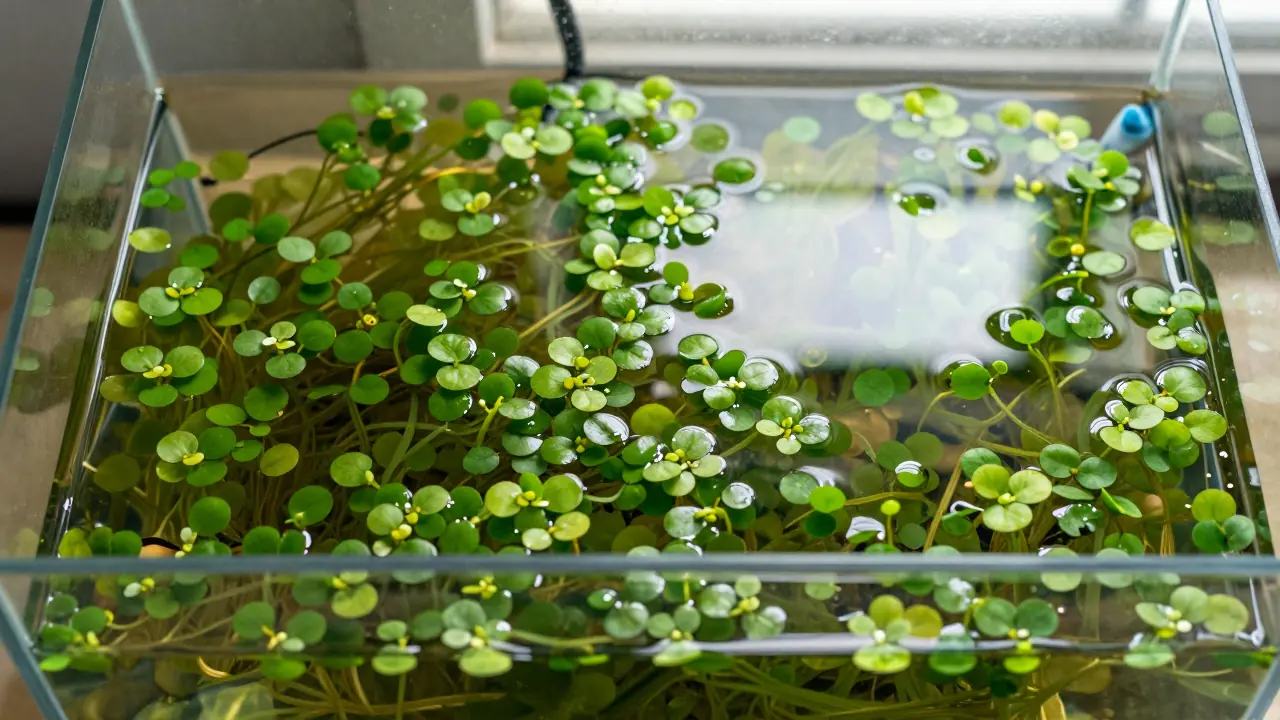
Plants compete with algae for the same nutrients. Fast growers such as hornwort, water sprite, anacharis (elodea) and floating plants take up nitrate quickly and shade the water. Floating plants are the easiest because they sit under the light and do not need the substrate. See our list of easy aquarium plants.
5. The blackout method
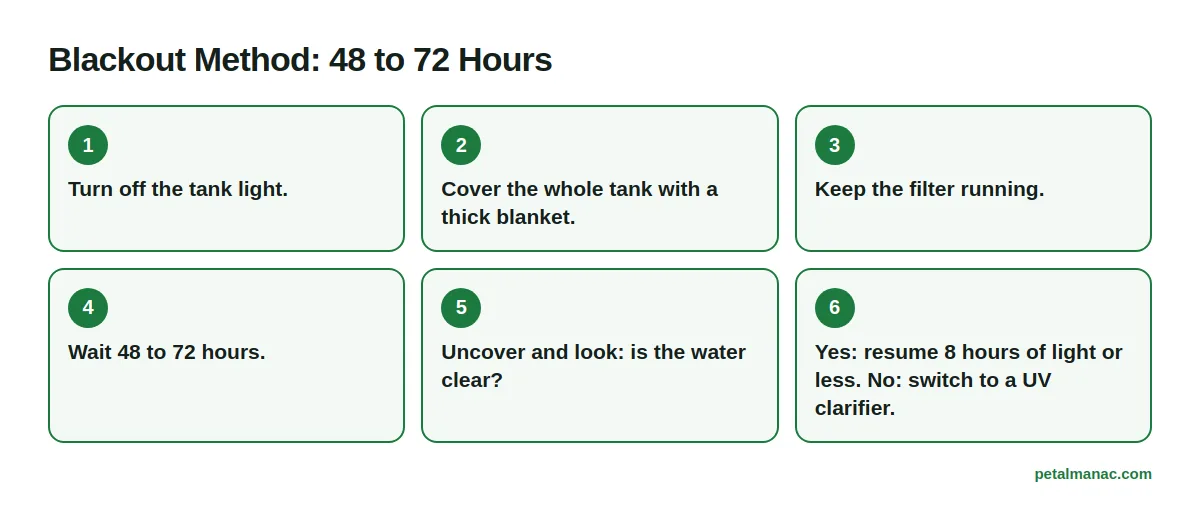
If the water is already thick, cutting the light entirely for a short while collapses the bloom. Cover the whole tank with a thick blanket or foil-lined cardboard for 48 to 72 hours, with the filter running and the lights off. Do not feed heavily during the blackout. If you see no result in 48 to 72 hours, switch to a different approach. Most fish tolerate a few days of darkness, but planted tanks can suffer, so keep it short and do not repeat it back-to-back.
6. Fine filtration or a UV clarifier
A UV clarifier passes water over an ultraviolet lamp that kills floating algae cells as water goes through. Most tanks clear within 24 to 72 hours with UV, and results come in a matter of days. Size the unit to your tank volume using the maker’s rating, and keep the water moving through it. Fine floss in the filter catches the dead cells. This is the fastest dependable fix and also the most expensive.
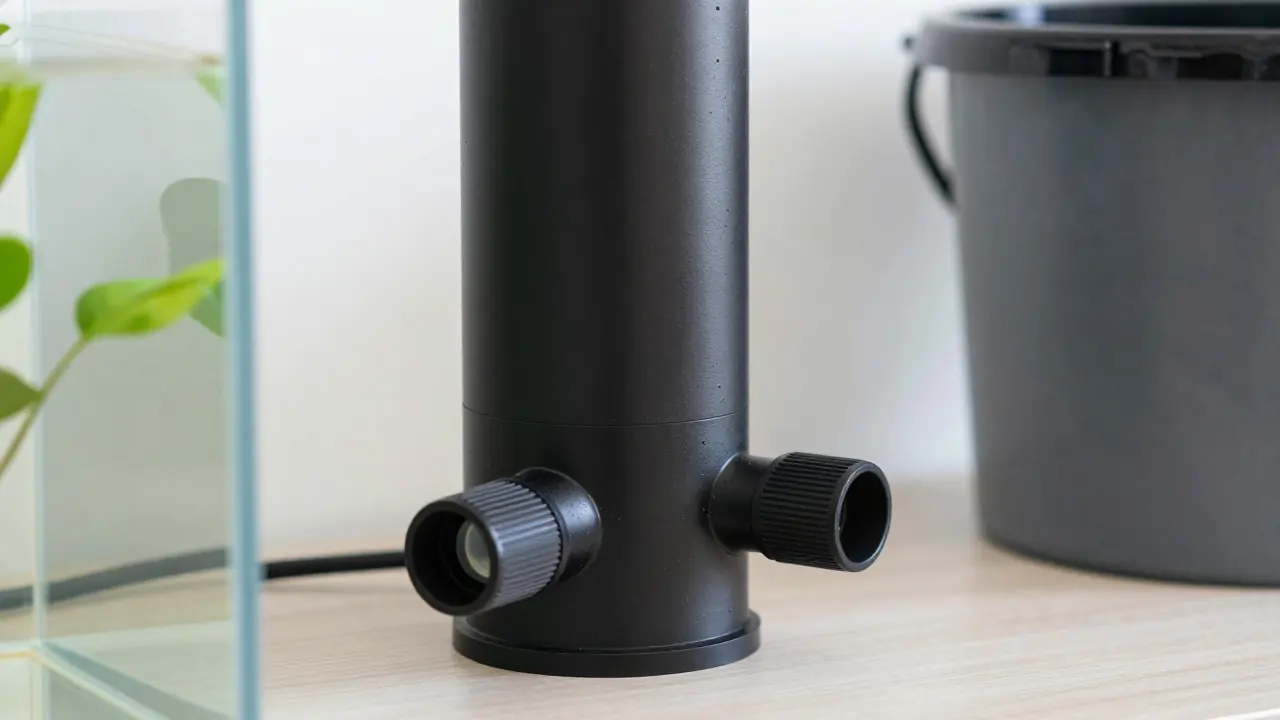
A UV clarifier is electrical equipment that sits near water. Choose a UL-listed unit, run it only with the lamp fully enclosed, plug it into a GFCI outlet with a drip loop in the cord, and unplug it before you open the housing or put your hands in the tank. Never look at a lit UV lamp.
7. Chemical options are a last resort
Algaecides and water clarifiers treat the symptom, not the cause. If you use one, follow the product label exactly, remove activated carbon and other chemical media first so they do not absorb it, keep the water moving and dose by actual net gallons (a 20-gallon tank usually holds about 16 gallons of water once decor and substrate are in). Some products harm plants and invertebrates such as shrimp and snails, so check the label before using one.
Why water changes alone often fail
Green water is not stuck to anything, so each water change just dilutes it for a day or two. As long as the tank gets the same light and the same nutrients, the surviving cells divide again and the water is green again within days. Water changes are a supporting move, not the fix. Pair them with shorter light hours and less feeding, and the water stays clear.
How to keep green water from coming back
- Run the light on a timer, 8 hours or less, and keep the tank out of direct sun.
- Feed only what is eaten in a minute or two and stock within the tank’s capacity.
- Keep a steady change routine, around 10% weekly, and replace hang-on filter cartridges monthly and chemical media every 4 to 6 weeks, or on the maker’s schedule.
- Read nitrate and phosphate with a liquid kit now and then, especially if your tap water is high.
- Keep live plants growing. Healthy plants are the best long-term competition for algae.
Green water is one form of algae among several. For the other kinds, such as green spot, hair algae and cyanobacteria, see our guide to aquarium algae. If the water is cloudy but not green, start with cloudy aquarium water.
FAQ
How do I fix green water in my fish tank?
Cut the light to 6 or 7 hours, feed less, do one moderate water change, and add fast-growing plants. For a faster fix, use a blackout of 48 to 72 hours or a UV clarifier.
Will green water go away on its own?
Sometimes, especially in a new tank, but only once light and nutrients come into balance. Do not count on waiting alone.
Why is my aquarium water greenish?
Free-floating algae are growing faster than your tank can use up the nutrients. The usual causes are long light hours, sunlight, overfeeding or a tank that is still settling.
Is green water the same as algae on the glass?
No. Glass algae is attached, and green water is suspended. They share the same triggers but need different tools.

The Pet Almanac editorial team researches, writes and edits every care guide on the site. Each guide is fact-checked before publishing and reviewed again when care guidance or equipment changes.