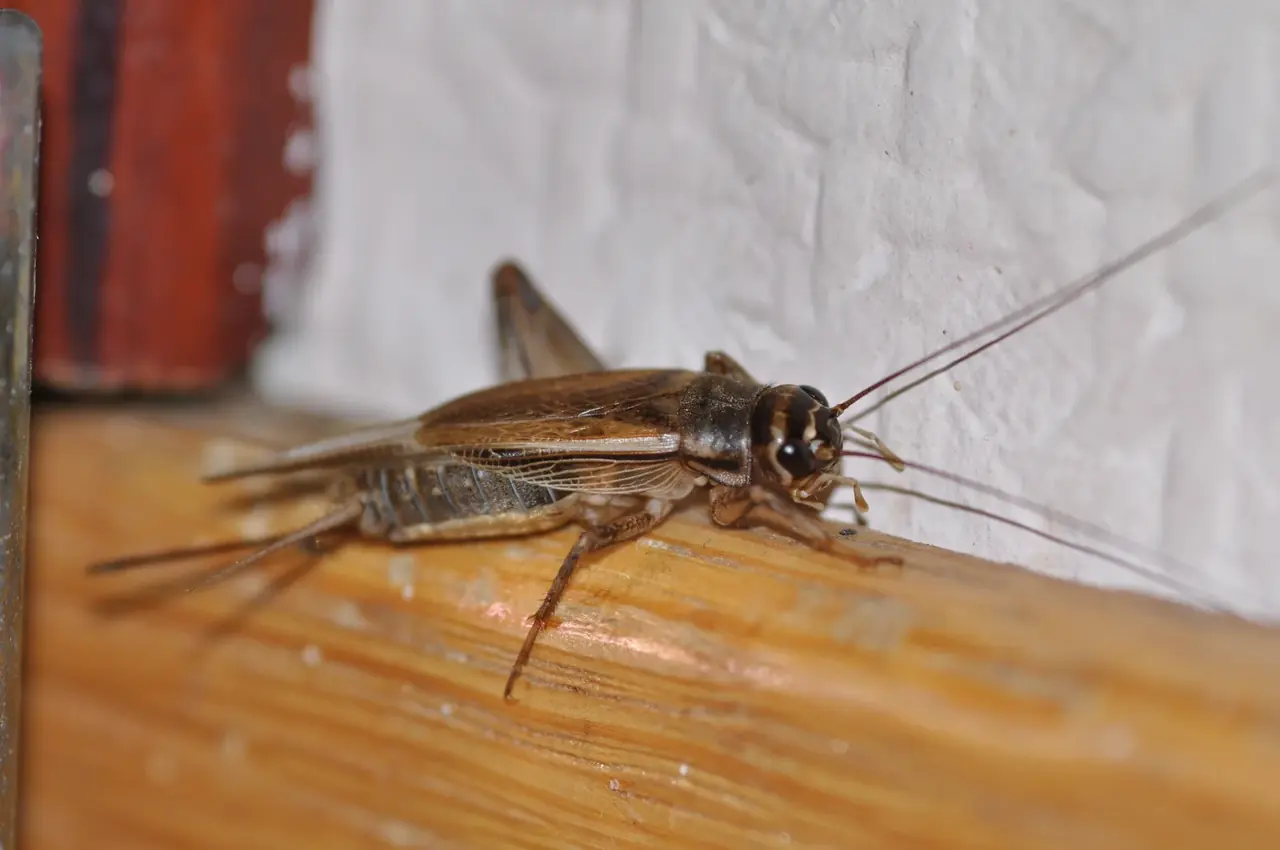
Crickets stay alive when they have dry, well-ventilated housing at 75 to 85°F, plenty of climbing surface, steady food, and a safe water source that cannot drown them. Most early deaths come from three mistakes: crowding, damp air, and an open water dish.
Even with perfect care, store-bought crickets are often partly grown already, so expect weeks, not months. This guide covers a setup you can build in ten minutes, what to feed, how to keep the bin clean, and a troubleshooting table for when they start dying.
Set up the cricket bin
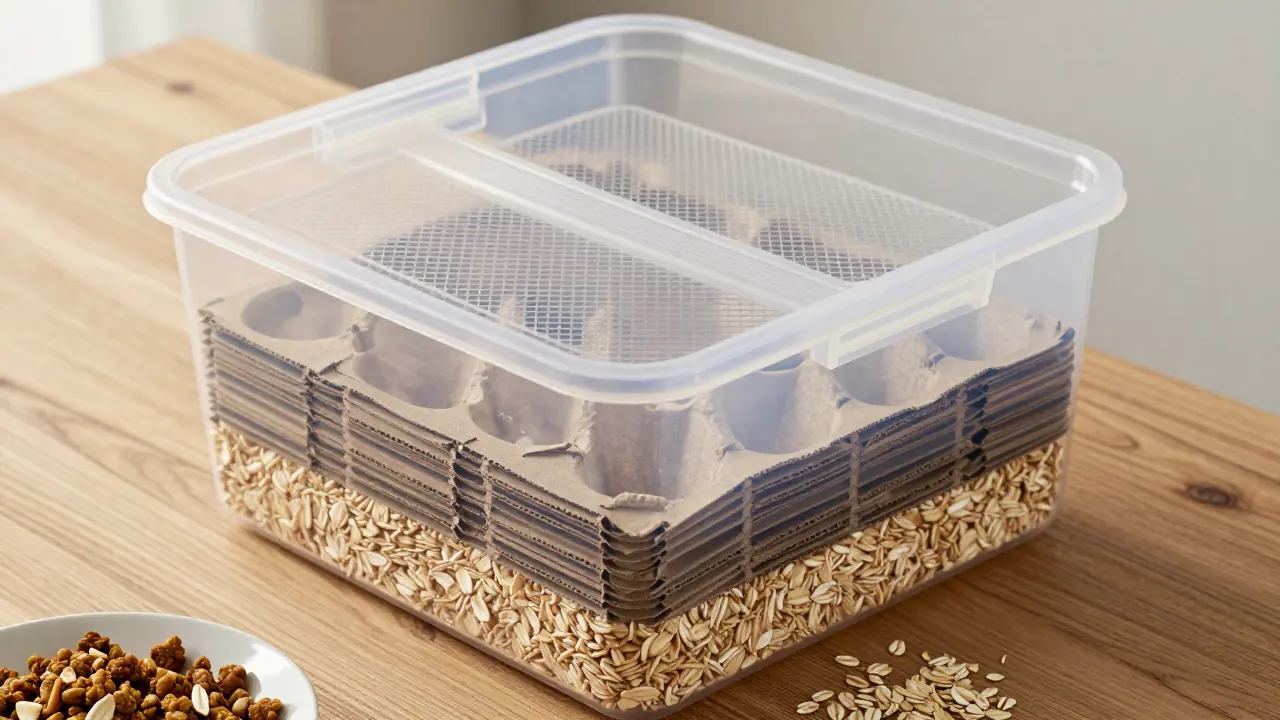
Use a plastic bin or tank with smooth sides and a screen or mesh lid. Small ventilation holes are not enough for most setups, so cut a large opening in the lid and cover it with mesh. Shipping bags and pet store containers are a temporary home only: move the crickets into a proper bin as soon as they arrive.
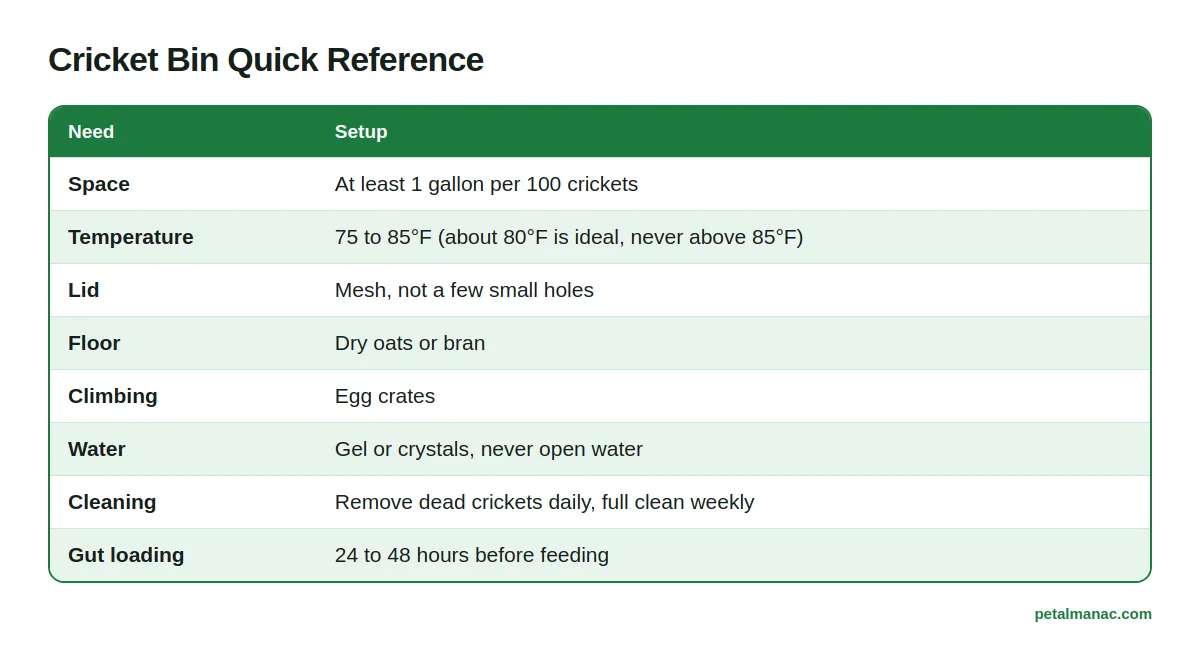
- Pick the size. Allow at least 1 gallon of space per 100 crickets. Overcrowding is the most common cause of early losses, since crowded crickets sweat moisture into the bin and attack each other.
- Add a dry floor. Line the bottom with dry oats or bran. A layer of vermiculite can also soak up moisture.
- Stack the egg crates. Cardboard egg crates or tubes give crickets hiding places and climbing surface, which reduces crowding on the floor. Replace them when they get flimsy, damp, soiled or chewed.
- Ventilate. Use a mesh lid. A fan or dehumidifier in the room helps if the air is damp.
- Place the bin. Keep it in a warm, stable room away from cold drafts, direct sun and heaters.
Crickets are stressed by bare smooth surfaces, so give them rough cardboard to grip. A bin that is wet, smells sour or has condensation on the lid needs more airflow right away.
Temperature and light
Keep crickets between 75 and 85°F with low humidity. Around 80°F is ideal, and the bin should never climb above 85°F. For short-term storage of up to a week, a cooler range of 65 to 70°F also works.
Read the temperature with a digital thermometer in the bin, not by guessing. If you add a heat mat or lamp to a cold room, put it on a thermostat, use UL-listed equipment, and never let the bin touch a heater directly.
Food and water
Crickets need constant food and a steady source of moisture, and the second is where most keepers go wrong. Open water is the main hazard: crickets drown in even a shallow dish. Use water-retaining gel, hydration crystals in a shallow dish, a clean damp sponge, or moist produce instead. Do not mist the bin, since crickets do best in dry air.
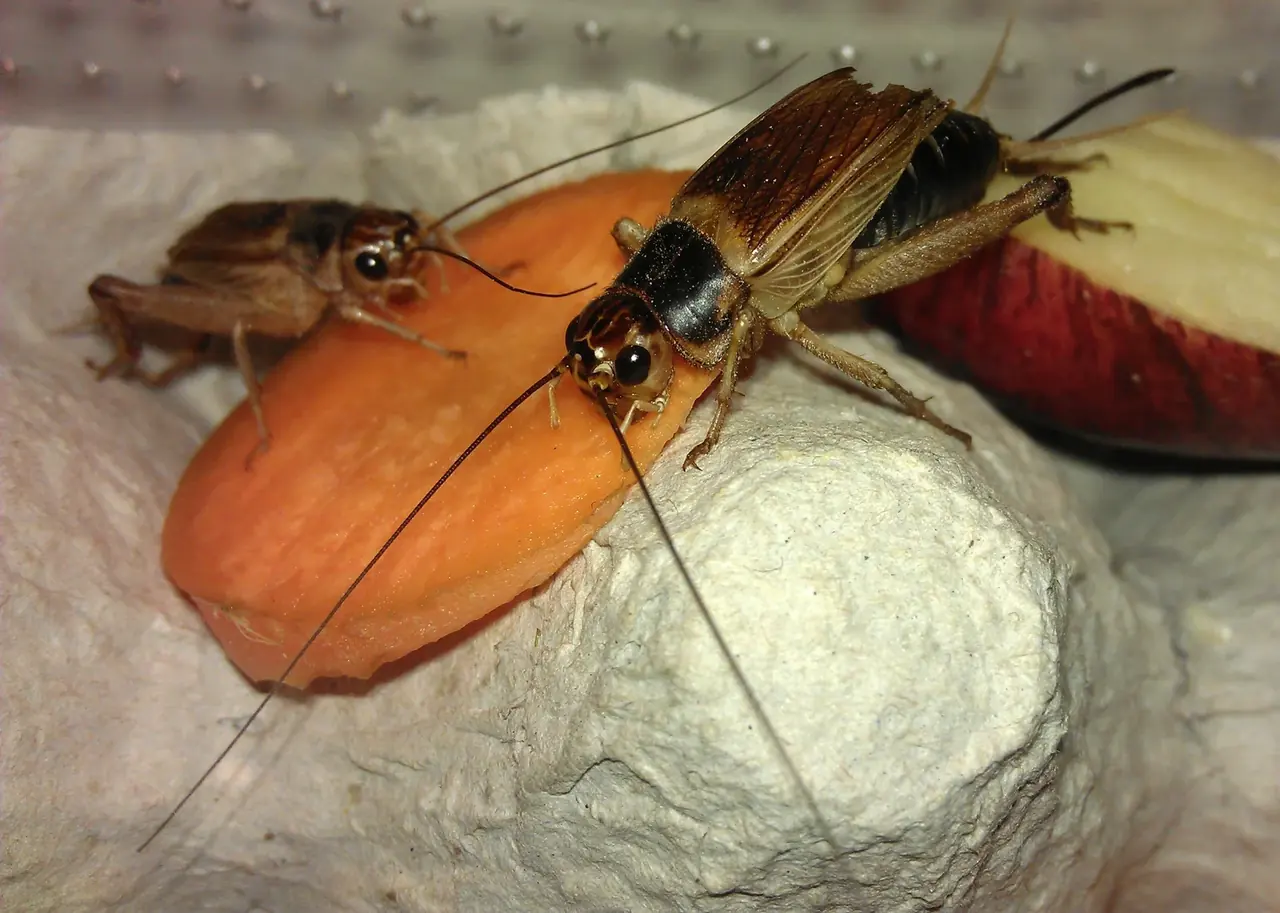
- Dry food: commercial cricket food, oats, wheat bran or cornmeal in a shallow dish.
- Fresh food: carrot, sweet potato, apple, orange slices or dark leafy greens. Replace soft or wet food within 24 to 48 hours, and never leave uneaten produce longer than that.
- Dishes: keep them shallow and clean, and remove any that get wet or moldy.
Gut loading
Gut loading means feeding crickets a nutritious diet before they go to your reptile. Do it for 24 to 48 hours before feeding, using a commercial gut-load product, dark leafy greens, carrots, squash or sweet potato. Then dust the crickets with a calcium supplement just before the meal. Crickets alone are a poor calcium source, so dusting matters. See our leopard gecko feeding guide for how this fits into a full diet, and offer crickets no larger than the space between your reptile’s eyes.

Cleaning the bin
Remove dead crickets and old food every day. Dead crickets left in the bin cause an ammonia smell and invite cannibalism. Once a week, or sooner when odor builds, clean out the droppings (frass) and rinse the container with hot water; replace any egg crates that are soiled or chewed. A spare bin makes this easy: move the crickets across, then scrub the dirty one. Do not flush leftover crickets or release them outdoors.
How long do crickets live?
A cricket from a pet store has often lived part of its life already, so the remaining time is short: roughly 2 to 3 weeks with good care. Reared from egg at home, a house cricket takes about two to three months to complete its whole life cycle at 80 to 90°F. The number depends on age at purchase, heat, and how crowded the bin is.
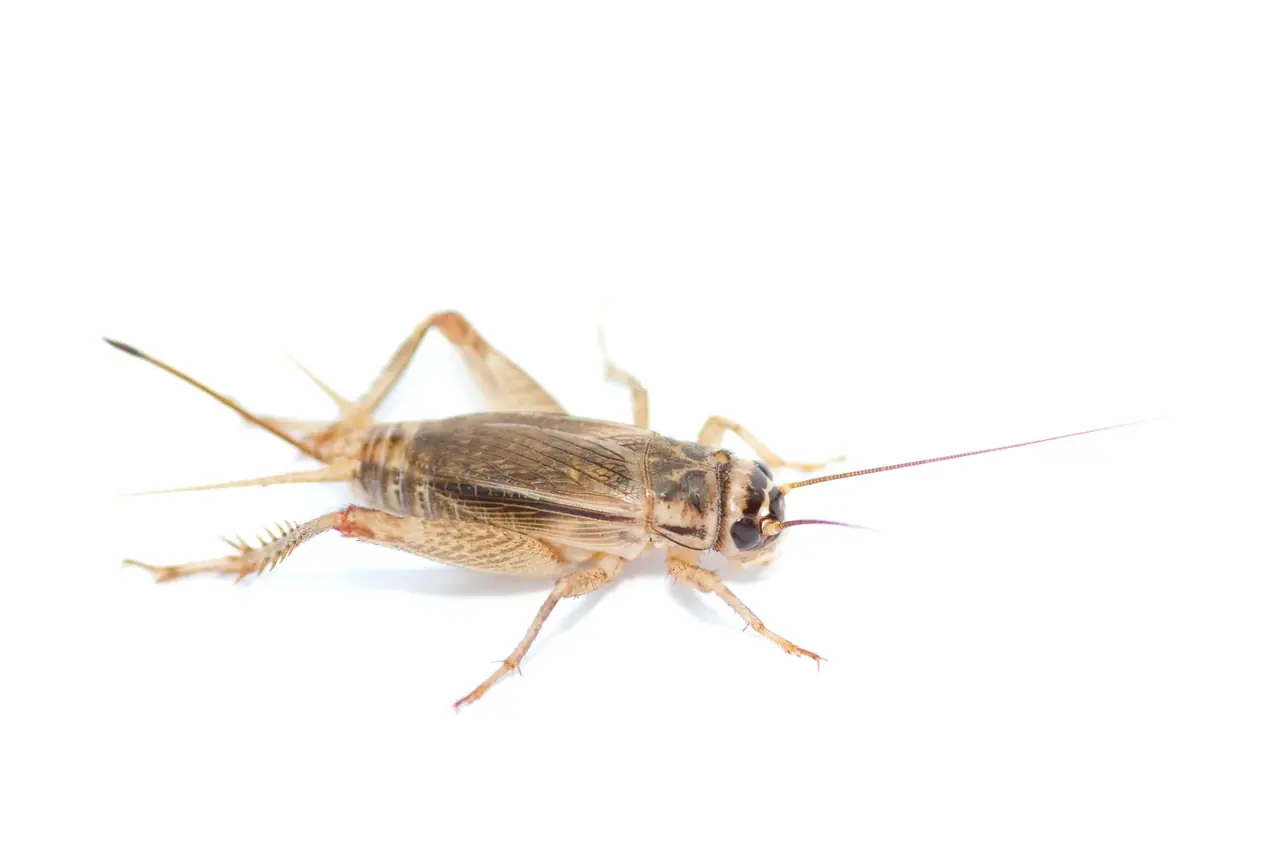
Why are my crickets dying?
| Sign | Likely cause | Fix |
|---|---|---|
| Many dying in the first days | Shipping stress or cold storage | Move to a bin right away, keep at 75 to 85°F, and remove the dead |
| Bin smells and walls are wet | Too much moisture or poor ventilation | Add mesh ventilation, dry food, dehumidify the room, replace damp cardboard |
| Dead crickets near a water dish | Drowning | Switch to water gel, crystals or moist produce |
| Crickets chewing on each other | Overcrowding, thirst or hunger | Buy less, add egg crates, keep food and moisture constant |
| Slow, sluggish crickets | Too cold | Warm the room to about 80°F |
| Mold on food | Produce left in too long | Replace within 24 to 48 hours |
Small container or bulk: how many to buy
Buy only what your reptile will eat in about a week or two. A small tub of crickets is easier to keep alive than a bulk order, because there is less to crowd, clean and lose. Bulk only makes sense for several animals or a big eater, and only if you have bins for them at the 1 gallon per 100 rule.
Can you keep crickets in the fridge?
No. Cold kills live crickets, so do not refrigerate them for storage. If you need to hold them briefly, a room at 65 to 70°F works for up to a week. Some insects, like mealworms, can handle a fridge, which is covered in our mealworms vs superworms guide.
Should crickets be kept in the dark?
Not necessarily. They need a stable room with normal day and night light, no direct sun, and no overheating. Darkness does not keep them alive longer.
How do I keep crickets alive overnight?
Put them in a ventilated bin with dry food, a gel water source and egg crate, in a room at 75 to 85°F.

The Pet Almanac editorial team researches, writes and edits every care guide on the site. Each guide is fact-checked before publishing and reviewed again when care guidance or equipment changes.