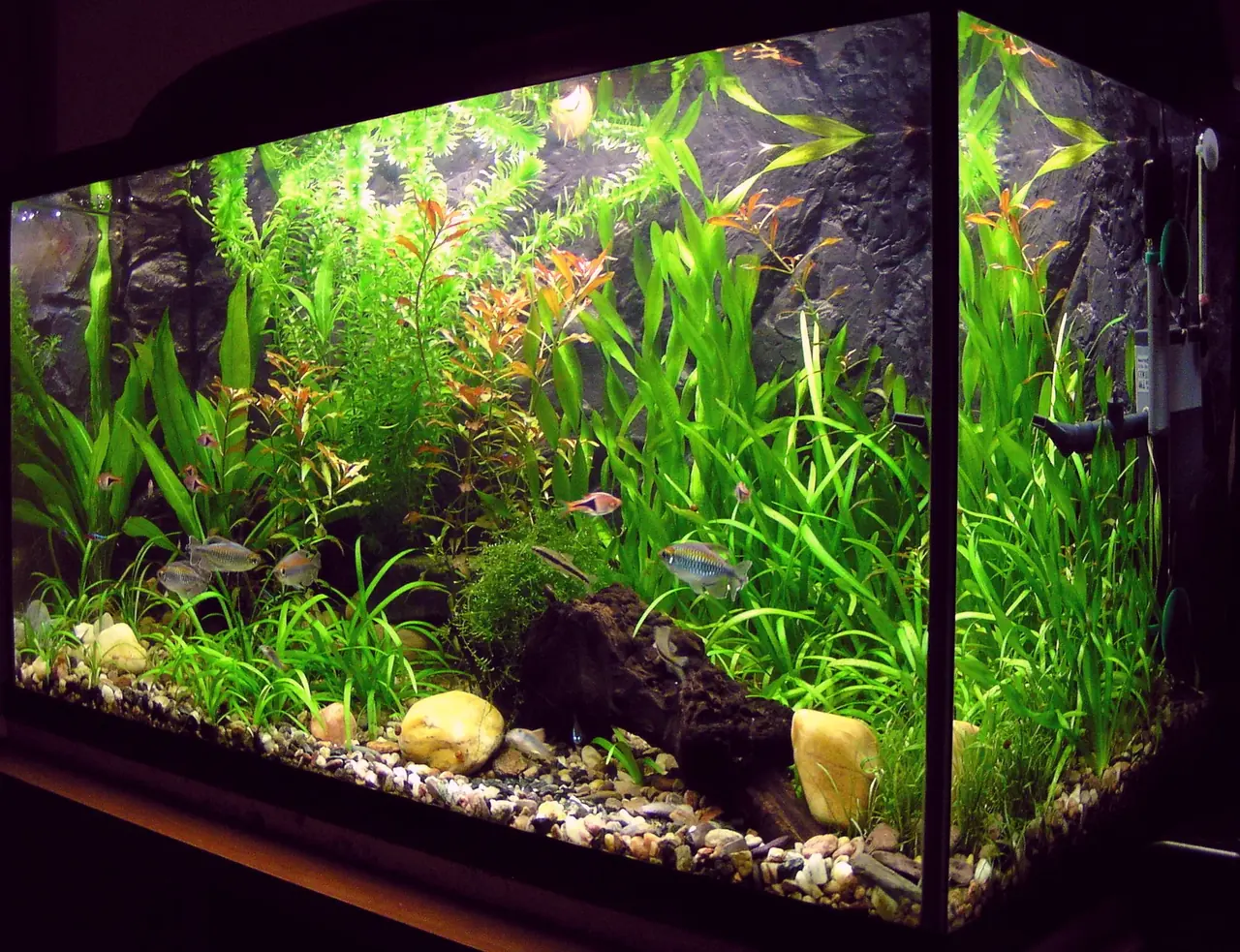
The best aquarium substrate is the one that matches what lives in the tank: smooth gravel or sand for most community tanks, sand for fish that sift and burrow, and nutrient-rich aqua soil for a heavily planted tank. Plan on about 1 pound per gallon, spread to a depth of roughly 2 to 3 inches, and rinse everything except aqua soil until the water runs clear.
Substrate is more than a floor covering. It is where a large share of your beneficial bacteria live, it anchors the plants, and it decides how easy the tank is to clean for years. Pick it before you buy anything else for the aquascape, because changing it later means tearing the tank down.
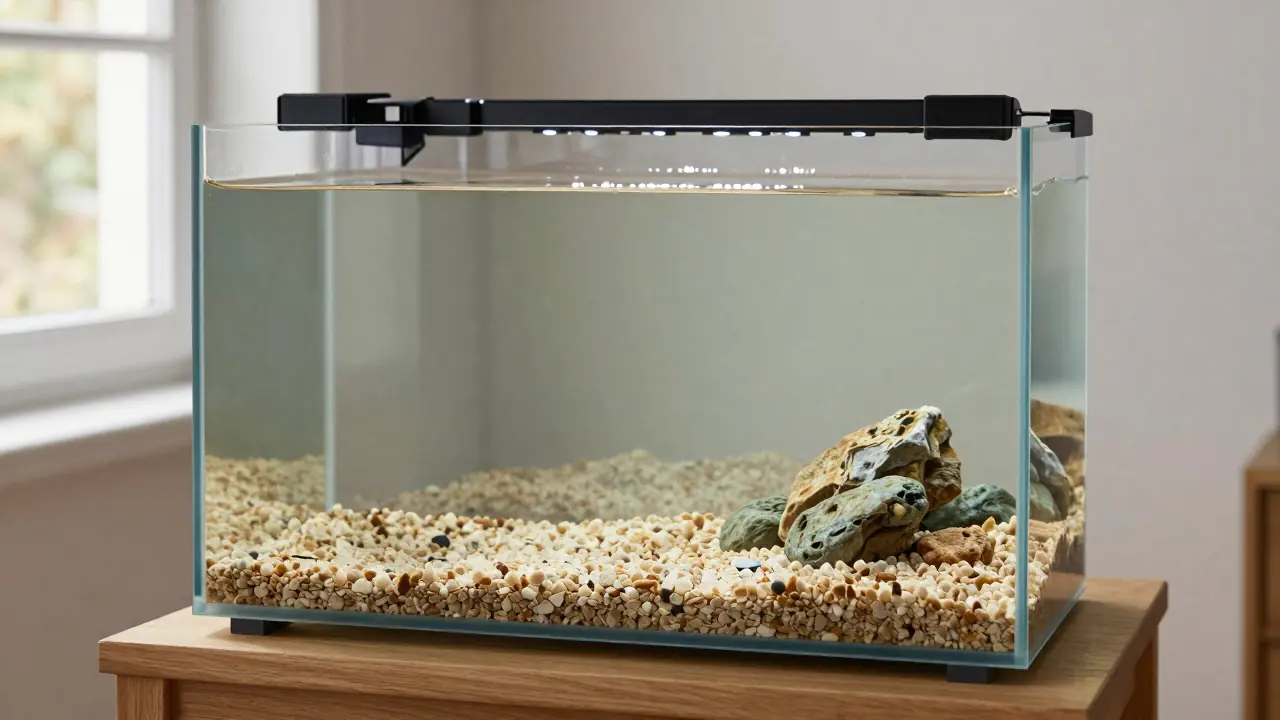
What aquarium substrate does
Substrate is the layer of material on the tank floor. It has four jobs. It gives nitrifying bacteria a large surface to live on, so it works alongside the filter to turn ammonia into nitrite and then nitrate. It holds plant roots. It lets bottom fish dig and forage. And it protects the bottom glass from heavy rocks and driftwood, which should never press directly on the pane.
Because so much bacteria lives in the substrate, a layer of at least an inch is better than a thin dusting. More depth means more surface area for the bacteria. If you are still setting up, the fish tank cycling guide explains how that bacterial colony builds up.
Types of aquarium substrate compared
Four materials cover almost every freshwater tank: gravel, sand, aqua soil and pebbles. Each trades price, cleaning effort and plant growth differently.
| Type | Grain size | Plants | Cleaning | Best for |
|---|---|---|---|---|
| Gravel | About 2 to 6 mm | Fine with root tabs; inert | Easiest; vacuum by lifting and dropping | Community tanks, beginners |
| Sand | Fine, quartz | Good for fine-rooted and carpet plants | Debris sits on top; hover the siphon above it | Corydoras, loaches, diggers |
| Aqua soil | Pellets or clay grains | Best; slow-release nutrients | Messy at setup; costs the most | Heavily planted tanks, soft water |
| Pebbles | Over 6 mm | Poor; roots cannot hold | Waste falls into gaps | Decorative accents only |
Gravel
Gravel is the most popular choice for good reason. It is inexpensive, comes in endless colors, drains well and is the easiest material to vacuum. Gravel is inert, so plants that feed through their roots need root tabs or liquid fertilizer. It also catches mulm, the brown film of microbes and organic matter, in the spaces between grains. Mulm feeds plants but looks untidy against the glass, so vacuum it regularly. Brightly colored gravel is usually natural gravel coated in colored epoxy, which is fine if you like the look and it is sold for aquariums.
Sand
Quartz sand is inert and will not raise pH. It is soft on fish that dig and on bottom feeders with delicate whiskers, and food and waste stay on the surface where you can see and remove them. The trade-off is that sand looks dirty sooner and can compact over time, so small, frequent water changes and an occasional gentle stir keep it healthy.
Aqua soil
Aqua soil is a baked or clay-based product enriched with plant nutrients that release slowly to the roots. It holds nutrients from fish food and fertilizer in reserve, and it often lowers pH and hardness, which suits soft-water fish and shrimp. It is also the most expensive option, often several times the cost of the same volume of gravel, and it clouds the water at setup. Soft-water-loving livestock do well on it; fish that need hard, alkaline water do not.
Pebbles
Pebbles are larger than gravel and leave big gaps that trap waste and offer little surface for bacteria. Plants cannot root in them, and nothing can dig. Use them as an accent over a sand or gravel base, not as the whole floor.
Inert vs. active substrate
An inert substrate, such as plain gravel, sand or calcined clay, does not change your water chemistry and does not feed plants. An active substrate does something: aqua soil releases nutrients and tends to lower pH and hardness, while crushed coral does the opposite and raises pH, KH and GH. Crushed coral belongs in African cichlid tanks, where hard alkaline water is the goal, and nowhere else.
Before you buy an active product, check the water you plan to keep. If you are fighting a pH that is already high, the guide to lowering pH in an aquarium is a better starting point than adding more buffering rock. Whatever you pick, change water chemistry slowly and follow the product label.
How much substrate do you need?
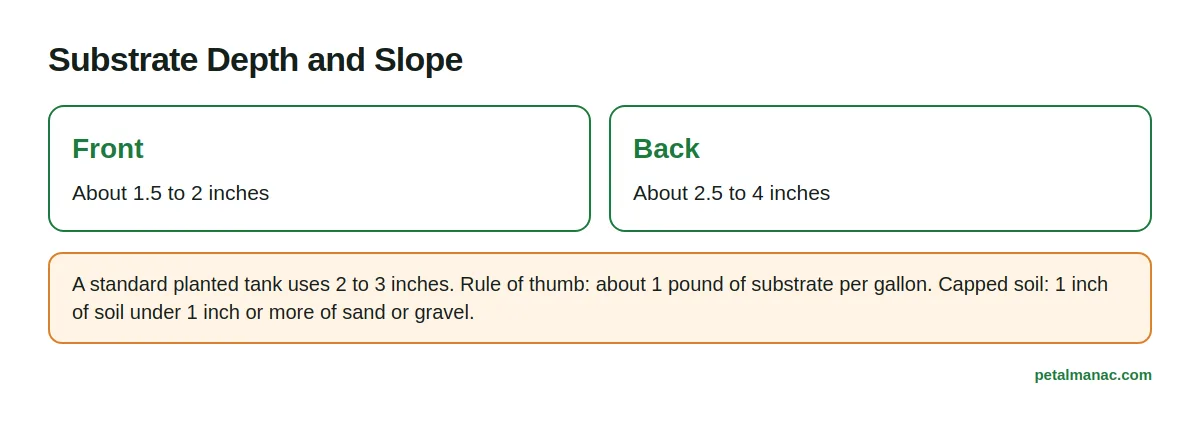
A reliable starting formula is 1 pound of substrate per gallon of tank volume, which gives a layer 2 to 3 inches deep in a standard tank. A 10-gallon tank takes about two 5-pound bags, and a 20-gallon tank takes about 20 pounds. Adjust for the shape of the tank. A breeder-style tank has a large floor and needs more per gallon, while a tall tank with a small footprint needs less. Aqua soil weighs less than sand or gravel, so a pound per gallon is a loose guide and the bag’s coverage chart is more accurate. Check the footprint of your tank in the fish tank sizes chart before you order.
How deep should substrate be?
Aim for 2 to 3 inches in a planted tank, since shallow layers give roots a weak anchor that is easy to disturb. For an unplanted tank, anything over an inch works. A gentle slope from about 1.5 to 2 inches at the front up to 2.5 to 4 inches at the back looks natural and gives a rooting area for tall plants. Do not go much deeper than that. Very deep, tightly packed substrate compacts, restricts water movement and can form oxygen-poor pockets.
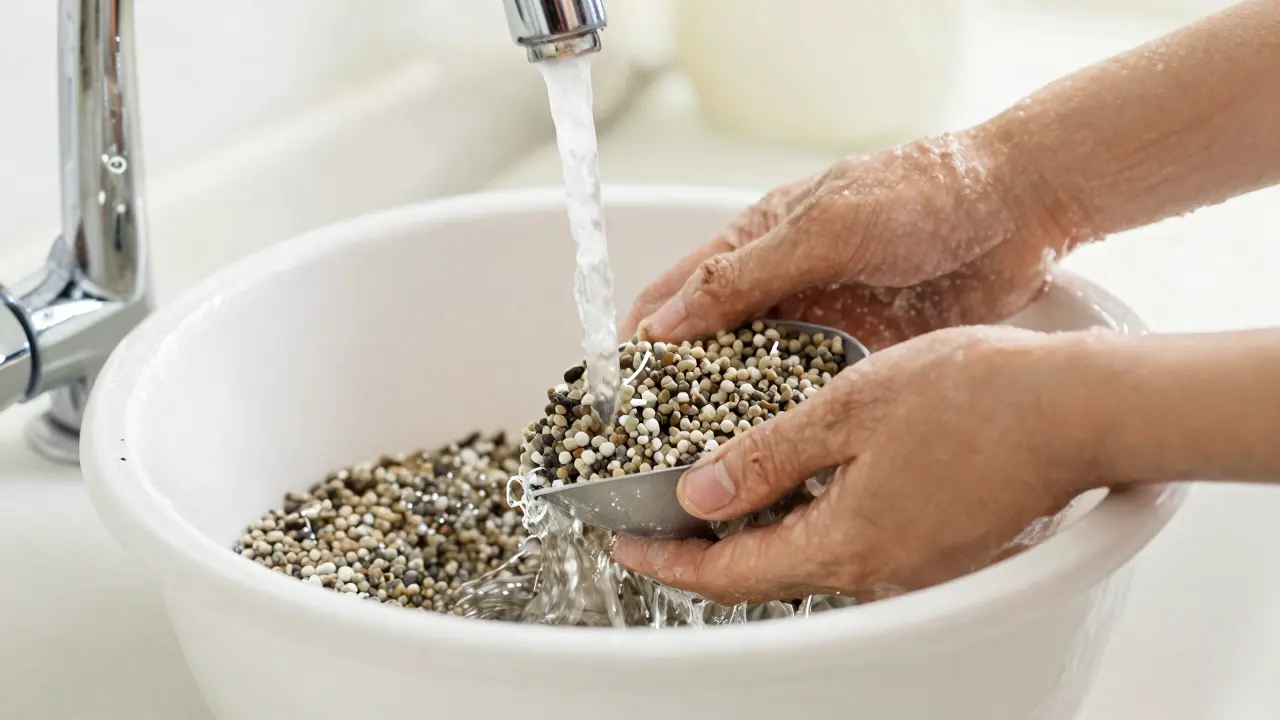
Rinsing and adding substrate
Rinse gravel and sand before they go in the tank. Put a few scoops in a bucket, run clean tap water through while stirring, pour off the silty water, and repeat until the water runs clear. The dust you lift would otherwise irritate fish gills and cloud the tank for days. Use plain water only, never soap.
Aqua soil is the exception to the pattern. Some manufacturers say not to rinse it at all, others say to wash it, and every brand leaves the first fill cloudy for a while, so follow the bag. Fill slowly by pouring water onto a plate or bowl set on the substrate so you do not blast a crater into the layers.
Which substrate for which setup
- Beginner community tank: natural or fine gravel. It is forgiving, easy to vacuum and works with a wide range of fish.
- Planted tank: aqua soil, or gravel or sand with root tabs. Heavy root feeders like swords and crypts need nutrients at the roots. Plants that attach to wood or rock, such as java fern and anubias, do not need substrate nutrition. Our guide to easy aquarium plants covers which are which.
- Corydoras, loaches and other bottom dwellers: sand, or smooth rounded fine gravel. Sharp or large grains can damage barbels and small scales.
- Betta tank: bettas visit the bottom but do not dig, so any safe substrate works. Choose for looks and plants. See the betta tank setup guide for the full build.
- Diggers such as large cichlids and goldfish: smooth substrate that cannot cut them. Sand suits many digging cichlids; crushed coral or aragonite suits African cichlids that need hard water.
- Color: dark substrate makes fish color look deeper, while light substrate can leave fish looking washed out.
Capped dirt tanks: soil under sand or gravel
Some planted-tank keepers put about an inch of organic soil on the bottom and cover it with a cap of sand or gravel, roughly an inch deep or more, so the soil stays put and fish never touch it. The method can grow excellent plants, but it is the hardest to get right. The wrong soil can release ammonia into the water. Many potting mixes contain extra fertilizer, perlite, wood chunks or pesticides. A soil that is too rich in nitrogen invites algae and even a foul, oxygen-poor layer. If you try it, choose a plain organic soil with no added fertilizers, let it sit wet for several weeks before planting, and do not disturb it afterward.
Cleaning and maintaining substrate
Waste sinks into substrate, so vacuum part of it at every water change. On gravel, push the vacuum in and let the gravel lift and drop so the debris travels up the tube. On sand, hover the siphon just above the surface and skim the waste without pulling sand out. Do not deep-clean the whole floor at once, because that removes too many of the bacteria living there. Rotate sections from one week to the next.
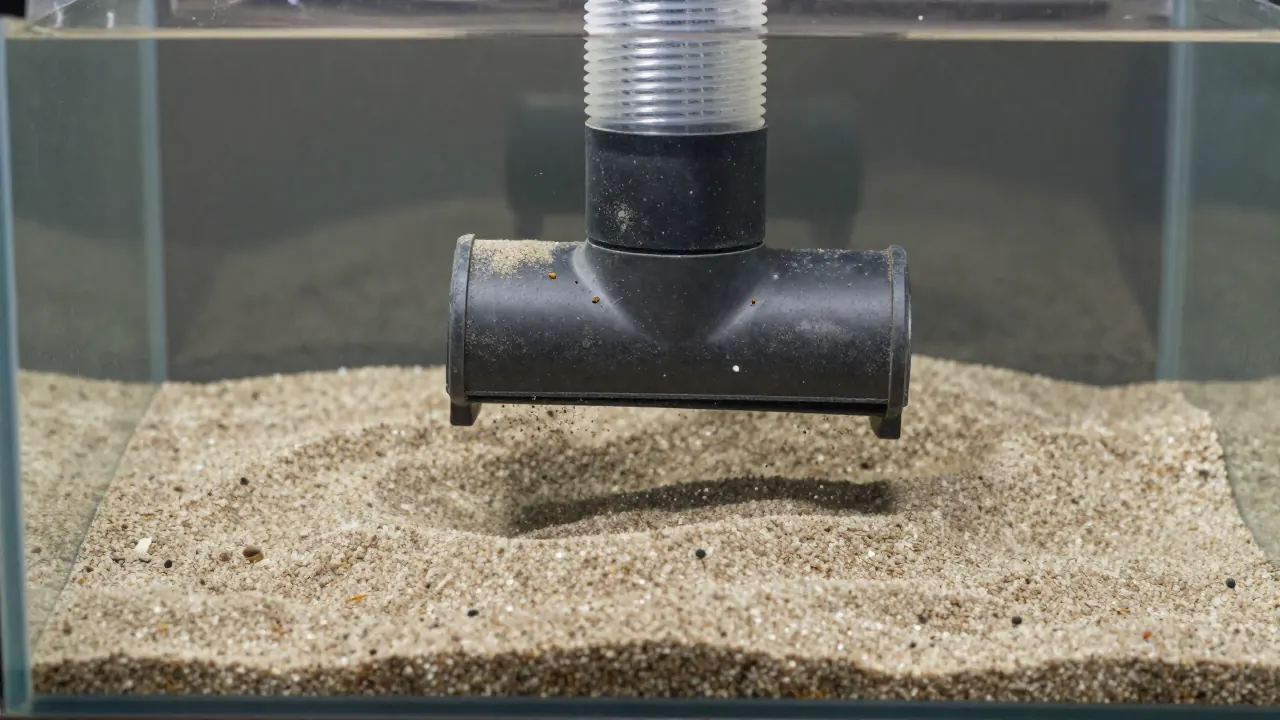
Our fish tank cleaning guide has the step-by-step method.
Substrate does not cause algae, but waste, overfeeding and skipped maintenance do. Keep up with the vacuuming and algae has less to feed on.
Is a bare-bottom tank okay?
Yes, in the right situation. Quarantine and breeding tanks often have no substrate because cleaning is quick and waste is easy to see. Very large predatory fish do well without it because a huge tank is costly to fill and hard to vacuum. Any decor in a bare-bottom tank should be smooth and stable, since there is no protective layer against the glass. For a normal community tank, a bare floor loses both the bacterial surface and the natural look.
Frequently asked questions
What substrate is best for an aquarium?
For most freshwater community tanks, natural gravel or fine gravel. Switch to sand for bottom feeders and diggers, and to aqua soil for a heavily planted tank.
Which is better for an aquarium, sand or gravel?
Sand is gentler on burrowing fish and keeps waste on the surface. Gravel is easier to vacuum and does not compact. Choose by the fish you keep first, then by looks.
What is a good, cheap substrate for aquariums?
Plain aquarium gravel or quartz sand is the most affordable and works for most tanks. Add root tabs if you plant it.
Do I need substrate at all?
No. A bare-bottom tank works for quarantine, breeding and some large fish, but you lose a bacterial surface and plant rooting.
Can I mix substrates?
Yes. Many keepers pair a sand foreground with a gravel path or an aqua soil planting area. A divider keeps the layers from blending over time.

The Pet Almanac editorial team researches, writes and edits every care guide on the site. Each guide is fact-checked before publishing and reviewed again when care guidance or equipment changes.